

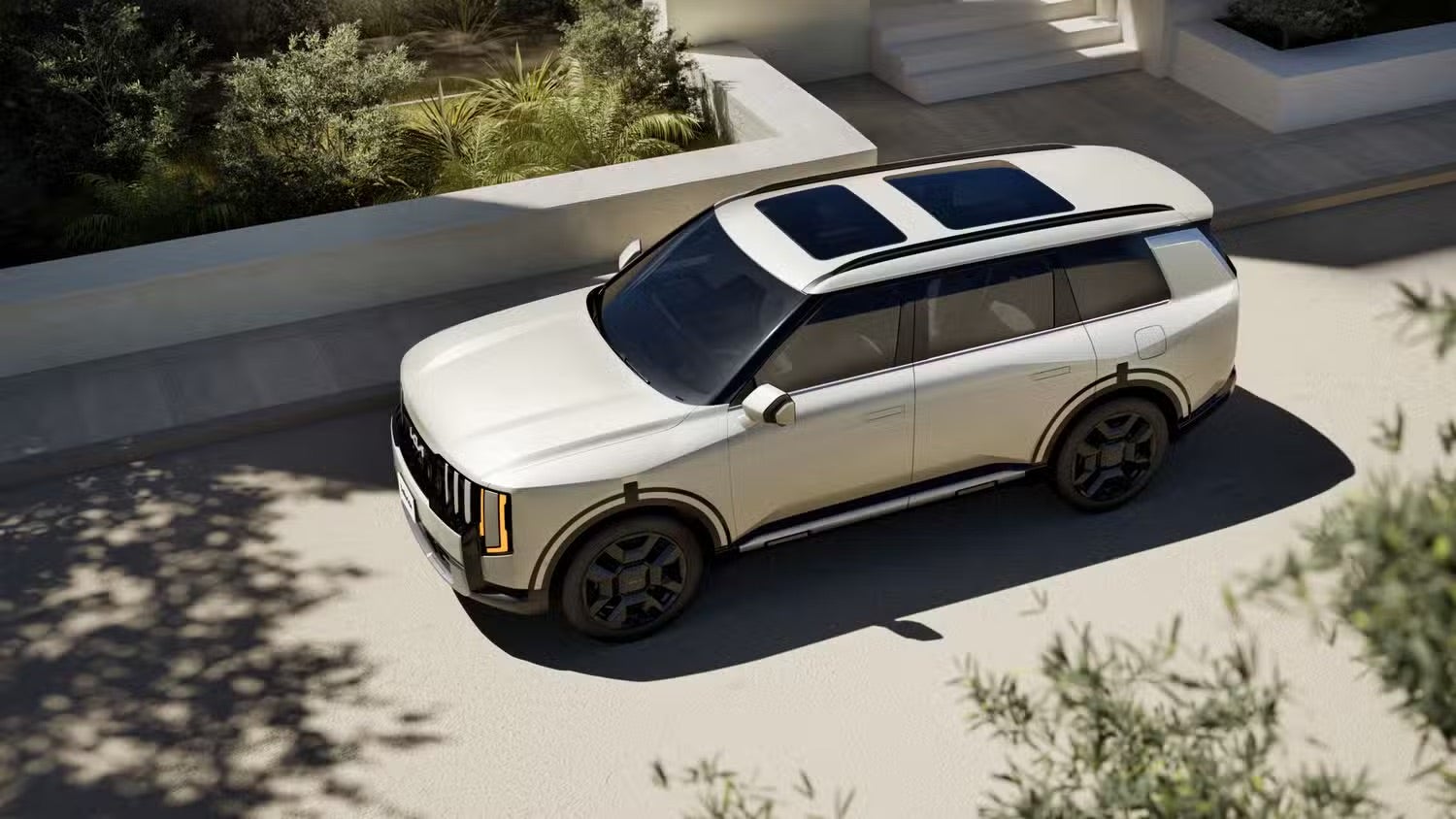
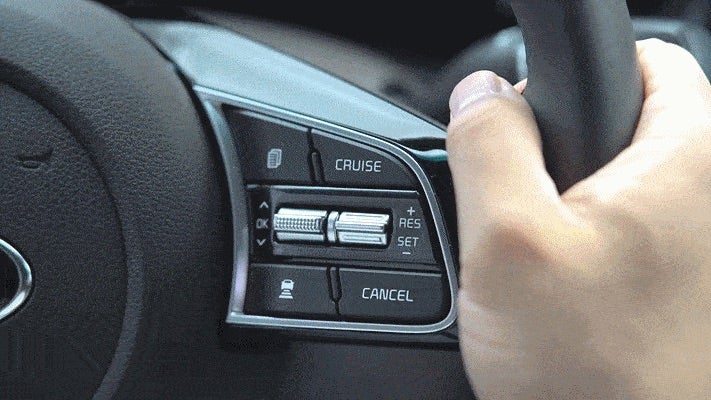
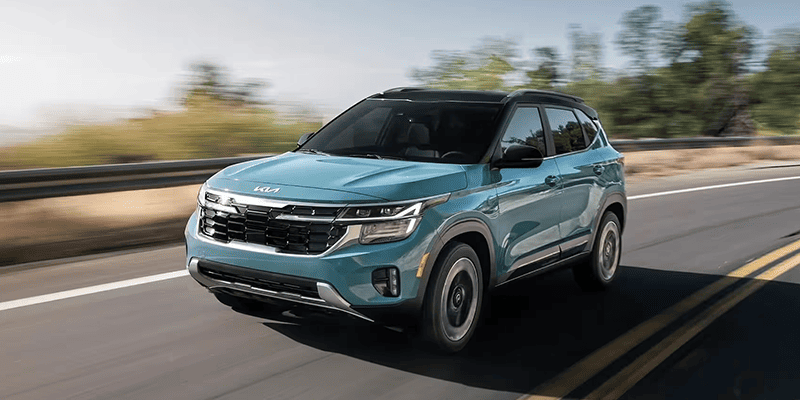
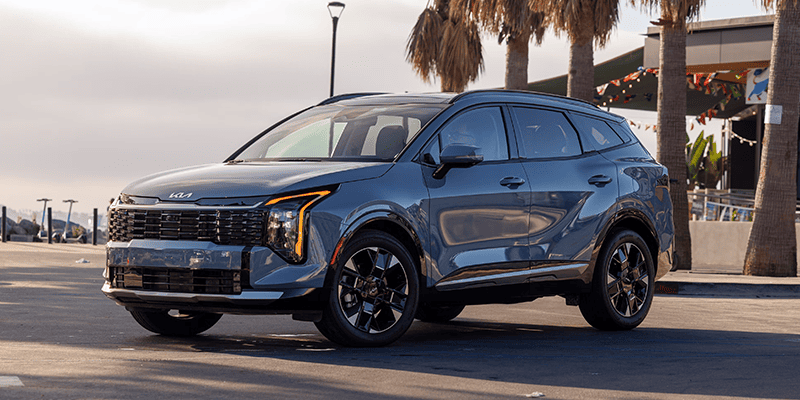
The 2027 Kia Telluride is the best overall Kia SUV for family road trips to Disney World, offering standard three-row seating for up to eight passengers, 22 cubic feet of rear cargo capacity, and up to 5,000 lbs of maximum towing capacity. Families prioritizing fuel efficiency can select the 2027 Kia Telluride Hybrid EX FWD, which achieves an EPA-estimated 34 mpg city / 36 mpg highway and up to 637 miles of total driving range on a single tank. When packing bags, strollers, and cooler bags for an Orlando vacation, cabin space and seating versatility determine how comfortable the journey will be. The 2027 Kia Telluride provides 22 cubic feet of storage behind the third row, expanding to 48 cubic feet when the back row is folded flat. For larger families, standard second-row bench seating accommodates eight people, while higher trims feature second-row captain's chairs that slide forward at the touch of a button. For families starting their road trip in New Port Richey, having a spacious three-row crossover ensures everyone stays comfortable along coastal highways and interstate corridors. The 2027 Kia Sorento offers a slightly more compact three-row alternative with seating for up to seven passengers and 13 cubic feet of cargo space behind the third row. Meanwhile, the 2027 Kia Sportage provides a two-row option with seating for five and 40 cubic feet of rear storage space, making it a great option for smaller households. Our team at Ken Ganley Kia New Port Richey helps local buyers compare interior dimensions, seat configurations, and technology options side by side. Families comparing three-row crossovers on our lot usually ask to try the second-row seat slide mechanism with a child seat installed before discussing pricing options. You can stop by our New Port Richey showroom address to tour the lineup or give our sales team a quick call to learn more about current vehicle availability. How Far Is the Drive from New Port Richey to Disney World and What Is the Best Route? The drive from Florida's Gulf Coast to Walt Disney World in Orlando covers approximately 95 to 105 miles and takes between 1 hour 45 minutes and 2 hours under normal traffic conditions. The most direct route follows State Road 54 East to Interstate 75 South, merging onto Interstate 4 East toward Orlando before taking Exit 64 onto World Drive directly into the theme park resort area. Depending on your starting neighborhood and real-time traffic updates, alternative routes offer smoother travel during peak rush hours. Drivers can travel east on State Road 52 to connect with Interstate 75, or utilize State Road 589 (Suncoast Parkway) to bypass local surface street congestion. Near Orlando, taking the Western Beltway (State Road 429) provides a less congested approach to the western entrances of the Walt Disney World property. Both the Suncoast Parkway and State Road 429 use electronic toll collection systems compatible with SunPass and Toll-by-Plate. Morning commuter traffic on Interstate 4 East typically peaks between 7:00 AM and 9:30 AM, while Friday afternoon travel into Orlando brings heavier congestion near major tourist exits. Planning departure times around these window periods helps ensure a steady, stress-free drive. Selecting a vehicle equipped with comfortable seating, dynamic cruise controls, and multi-zone climate settings makes long highway stretches much more enjoyable for every passenger. Shoppers can explore our selection of new Kia vehicles to find the latest crossover models, or browse our pre-owned SUV inventory for high-value family hauler options ready for the highway. Which Kia SUV Delivers the Best Fuel Economy and Range for Commutes? The 2027 Kia Telluride Hybrid EX FWD leads the three-row crossover class in highway efficiency, achieving an EPA-estimated 34 mpg city / 36 mpg highway / 35 mpg combined and an estimated driving range of up to 637 miles. For all-wheel-drive efficiency, the 2027 Kia Telluride Hybrid AWD delivers an EPA-estimated 30 mpg city / 32 mpg highway / 31 mpg combined, making it an ideal choice for drivers wanting all-weather traction without sacrificing range. Among non-hybrid two-row models, the 2027 Kia Sportage FWD delivers an EPA-estimated 25 mpg city / 33 mpg highway, providing up to 462 miles of highway range from its 17.2-gallon fuel tank capacity. Choosing the Sportage AWD configuration lowers highway efficiency slightly to an EPA-estimated 24 mpg city / 30 mpg highway, resulting in a estimated highway range of roughly 420 miles. For commuters driving from Trinity onto the Suncoast Parkway or heading east toward Orlando, hybrid efficiency eliminates the need for frequent fuel stops during busy travel weeks. Lower fuel consumption combined with long driving range reduces long-term ownership costs for active households. Our finance specialists can help you compare efficiency figures against vehicle purchase terms to find a model that fits your monthly budget. Buyers can submit an online credit application to review competitive loan options before visiting our dealership. What Driver-Assist Safety Features and Disney EV Charging Stations Are Available? Kia SUVs come standard with Kia Drive Wise driver-assist technology is designed to help reduce driver fatigue on long highway routes like Interstate 4. Standard systems include Blind-Spot Collision-Avoidance Assist, Lane Following Assist, and Rear Cross-Traffic Collision-Avoidance Assist. Upgrading to advanced trim levels adds Highway Driving Assist 2, which combines adaptive cruise control with automated lane-changing capabilities and steering wheel hands-on detection. Inside the cabin, driver and passenger comfort is enhanced by multi-zone automatic climate control, standard Apple CarPlay and Android Auto integration, and multiple device charging stations. The 2027 Kia Telluride equips up to seven USB-C charging ports—three in the front row, two in the second row, and two in the third row—along with dual front wireless charging pads on higher trim levels to keep smartphones powered during the entire trip. Families traveling to Central Florida in electric or plug-in hybrid vehicles will find convenient charging infrastructure throughout the Walt Disney World resort. Disney provides ChargePoint Level 2 EV charging stations at all four major theme park parking lots: Magic Kingdom Park (Medical Parking Lot) EPCOT (Journey Parking Lot) Disney's Hollywood Studios (Heel Parking Lot) Disney's Animal Kingdom Theme Park (Peacock Parking Lot) Additional ChargePoint charging stations are located at Disney Springs garages and select Disney Resort hotels, allowing EV drivers to recharge their vehicle batteries while enjoying the parks or resting overnight. Common Questions About Driving a Kia SUV to Disney World Q: How many USB ports are available for device charging in the Kia Telluride? Equipped with up to seven USB charging ports, the 2027 Kia Telluride ensures every passenger stays connected during the drive. Front passengers receive three USB ports, second-row occupants have access to two ports integrated into the front seatbacks, and third-row passengers receive two dedicated side-panel ports. Upper trims also feature dual rubberized wireless charging pads in the center console. Q: Does Kia’s 10-year/100,000-mile warranty cover roadside emergencies on road trips? Yes, Kia’s 10-year/100,000-mile warranty program includes a 5-year/60,000-mile roadside assistance plan that provides 24/7 emergency support anywhere in the United States. If you experience a flat tire, dead battery, or mechanical breakdown on the way to Orlando, you can access manufacturer-backed service by calling Kia Roadside Assistance: 1-800-333-4542 for towing to the nearest authorized dealership. Q: How much cargo space remains in the Kia Telluride when all seats are occupied? The 2027 Kia Telluride provides 22 cubic feet of cargo room behind the third-row seats, which easily holds several carry-on suitcases or a double stroller. Folding the third-row seatbacks increases storage volume to 48 cubic feet, while folding both rear rows opens up a maximum cargo capacity of 89 cubic feet. Q: Do I need a SunPass transponder when driving on Central Florida toll roads? Central Florida toll highways, including the Suncoast Parkway (SR-589) and Western Beltway (SR-429), use all-electronic toll collection systems. While Toll-by-Plate billing automatically invoices vehicle owners by mail using license plate images, using a SunPass or compatible transponder grants access to discounted toll rates and prevents delayed billing statements after your trip. Q: What documents should I bring to apply for auto financing at the dealership? When visiting our finance department to purchase a new or pre-owned Kia SUV, bring a valid driver's license, your most recent proof of income (such as pay stubs), proof of residency (a current utility bill), and your auto insurance card. Bringing complete documentation helps our underwriters process your application quickly and secure competitive financing terms. Start Your Disney Road Trip Journey at Ken Ganley Kia New Port Richey Finding the right SUV for your family road trip comes down to balancing passenger seating, cargo capacity, and long-distance fuel efficiency. Whether you need the three-row versatility of the 2027 Kia Telluride, the flexible efficiency of the 2027 Kia Sorento, or the two-row agility of the 2027 Kia Sportage, our lineup offers proven options for Florida drivers. As the #1 Volume Kia dealer in Tampa, Ken Ganley Kia New Port Richey maintains a wide inventory selection, giving you more trim levels, exterior colors, and package options to choose from. Every new Kia comes backed by Kia's 10-year/100,000-mile warranty powertrain protection, giving you long-term confidence on every vacation and daily drive. To test drive your preferred crossover model or discuss current purchase incentives, stop by our New Port Richey dealership location or call our sales department today to schedule your visit. Prices and MSRP referenced in this article are estimates for informational purposes only and do not constitute an offer to sell. See dealer for complete details. Fuel economy estimates shown may differ from official EPA ratings and should not be relied upon as a guarantee of actual vehicle performance.
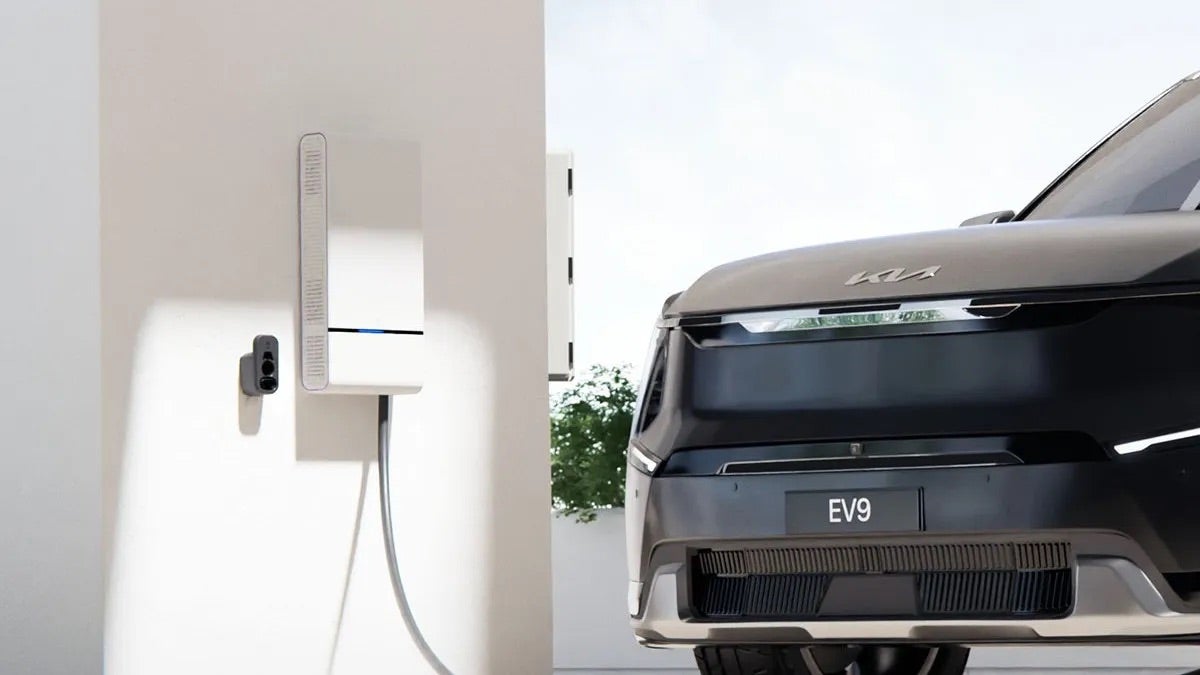
How to Charge Your Kia EV at Home: Tips & Best Practices
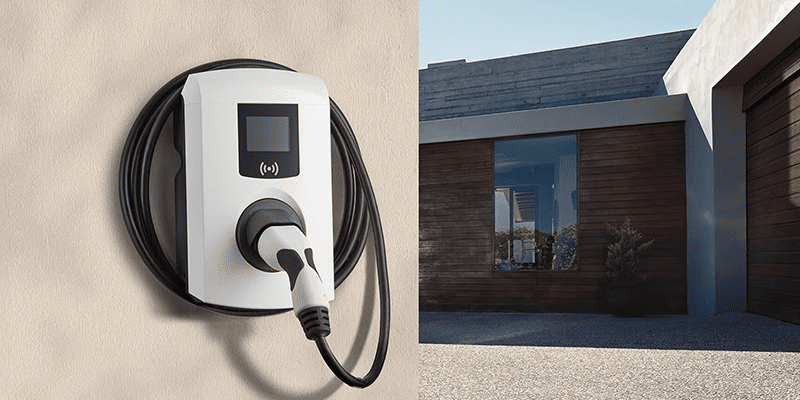
The best home charging setup for a Kia EV is a dedicated 240-volt Level 2 charging station installed on a 40-amp or 50-amp circuit. Connected through a hardwired terminal or a NEMA 14-50 outlet, Level 2 delivers up to 35 miles of range per hour, enabling complete overnight replenishments for long-range electric models. First-time electric vehicle shoppers at our showroom often ask whether a standard wall outlet is sufficient for daily driving before deciding if they need a 240-volt home installation. While every electric Kia is designed for versatile plug-in capability, equipping your garage with a dedicated Level 2 charger provides the ideal blend of speed, convenience, and daily peace of mind. Models such as the 2026 Kia EV6 come equipped with a standard dual-voltage charging cable that connects to both 120-volt and 240-volt power sources, allowing new owners to charge immediately while deciding on permanent equipment. Kia also offers official Level 2 home charging hardware available with either J1772 or NACS connectors, backed by a 3-year limited warranty. Installing a dedicated home station ensures your vehicle is always ready for the day ahead without relying on public infrastructure. If you want to view electric models in person or explore home charging accessories, stop by our showroom on US Highway 19 or give our team a quick call to learn more. What Is the Difference Between Level 1 and Level 2 Home Charging for a Kia EV? Level 1 home charging uses a standard 120-volt household AC outlet to add 3 to 5 miles of range per hour, whereas Level 2 charging utilizes 240-volt power to restore 25 to 35 miles of range per hour. Understanding the technical differences between these two power delivery methods helps buyers choose the right setup for their daily driving habits. Level 1 relies on the portable charging cable included with the vehicle, plugging directly into any grounded three-prong wall socket. Because standard household outlets supply continuous current at roughly 1.4 kW, power recovery is gradual. This trickle approach works fine when a vehicle sits parked for 12 or more hours, but it requires patience when recharging larger battery packs from a low state of charge. Level 2 charging elevates power delivery by tapping into a dedicated 240-volt circuit—similar to the heavy-duty outlets used by clothes dryers or electric ranges. Supplying between 7.6 kW and 11.5 kW of continuous power, a Level 2 station drastically reduces total charge time. Owners can set custom charging schedules directly through the vehicle's infotainment system or the Kia Access app to take advantage of lower off-peak electricity rates overnight. Choosing between charger types often comes down to daily mileage expectations; shoppers browsing our new Kia EV inventory can evaluate their driving routine with our team to determine whether a Level 1 cable fits their lifestyle or if a Level 2 station is worth the upgrade. Why Would a Kia EV Owner Rely Solely on Level 1 Charging or Upgrade to Level 2? A Kia EV owner relies solely on Level 1 charging because it requires no upfront electrical installation costs and easily recovers 30 to 40 miles of range during an overnight plug-in session. Upgrading to Level 2 becomes necessary when daily driving distances exceed 40 miles or when charging larger electric vehicles. For drivers with predictable routines, low daily mileage, or short trips like suburban driving around New Port Richey, Level 1 trickle charging provides all the energy needed without spending extra on electrical upgrades. Plugging into a standard 120-volt outlet for 10 to 12 hours overnight replenishes roughly 35 to 50 miles of driving range. If your commute is brief, the standard wall outlet handles your energy requirements effortlessly. However, daily range recovery demands change significantly with larger vehicles or longer travel schedules. Fully charging a three-row electric SUV like the Kia EV9 from near empty using a 120-volt outlet can take 60 to 70 hours due to its high-capacity battery pack. In those scenarios, upgrading to a 240-volt Level 2 charger transforms the ownership experience by fully restoring range in approximately 7 to 9 hours. Whether you are considering a brand-new crossover or exploring a selection of pre-owned electric vehicles, evaluating your daily mileage helps pinpoint the exact charging hardware you need. Is Level 2 Home Charging More Energy Efficient Than Level 1 Charging? Charging efficiency varies notably: Level 2 chargers typically convert 85% to 90% of power into battery charge, while Level 1 chargers convert only 75% to 80%. The efficiency advantage of Level 2 stems from reducing the operating duration of the vehicle's onboard electronics. When an electric vehicle is plugged in, its internal computer systems, cooling pumps, and battery thermal management controls remain active to monitor voltage and cell temperatures. During a Level 1 session, these auxiliary systems must draw power over a 30-to-50-hour window, consuming a larger proportion of total electricity just to keep the vehicle awake. Because Level 2 delivers power up to six times faster, the vehicle completes its charge cycle in a fraction of the time, allowing cooling systems and onboard computers to enter sleep mode much sooner. In warm climates where sustained summer heat forces active thermal conditioning during charging, Level 2 minimizes heat buildup and energy loss. Investing in home charging equipment is a seamless process, and buyers can complete an online credit application to include home charger accessory costs directly into their purchase financing. What Is the Best Daily Home-Charging Routine for a Kia EV? The best daily home-charging routine for a Kia EV is setting the maximum charge limit to 80% for routine driving and plugging in overnight during off-peak utility hours. Maintaining a target charge level of 80% preserves lithium-ion battery chemistry by preventing the high voltage stress that occurs when cells remain fully saturated. Reserving a 100% state of charge for occasional long-distance travel—such as commuters traveling from Trinity along the Suncoast Parkway for trips toward Tampa—strikes the perfect balance between daily battery health and maximum highway range. Establishing a consistent plug-in habit also allows owners to utilize grid pre-conditioning features. By scheduling departure times through the vehicle settings, the electric powertrain uses grid electricity rather than battery reserve to heat or cool the cabin before you set off. This practice optimizes driving efficiency and preserves maximum battery range for your drive. Every new electric Kia is backed by Kia’s 10-year/100,000-mile warranty, giving owners long-term confidence in their vehicle's powertrain and high-voltage battery system. Is It Safe to Leave a Kia EV Plugged In Overnight After Reaching the Charge Limit? It is completely safe to leave a Kia EV plugged in overnight because the vehicle's internal Battery Management System automatically terminates power intake once the designated charge limit is reached. Modern electric vehicles feature sophisticated onboard charge controllers that actively monitor cell voltage, current intake, and internal temperatures. Once the battery reaches your chosen threshold—whether set to 80% for daily driving or 100% for a weekend highway trip—the vehicle signals the charging station to stop supplying power. The charger then sits in a passive standby mode, drawing virtually no electricity until a scheduled climate pre-conditioning event occurs or the plug is disconnected. Leaving the vehicle connected overnight actually benefits overall battery health. While plugged in, the control system can perform passive cell balancing and utilize external grid power to run thermal management systems during extreme ambient temperatures. Combined with active safety technologies like lane assist and blind spot detection that protect you on the road, Kia’s high-voltage engineering ensures your vehicle remains protected while parked in your driveway. Common Questions About Kia EV Home Charging and Battery Health Q: How often should a Kia EV battery be charged to 100 percent? A Kia EV battery should be charged to 100% roughly once a month or immediately prior to heading out on an extended road trip. Routine monthly 100% charges help the Battery Management System calibrate individual cell voltages across the pack, ensuring accurate range estimates on your driver display. For daily driving, keeping the target limit at 80% is recommended to maximize long-term battery health and minimize chemical degradation. Q: Why does Kia EV home charging slow down after reaching 80 percent charge? Home charging speed slows down past 80% because the vehicle's onboard computer automatically tapers the incoming electrical current to protect internal cell chemistry. As lithium-ion cells approach full capacity, internal resistance increases and generates heat. Reducing charging power past 80% prevents thermal stress, prevents lithium plating on the battery anode, and extends the overall service life of the high-voltage battery pack. Q: Can you charge a Kia EV using a standard 120V household wall outlet? Yes, you can charge any Kia EV using a standard 120-volt household wall outlet via Level 1 charging. Using the portable dual-voltage charging cable supplied with models like the 2026 Kia EV6, the vehicle draws power from a standard grounded outlet to add 3 to 5 miles of range per hour. This method is ideal for drivers with shorter daily commutes who can leave their car plugged in overnight. Q: What safety features protect the EV battery while charging during hot Florida summers? Kia electric vehicles feature active liquid cooling systems that monitor battery cell temperatures continuously during charging sessions. If ambient temperatures rise or charging causes internal heat buildup, the thermal management system circulates coolant and operates active cooling fans to keep the battery within its optimal operating window. Charging in a shaded garage or during cooler overnight hours further enhances thermal efficiency during summer months. Q: Does charging overnight on Level 1 affect battery warranty coverage? No, charging overnight on Level 1 power has zero negative impact on your warranty coverage. Every new electric vehicle is covered by Kia’s 10-year/100,000-mile warranty program, which includes the high-voltage battery pack against major capacity loss and manufacturing defects regardless of whether you primarily charge via Level 1 or Level 2 AC power. To learn more about electric vehicle ownership, test-drive a new model, or discuss home charging accessories, visit our New Port Richey dealership location or call our specialists at (727) 242-9613 today. Prices and MSRP referenced in this article are estimates for informational purposes only and do not constitute an offer to sell. See dealer for complete details. Fuel economy estimates shown may differ from official EPA ratings and should not be relied upon as a guarantee of actual vehicle performance.




 Warranties include 10-year/100,000-mile powertrain and 5-year/60,000-mile basic. All warranties and roadside assistance are limited. See retailer for warranty details.