

Today: 9:00AM - 8:00PM

Blog

All New Port Richey New Cars New Port Richey Kia Dealer Informational New Port Richey Kia Service Kia Seltos Ken Ganley Kia New Port Richey Service Kia Carnival Kia EV9 Kia Forte Kia Sorento Kia Sportage Kia Telluride Credit Financing Kia Carnival MPV Kia EV6 Kia K4 Kia Niro Hybrid Kia Soul Loans New Port Richey Used Cars New Specials Trim Levels

Exploring Starkey Wilderness Park in a Kia Telluride

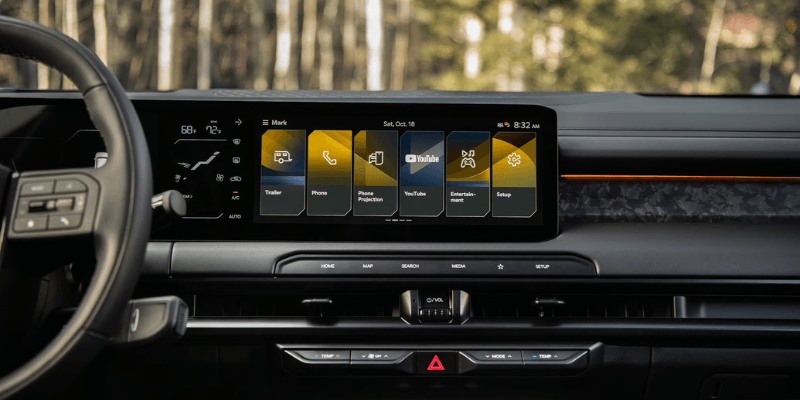
Outdoor enthusiasts planning trips to local trailheads need a vehicle that balances everyday driving comfort with genuine utility. The Kia Telluride earns top safety marks, including an IIHS Top Safety Pick+ award and a 5-Star Overall Safety Rating from the NHTSA, providing structural confidence when traveling on high-speed highways and isolated rural routes. more Yes, the 2027 Kia Telluride is thoroughly engineered for wilderness road trips, combining a 3.8-liter V6 engine producing 291 hp, available active all-wheel drive, and up to 5,500 pounds of maximum towing capacity. With over 8 inches of ground clearance and roughly 87 cubic feet of total cargo space, it easily navigates unpaved park roads, heavy camping equipment, and long family drives across Florida. Under the hood, the standard naturally aspirated V6 delivers 262 lb-ft of torque through an 8-speed automatic transmission. This powertrain offers steady, linear acceleration when merging onto busy corridors or maintaining speed with a loaded cabin. When paired with Kia's active on-demand all-wheel-drive system, power shifts automatically between the front and rear wheels to maintain traction on wet asphalt, loose sand, or gravel paths. For drivers heading out from New Port Richey, accessing nearby outdoor destinations like Starkey Wilderness Park requires navigating a mix of suburban streets, highway stretches, and winding park roads. The Telluride handles these transitions without compromising interior quietness or ride smoothness. To explore available models in person or map your drive to our dealership, check our showroom on US Highway 19 or give our sales team a call at (888) 604-4352. How Does the Kia Telluride Perform on Dirt Roads and Mild Off-Road Trails at Starkey Wilderness Park? The 2027 Kia Telluride handles dirt roads and mild off-road trails with ease, utilizing its active all-wheel-drive system, specialized Terrain Mode settings, and up to 9 inches of ground clearance on rugged trims. Its calibrated suspension absorbs ruts and washboard surfaces, keeping the cabin stable for all passengers. Exploring unpaved park routes means encountering soft sand, loose gravel, and mud after heavy Florida rainfall. Standard Telluride models provide over 8 inches of ground clearance, which easily clears small rocks, tree roots, and shallow dips. For drivers seeking greater trail capability, the X-Line package and X-Pro package elevate ground clearance to 9 inches, improving approach and departure angles for uneven terrain. The X-Pro trim enhances off-pavement performance by adding an Electronic Limited-Slip Differential, 18-inch wheels wrapped in all-terrain tires, and heavy-duty engine cooling. When driving through loose dirt or slick clay, the all-wheel-drive system can lock power 50/50 between the front and rear axles at low speeds. Drivers can select specialized terrain modes to recalibrate throttle sensitivity and traction control for maximum grip. Families comparing trims on our showroom floor often ask whether the extra ground clearance on rugged trims is necessary for local park trails before they test the fold sequence on the second-row seats. While base front-wheel-drive configurations handle paved main roads without issue, opting for all-wheel drive or browsing our pre-owned SUV inventory for all-terrain capability gives drivers extra peace of mind when venturing off the main path. Can the 2027 Kia Telluride Tow a Camper to Starkey Wilderness Park? The 2027 Kia Telluride comfortably tows a camper to Starkey Wilderness Park with a standard tow rating of 5,000 pounds that increases to 5,500 pounds on X-Line and X-Pro models equipped with the factory tow package. This capacity allows families to pull single-axle travel trailers, pop-up campers, utility trailers, or double personal watercraft without straining the engine. Hauling heavy loads across Florida highways requires proper weight management and electronic driver support. The Telluride features standard Trailer Stability Assist, which works alongside the vehicle's electronic stability control to detect trailer sway. If crosswinds or sudden lane adjustments cause oscillation, the system selectively applies individual brakes and reduces engine torque to stabilize the trailer. To assist with heavy tongue weights, select Telluride trims offer an available self-leveling rear suspension. This system automatically adjusts the rear ride height when a heavy trailer is attached, preventing rear-end sag, maintaining proper headlight alignment, and ensuring firm front-tire contact for precise steering control. Key factory towing features on the Kia Telluride include: Integrated Class III receiver hitch and 7-pin wiring harness Heavy-duty engine cooling fan and transmission fluid cooler Dedicated Tow Mode shift mapping to prevent gear hunting on inclines High-resolution backup camera with dynamic hitch guidelines for quick alignment What Cargo Capacity and Family Comfort Features Does the Kia Telluride Offer for Camping Trips? With up to 87 cubic feet of maximum cargo capacity and standard three-row seating for up to eight passengers, the 2027 Kia Telluride provides versatile interior utility for family camping trips. The cabin easily accommodates tents, coolers, sleeping bags, and bulky gear bags alongside a full crew of campers. Behind the third row, the Telluride offers 21 cubic feet of storage space, which is enough room for several duffel bags and daypacks. When extra gear space is required, the 60/40 split-folding third-row seats tumble flat with a single pull, expanding cargo volume to 46 cubic feet. Folding both rear rows opens up the full 87 cubic feet of flat floor space. Heavy-duty roof rails come standard on most trims, allowing drivers to mount cargo boxes, kayak racks, or bike carriers. Passenger comfort remains a priority during long drives out to outdoor parks. Available second-row captain's chairs slide forward with a single touch, clearing a wide walkway to the third row even with a child seat installed. High-trim models feature heated and ventilated seats in both the first and second rows, tri-zone automatic climate control with ceiling-mounted vents, and premium seating upholstery designed for easy cleaning after a day on the trail. For active households around Trinity, loading up soccer gear during the week and packing camping equipment on the weekend demands a flexible interior layout. The Telluride delivers that versatility while maintaining a refined, quiet cabin environment on every trip. Which Tech Features Help the 2027 Kia Telluride on Long Trips to Wilderness Parks? The 2027 Kia Telluride delivers essential long-trip technology, including dual 12.3-inch panoramic displays, standard wireless Apple CarPlay and Android Auto, and the Drive Wise driver-assist suite. These features keep drivers informed and passengers entertained during extended road trips. Navigation and media are managed through the central 12.3-inch touchscreen, which seamlessly integrates with an available matching 12.3-inch digital instrument cluster. Drivers can view real-time maps, route weather, and media controls side-by-side. Dual wireless phone charging pads in the front console keep devices powered up without cluttering the cabin with cords, while USB-C charging ports are distributed across all three rows so every passenger can charge a device. Highway driving is supported by Kia's advanced driver-assist systems. Navigation-Based Smart Cruise Control automatically adjusts vehicle speed based on upcoming highway curves, while lane assist and blind spot detection monitor surrounding traffic. Features like Forward Collision-Avoidance Assist provide active braking intervention if a potential front-end hazard is detected. On remote drives near state parks, the available Ground View Monitor provides a camera-based display of the terrain directly beneath the front bumper at low speeds, helping drivers steer clear of high rocks, stumps, or deep ruts when maneuvering through tight campsites. Questions Buyers Ask About Exploring with the 2027 Kia Telluride Q: Is the Kia Telluride good for driving on dirt roads and unpaved park paths? Many buyers ask if the Telluride can handle unpaved paths; its active AWD and Terrain Modes make it a reliable choice. With over 8 inches of standard ground clearance, available active all-wheel drive, and specialized terrain modes, it easily navigates rutted dirt, packed gravel, and sand. The X-Pro trim adds 9 inches of ground clearance and all-terrain tires for added traction on unpaved trails. Q: How much cargo space is available in the Kia Telluride for camping gear? The Telluride provides 21 cubic feet of cargo space behind the third row, 46 cubic feet with the third row folded flat, and roughly 87 cubic feet of total cargo volume with both rear rows folded down. High-utility roof rails are also standard on most trims to support external cargo carriers and gear racks. Q: Can the 2027 Kia Telluride tow a travel camper or boat? Yes, the 2027 Kia Telluride has a standard towing capacity of 5,000 pounds, which increases to 5,500 pounds on X-Line and X-Pro models equipped with the factory tow package. This enables it to tow midsize campers, utility trailers, pop-up trailers, or boats. Q: What warranty coverage protects the Kia Telluride during long road trips? Every new Telluride comes backed by Kia’s 10-year/100,000-mile warranty program. This includes a 10-year/100,000-mile limited powertrain warranty, a 5-year/60,000-mile limited basic warranty, and a 5-year/60,000-mile roadside assistance plan for complete peace of mind on long highway drives. Q: Which Kia Telluride trim is best for families who explore outdoor parks often? The X-Line and X-Pro trims are ideal for outdoor-focused families. The X-Line adds higher ground clearance, high-utility roof rails, and standard all-wheel drive. The X-Pro adds all-terrain tires, an Electronic Limited-Slip Differential, and enhanced engine cooling for maximum trail capability. You can explore our new Kia Telluride inventory or start your purchase by completing an online finance application today. Prices and MSRP referenced in this article are estimates for informational purposes only and do not constitute an offer to sell. See dealer for complete details. Fuel economy estimates shown may differ from official EPA ratings and should not be relied upon as a guarantee of actual vehicle performance.
Read More

Does a Larger Down Payment Help If You Have Poor Credit?

A larger down payment directly improves bad credit auto loan approval odds by lowering the lender's loan-to-value (LTV) ratio and reducing financial risk exposure. In subprime underwriting models, placing more cash upfront creates immediate equity in the vehicle. This equity buffer offsets bad credit scores, turning potential loan declines or strict conditional offers into firm approvals without requiring credit score changes. more When subprime auto lenders evaluate an application, they look at two distinct components: credit risk and asset risk. Credit history dictates the interest rate tier, while the loan-to-value (LTV) ratio determines whether the loan amount is approved. The LTV ratio compares the total amount financed against the wholesale market value of the car. When a borrower finances 100% of a vehicle's price plus sales tax and documentation fees, the loan balance instantly exceeds the vehicle's actual value. Subprime lenders enforce strict maximum LTV caps because uncollateralized balances represent potential losses if a default occurs. Providing a cash down payment lowers the principal balance dollar for dollar, bringing the loan beneath the lender's LTV ceiling. For buyers navigating suburban driving around New Port Richey, presenting a substantial upfront contribution signals personal financial commitment and stability. Lenders view borrowers who risk their own cash upfront as significantly less likely to default. Consequently, a strong cash down payment often carries more weight in subprime approval algorithms than recent credit score fluctuations. To explore your purchasing power and view flexible payment structures, you can start by completing our online financing application. If you want to discuss your approval options directly with a finance specialist, feel free to give our sales desk (888) 604-4352 or visit our showroom on US Highway 19. How Much Down Payment Do You Need and Can It Lower Your Interest Rate? A down payment of 10% on used cars or 20% on new vehicles serves as the standard industry guideline, though subprime lenders typically set minimum cash requirements between $1,000 and $2,500. Putting more money down can move your application into a lower risk bracket, which frequently triggers interest rate reductions within subprime pricing tiers. While a credit score determines your primary credit tier, subprime interest rates are not entirely rigid. Auto finance companies utilize risk-based pricing matrices that combine credit scores with LTV ratios and debt-to-income metrics. If a buyer with a subprime score submits an application with zero down payment, the lender places the loan in its highest risk tier. However, increasing the upfront payment lowers the lender's risk exposure, often unlocking better rate brackets that save money over the life of the loan. The recommended down payment amount varies based on whether you choose a new or pre-owned car: Used Vehicle Benchmark: Financial guidelines suggest placing at least 10% down on pre-owned cars because initial depreciation has already slowed. New Vehicle Benchmark: A 20% down payment is recommended for new cars to absorb initial drive-off depreciation. Subprime Cash Expectations: Lenders often require a minimum cash contribution between $1,000 and $3,000 or 10% of the vehicle price, whichever is greater. Choosing the right pre-owned model helps maximize your down payment's impact by keeping total loan amounts manageable. You can filter available models and compare mileage options across our pre-owned inventory to find a reliable vehicle that fits your budget. How Much Can a Larger Down Payment Save You Over the Life of the Loan? Increasing your down payment from $0 to $2,500 on a typical subprime auto loan can reduce monthly payments by roughly $68 and lower total interest charges by over $1,600 across a 60-month term. Lowering the overall principal balance reduces the daily interest accrual on high-APR loans. To understand the financial impact, compare financing scenarios on a $14,000 vehicle at a subprime interest rate of 21.6% APR over a 60-month term: Down Payment Amount Amount Financed Estimated Monthly Payment Total Interest Paid $0 Down $14,000 $383 / month $9,009 $1,000 Down $13,000 $356 / month $8,366 $2,500 Down $11,500 $315 / month $7,400 Financing $11,500 instead of $14,000 slashes interest costs because high subprime rates compound over fewer borrowed dollars. Saving $68 every month provides essential breathing room for ongoing ownership costs like full-coverage vehicle insurance, routine fuel costs, and periodic maintenance. When commuters evaluate financing options at our desk, they frequently ask whether a $2,500 down payment saves enough money each month to cover routine maintenance expenses. Lowering the monthly loan commitment makes it significantly easier to keep up with routine service and keep your vehicle operating safely. To ensure your current car stays reliable while planning your purchase, you can easily book maintenance through our online service scheduler. Should You Follow the 10–20% Down Rule if It Exhausts Your Savings? Borrowers with poor credit should avoid draining their emergency savings entirely to meet a 10% to 20% down payment recommendation. Retaining a cash cushion for unexpected life expenses or sudden mechanical repairs is vital to maintaining on-time vehicle payments and protecting your credit recovery efforts. Exhausting every liquid dollar to secure a vehicle creates substantial financial risk. If an unexpected emergency arises shortly after purchase, a borrower with zero financial reserves risks missing a loan payment. A single 30-day late payment can severely damage a credit score that is actively being rebuilt. While a larger down payment improves approval terms, maintaining long-term payment reliability is the single most important factor for credit health. For families navigating daily commutes along the Suncoast Parkway near Trinity, balancing upfront cash with personal reserves ensures overall financial stability. Aim for a balanced approach: Calculate Clear Reserves: Retain at least one to two months of basic living expenses in savings before committing cash to a down payment. Incorporate Trade-In Equity: Use the value of your current trade-in to supplement cash upfront without draining personal savings accounts. Select Lower Purchase Prices: Opt for a lower-cost vehicle that allows a 10% down payment to fit comfortably within your existing liquid funds. Budgeting for long-term ownership also includes factoring in affordable care and routine replacement parts down the road. You can browse authentic components and maintenance accessories through our parts department to estimate long-term upkeep costs accurately. Exploring Your Flexible Auto Financing Options in New Port Richey Securing an affordable auto loan with bad credit comes down to managing loan-to-value ratios, choosing the right vehicle, and selecting a down payment structure that preserves your personal financial safety net. A larger down payment lowers lender risk, reduces monthly payments, and saves hundreds or thousands of dollars in overall interest charges over the life of the contract. At Ken Ganley Kia New Port Richey, our finance team works directly with national subprime lenders and regional credit unions to build custom payment plans for every budget. Whether you want to explore efficient sedans with excellent fuel efficiency or practical family SUVs featuring lane assist and blind spot detection, we offer inventory tailored to your commuting needs. Every new Kia also includes our industry-leading 10-year/100,000-mile warranty coverage for complete long-term peace of mind on the road. Take the next step in your car-buying journey today by reviewing our complete selection of new Kia models online. When you are ready to test drive a vehicle or discuss financing scenarios in person, visit our dealership team at 5819 US Highway 19 or call our finance specialists at (888) 604-4352 to secure a payment plan built for your budget. Common Questions About Auto Financing with Bad Credit Q: Can a large down payment offset a low credit score enough to get near-prime rates? A: A substantial down payment of 20% or more significantly improves loan approval odds and lowers interest rates, but it rarely moves deep-subprime credit scores directly into prime rate tiers. Lenders utilize credit scores to establish base rate tiers, while down payments determine loan-to-value limits and approval eligibility. A large down payment helps secure the absolute lowest available interest rate within your applicable credit bracket. Q: How do auto lenders view trade-in equity compared to cash down payments? A: Auto lenders view trade-in equity and cash down payments as equal reductions to the total loan amount. If your trade-in is worth $3,000 and you owe $1,000 on its existing loan, the remaining $2,000 in net positive equity acts identically to $2,000 in physical cash. Positive trade-in equity lowers your loan-to-value ratio, improves approval chances, and reduces total financed interest. Q: What documentation should I bring to support a bad credit car loan application? A: Subprime lenders require verification documents to confirm income and residence before issuing final loan approvals. You should bring your most recent pay stubs showing year-to-date earnings, a recent utility bill or bank statement matching your current residential address, a valid driver's license, proof of full-coverage auto insurance, and a list of personal references. Bringing complete paperwork speeds up the underwriting process. Q: Does financing a used vehicle require less money down than a new vehicle? A: Financing a used vehicle often requires less total cash down in pure dollar terms because used cars carry lower purchase prices. Standard guidelines recommend putting 10% down on a pre-owned car compared to 20% on a new car. Because new vehicles experience higher initial drive-off depreciation, lenders enforce higher down payment percentages to offset rapid equity drops during the first year of ownership. Q: How long after making on-time auto payments can I refinance for a lower rate? A: Most subprime borrowers can qualify to refinance their auto loan after 12 to 18 months of consistent, on-time payments. Establishing a steady history of on-time car payments builds your credit score significantly. Once your score moves up from subprime into nonprime or prime territory, refinancing allows you to secure a lower interest rate and reduce your remaining monthly payments. Prices and MSRP referenced in this article are estimates for informational purposes only and do not constitute an offer to sell. See dealer for complete details. Fuel economy estimates shown may differ from official EPA ratings and should not be relied upon as a guarantee of actual vehicle performance.

Kia Carnival vs. Three-Row SUVs: Which Is Better for Families?

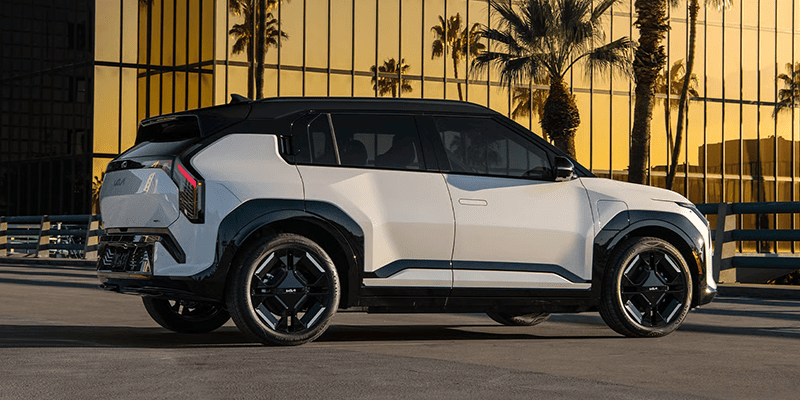
For parents managing suburban school drop-offs and weekend sports around the New Port Richey area, access to the rear rows is often the deciding factor during a vehicle search. While three-row crossover SUVs require passengers to squeeze past folded middle seats, the wide door openings of the Carnival let children and adults step directly into the third row without hassle. more The 2027 Kia Carnival delivers significantly more usable interior passenger room, easier rear-seat access through power-sliding doors, and a lower cargo liftover height than traditional three-row midsize SUVs. While three-row SUVs offer higher ground clearance and towing capacities often reaching 5,000 lbs, the Carnival provides a balanced choice between a 3.5-liter V6 engine with 287 horsepower and a 242-hp turbo hybrid powertrain, delivering superior overall cabin volume and up to 145 cubic feet of maximum cargo space. Officially styled as a Multi-Purpose Vehicle, the Carnival blends modern crossover design lines with the functional architecture of a family hauler. Standard gas models feature a 3.5-liter V6 producing 260 lb-ft of torque paired with an automatic 8-speed transmission and front-wheel drive. For shoppers comparing driving dynamics, the lower center of gravity in the Carnival creates a smoother, more planted highway ride than truck-based SUVs. When you are ready to evaluate how this vehicle handles your daily routine, you can explore our showroom location in New Port Richey or give our team a quick call to check vehicle availability. Why Do Families Prefer the Carnival's Low-Loading Floor and Sliding Doors for Daily Driving? A low-loading floor height and power-sliding rear side doors eliminate door-ding anxiety in tight parking spaces while substantially reducing the physical effort needed to buckle toddlers into car seats or load heavy strollers into the rear cargo area. Sliding rear doors extend outward only a few inches when opening, making them ideal for crowded grocery store parking lots and tight school lanes. SUV swing-out doors demand wide clearance, creating a constant risk of striking adjacent vehicles when children climb out. Furthermore, the lower step-in height allows young kids to enter and exit the cabin independently, saving parents from lifting heavy toddlers multiple times a day. Loading luggage, coolers, or double strollers is equally effortless. Traditional three-row SUVs feature tall rear bumpers that require lifting heavy gear high off the ground. The cargo well in the Carnival sits much lower, allowing you to slide heavy items straight into the back. Families test-driving the Carnival usually ask to test the power-sliding doors and check third-row legroom before taking the vehicle out on the road. For budget-conscious shoppers evaluating vehicle history and value, reviewing our pre-owned family vehicle inventory provides additional choices alongside our newest arrivals. Does the Kia Carnival Fit Three Child Seats Across the Second Row and Offer Superior Cargo Space? The 8-passenger Kia Carnival easily accommodates three child safety seats side-by-side across its second-row bench using complete LATCH anchor sets on all three seating positions. The 8-passenger seating layout features the versatile Slide-Flex seating system. The center seat in the second row slides forward to give front-passenger parents easy reach to a sleeping infant. It can also fold into a functional table with cup holders or be removed entirely when you prefer a walk-through aisle to the third row. Cargo capacity easily outperforms most three-row crossover SUVs: Behind the Third Row: Provides about 40 cubic feet of deep cargo storage, easily holding a full week of groceries or a double stroller while keeping all seats occupied. Behind the Second Row: Offers about 87 cubic feet of usable cargo volume when the 60/40 split third-row seats tumble flat into the floor in one simple motion. Maximum Cargo Volume: Expands to 145 cubic feet when second-row seats are removed and the rear row is stowed, creating a completely flat load floor. By comparison, most midsize three-row SUVs offer only 16 to 22 cubic feet of cargo room when the third row is in use, forcing families to choose between passenger capacity and luggage space. Is the Kia Carnival Hybrid Worth It for Families Comparing SUV Fuel Economy? The 2027 Kia Carnival Hybrid is exceptionally practical for budget-conscious families, combining a 1.6-liter turbocharged gas engine with an electric motor to deliver 242 horsepower, 271 lb-ft of torque, and an EPA-estimated 33 mpg combined. Standard gas-powered V6 models yield an EPA-estimated 18 mpg city / 26 mpg highway (21 mpg combined). While the V6 engine offers robust acceleration and a 3,500 lbs towing capacity, the hybrid powertrain uses an automatic 6-speed transmission to achieve 34 mpg city and 31 mpg highway. For families who spend significant time navigating city stop-and-go traffic, the hybrid powertrain dramatically cuts down on trip frequency to the gas pump. Midsize gas-powered three-row SUVs typically average between 20 and 22 mpg combined, making the hybrid version of the Carnival one of the most fuel-efficient 8-passenger vehicles available. How Reliable Is the Kia Carnival and What Warranty Coverage Does It Include? The Kia Carnival delivers impressive long-term dependability, ranked first in its segment in the J.D. Power 2026 U.S. Initial Quality Study and backed by Kia's industry-leading 10-year/100,000-mile powertrain warranty program. Every new Kia Carnival includes complete factory protection designed to protect your investment over years of daily driving: 10-Year/100,000-Mile Limited Powertrain Warranty: Covers internal engine components, transmission assemblies, axles, and differentials. 5-Year/60,000-Mile Limited Basic Warranty: Provides bumper-to-bumper protection against factory defects in materials or workmanship. 5-Year/100,000-Mile Limited Anti-Perforation Warranty: Guards against sheet metal rust-through from the inside out. 5-Year/60,000-Mile Roadside Assistance Plan: Includes 24/7 emergency roadside support for flat tires, battery jump-starts, fuel delivery, and lockout assistance. Independent evaluation data from Consumer Reports highlights expected average reliability based on consistent owner survey results across recent model years. This combination of strong build quality and extensive warranty protection provides long-term peace of mind for growing families. Who Should Buy a Kia Carnival Instead of a Three-Row SUV? In 2027, the Kia Carnival offers up to 145 cubic feet of passenger volume, making it ideal for families needing spacious interiors without sacrificing comfort. Selecting the ideal configuration depends on your budget and desired features: LX ($37,490 MSRP): The entry point includes the 3.5-liter V6, 8-passenger seating, keyless entry, and advanced driver assistance features like blind spot detection and lane assist. LXS ($39,490 MSRP V6 / $41,490 MSRP HEV): Adds synthetic leather upholstery, power-adjustable driver seating, and heated front seats. EX ($41,690 MSRP V6 / $43,690 MSRP HEV): Introduces a larger 12.3-inch infotainment system display, smart power liftgate, in-cabin camera system, and wireless smartphone charging. SX ($46,590 MSRP V6 / $48,590 MSRP HEV): Upgrades exterior styling with roof rails, surround-view parking camera, ventilated front seats, and dual rear entertainment screens. SX Prestige ($51,590 MSRP V6 / $53,590 MSRP HEV): The flagship trim features full leather seating, Dual Sunroofs, a Bose premium audio system, and optional second-row VIP Lounge Seats with power footrests. For commuters driving into Tampa for work each day, the quiet cabin and smooth suspension tuning make long highway drives comfortable and stress-free. To explore current pricing and incentives, you can view our new Kia Carnival selection or begin the purchasing process by submitting an online credit application. Common Questions About Choosing Between a Kia Carnival and a Three-Row SUV Q: Is the Kia Carnival considered a minivan or a three-row SUV? A: Kia officially markets the Carnival as a Multi-Purpose Vehicle (MPV) because its exterior styling features an SUV-like squared-off hood and aggressive front grille, though its interior delivers the sliding doors, low floor, and massive cabin volume of a traditional minivan. Q: Does the Kia Carnival offer all-wheel drive? A: The Kia Carnival is configured exclusively with front-wheel drive across all trim levels and engine choices, using advanced electronic stability and traction control systems to handle wet road conditions effectively. Families requiring active mechanical all-wheel drive for off-road driving may consider a traditional AWD crossover. Q: How much can the Kia Carnival tow? A: When equipped with a factory-approved towing hitch, the V6-powered Kia Carnival offers a maximum towing capacity of 3,500 lbs, which easily handles small pop-up campers, utility trailers, or personal watercraft. Q: Can the second-row seats in the Kia Carnival be removed? A: On 8-passenger configurations equipped with the standard second-row bench seat, individual seats can be folded or removed completely to maximize cargo room up to 145 cubic feet. However, the optional 7-passenger VIP Lounge Seats found on top trims recline with power footrests and are permanently fixed to the floor track. Q: What roadside assistance benefits are included with a new Kia Carnival? A: Every new Kia Carnival includes 5 years or 60,000 miles of 24/7 roadside assistance coverage, including flat tire assistance, battery jump-starts, lockout help, out-of-gas fuel delivery, and towing to an authorized Kia dealer location. Prices and MSRP referenced in this article are estimates for informational purposes only and do not constitute an offer to sell. See dealer for complete details. Fuel economy estimates shown may differ from official EPA ratings and should not be relied upon as a guarantee of actual vehicle performance.
Why Brake Fluid Service Is Important in Florida's Heat and Humidity post

Why Brake Fluid Service Is Important in Florida's Heat and Humidity

Brake fluid serves as the vital hydraulic link between your foot and your vehicle's wheels. When you press the brake pedal, hydraulic pressure transfers through liquid-filled lines to force brake pads against metallic rotors. Unlike air or gas, liquid cannot be compressed under normal operating conditions. This incompressible nature allows hydraulic pressure to translate instantly into smooth, immediate stopping power. more Regular brake fluid service is critical in humid climates because glycol-based brake fluid naturally absorbs atmospheric moisture over time. Water contamination depresses the fluid's boiling point, causes vapor lock during heavy braking, and triggers internal corrosion within calipers and anti-lock braking components. Replacing contaminated fluid restores firm pedal feel and maintains full stopping confidence. In coastal environments near Gulf Coast waterways, high atmospheric moisture creates severe-service conditions for motor vehicles. As moisture permeates the hydraulic lines, water molecules mix directly into the fluid. Over time, this fluid degradation reduces hydraulic efficiency and exposes sensitive metal components to internal rust. Routine maintenance at our New Port Richey service department ensures your hydraulic system stays clean, dry, and responsive. Reaching out by (888) 604-4352 allows our factory-trained technicians to inspect your brake reservoir during every routine oil change. How Do Florida's Heat and Humidity Affect Brake Fluid Performance? In Florida, summer temperatures often exceed 90°F, intensifying brake fluid degradation and stressing hydraulic components during frequent stops. When water content reaches roughly 3%, the fluid's boiling point drops by over 100 degrees Fahrenheit, increasing the risk that severe thermal stress converts liquid hydraulic force into compressible steam. Most modern passenger vehicles rely on polyglycol-ether hydraulic fluids rated under Federal Motor Vehicle Safety Standard FMVSS No. 116, such as DOT 3, DOT 4, or DOT 5.1. Fresh, dry DOT 3 fluid features a minimum dry boiling point of 401°F. However, as it absorbs moisture from humid air over 12 to 24 months, its wet boiling point drops down to around 284°F. Higher-grade DOT 4 fluid offers a higher dry boiling point of 446°F, but it remains equally vulnerable to moisture accumulation over time. High summer temperatures compound this chemical challenge. When vehicles operate in extreme heat during stop-and-go driving, thermal energy from the brake pads transfers directly into the brake calipers and fluid lines. Because elevated outdoor temperatures slow natural heat dissipation, brake fluid operates at sustained high temperatures. When combined with moisture contamination, these elevated operating temperatures push degraded fluid toward its lowered wet boiling point much faster. How Does Moisture Get Into a Sealed Brake System and Absorb Ambient Humidity? Atmospheric moisture enters a vehicle's sealed braking system by permeating through microscopic pores in flexible rubber brake hoses, master cylinder reservoir vents, and aging rubber seals. Because polyglycol-ether fluids are chemically hygroscopic, they continuously draw in ambient water vapor during daily heating and cooling cycles. Although the braking system is designed to keep fluid inside under extreme pressure, it is not completely airtight. Everyday temperature shifts create thermal expansion and contraction within the fluid reservoir. As the master cylinder fluid level moves up and down during braking, outside air enters through tiny pressure-relief vents in the reservoir cap. In regions with high relative humidity, this vent air carries water vapor directly over the surface of the fluid. Furthermore, rubber brake lines expand and contract under hydraulic load. Over time, atmospheric moisture slowly diffuses through the microscopic pores of these rubber hoses. Once water molecules cross this barrier, they bond chemically with the glycol-ether base. This absorption process occurs continuously regardless of total vehicle mileage, making calendar age just as important as odometer readings when evaluating fluid health. What Happens When Water Inside Your Brake Fluid Boils? Trapped water that reaches its boiling point instantly expands into steam pockets within the brake lines, creating a dangerous condition known as vapor lock. Because gas compresses under pressure while hydraulic fluid does not, foot pressure on the pedal compresses the steam bubbles rather than forcing caliper pistons against the brake rotors. Vapor lock manifests as a soft, spongy brake pedal that sinks significantly lower toward the floorboard. During emergency stops on fast-moving highways, severe thermal buildup can cause the pedal to drop completely with little to no slowing force. This pedal fade drastically extends stopping distances, compromising the safety of your passengers and preventing advanced driver-assist systems—such as blind spot detection or automatic emergency braking—from stopping the vehicle effectively. When experiencing vapor lock, pumping the brake pedal may temporarily compress steam pockets enough to slow the vehicle, but structural braking power remains severely diminished until the fluid cools back down. Preventative maintenance by scheduling a brake fluid exchange eliminates water pockets before high thermal stress causes sudden hydraulic pressure loss. How High Summer Temperatures Accelerate Internal Corrosion and ABS Component Wear Elevated under-hood heat combined with water-contaminated brake fluid depletes essential corrosion-inhibitor additives, initiating galvanic corrosion between steel valves and aluminum housings inside the anti-lock braking system. This oxidation forms scaly rust and gelatinous deposits that clog tiny hydraulic passages and bind solenoid valves. When drivers bring their vehicles in after a hot summer of commuting to Tampa, they often ask why an Anti-lock Braking System (ABS) warning light illuminates after extended highway driving. The reason frequently traces back to internal fluid contamination. The ABS hydraulic control unit contains micro-passages and electromagnetic solenoid valves that cycle rapidly to prevent wheel lockup. When moisture accelerates galvanic reactions between aluminum manifold blocks and steel solenoid spools, microscopic aluminum-hydroxide debris circulates throughout the assembly. This internal corrosion leads to multiple mechanical risks: Solenoid valve binding: Debris prevents valves from opening or closing smoothly during hard stops. Internal pressure bypass: Corroded valve seats allow fluid to leak internally, resulting in an unstable pedal feel. Master cylinder seal degradation: Rust particles score rubber seals, causing pressure loss and fluid leaks. Brake line pitting: Internal moisture eats through metal brake lines from the inside out. Replacing a damaged ABS module is one of the most expensive brake repairs a vehicle owner can face. Sourcing genuine factory components through our genuine Kia parts center guarantees proper fitment, but regular fluid flushes prevent internal corrosion from damaging these complex components in the first place. Commuters driving down from Trinity toward Tampa on the Suncoast Parkway benefit directly from fresh fluid that protects delicate ABS modulators against humidity-induced wear. What Is a Sensible Brake Fluid Maintenance Schedule for Drivers in New Port Richey, FL? A sensible brake fluid schedule for coastal Florida drivers is a complete fluid exchange every 2 years or roughly 24,000 to 30,000 miles. Annual inspections during routine maintenance allow technicians to check fluid color and test moisture levels before water contamination compromises hydraulic safety. While standard factory schedules in moderate climates suggest inspections every 30,000 to 48,000 miles, severe local humidity justifies adhering strictly to a 24-month calendar interval. Even low-mileage vehicles absorb moisture while sitting in driveways or garages. Technicians assess fluid condition using three primary inspection methods: Visual color inspection: Fresh fluid appears clear to light gold. Degraded fluid oxidizes into dark amber, brown, or black, signaling heavy contamination. Electronic boiling point testing: Digital probes heat a small fluid sample to measure its actual boiling threshold, confirming whether wet boiling limits have been reached. Chemical copper test strips: Test strips detect dissolved copper content, providing an early warning that internal anti-corrosion additives have broken down. Following a proactive maintenance routine preserves long-term vehicle health and supports overall warranty coverage. Additionally, late-model vehicles backed by Kia’s 10-year/100,000-mile warranty benefit from regular brake flushes that protect master cylinders, calipers, and electronic stability systems over thousands of miles of suburban driving around New Port Richey. Common Questions About Brake Fluid Care in Florida Q: Can moisture in brake fluid cause total brake failure during hard stopping? A: Yes, high moisture content can lead to vapor lock under heavy or repeated braking. When water contamination boils into steam pockets inside hydraulic lines, the gas compresses under pedal pressure instead of moving the brake calipers. This causes a spongy pedal that can sink to the floorboard, drastically increasing stopping distances or causing temporary loss of hydraulic braking force. Q: How can I tell if my brake fluid needs to be replaced? A: The most visible indicator is color change. Healthy brake fluid is clear with a light yellow tint, whereas aged or contaminated fluid turns dark amber, brown, or black like dark coffee. Drivers may also notice a soft or mushy brake pedal feel, increased pedal travel, or an illuminated ABS dashboard light. A professional moisture test confirms whether water levels exceed safe operational limits. Q: Will topping off low brake fluid fix a spongy brake pedal? A: No, pouring fresh fluid into the reservoir will not fix a spongy pedal caused by water contamination or air pockets in the lower brake lines. Fresh fluid mixed into the reservoir leaves degraded, moisture-laden fluid trapped inside the calipers and ABS valves. Resolving a spongy pedal requires a complete pressurized system flush to purge old fluid and trapped air entirely. Q: How does fresh brake fluid protect my anti-lock braking system? A: Fresh brake fluid contains specialized anti-wear and corrosion-inhibitor additives that prevent oxidation inside the hydraulic control unit. By replacing fluid before moisture accumulates, you prevent galvanic corrosion between aluminum housings and steel solenoid valves. This keeps internal ABS passages clean, preventing valve sticking and protecting expensive electronic modulators. Q: Is brake fluid replacement included in standard factory maintenance? A: Brake fluid inspection is typically included during routine multi-point checks, but complete fluid replacement is a specific maintenance service performed on a time or mileage schedule. Because coastal humidity accelerates moisture absorption, most technicians recommend exchanging fluid every 2 years regardless of mileage to maintain optimal hydraulic pressure and component lifespan. Prices and MSRP referenced in this article are estimates for informational purposes only and do not constitute an offer to sell. See dealer for complete details. Fuel economy estimates shown may differ from official EPA ratings and should not be relied upon as a guarantee of actual vehicle performance.
Which Kia SUV Is Best for Growing Families in Palm Harbor?

Selecting the right vehicle comes down to matching daily routine requirements with cabin capacity. Larger families frequently hauling kids, sports equipment, and groceries need dedicated legroom in every row, making full-size cabin dimensions a priority. Midsize alternatives offer easier parking in tight spots while maintaining the ability to fold down seats for sudden cargo demands. more For expanding households evaluating seating and cargo needs, the three-row 2027 Kia Telluride is the top recommendation for maximum passenger room and overall utility. Families needing flexible, occasional third-row seating in a slightly smaller footprint will find the 2026 Kia Sorento ideal, while five-passenger households focused on maneuverability and high fuel efficiency should consider the two-row 2026 Kia Sportage. Our team at Ken Ganley Kia New Port Richey helps local buyers compare these cabin layouts side by side. Whether you want to test out child seat installation or practice folding third-row seats, dropping by our New Port Richey showroom address allows you to evaluate each model in person. You can also give our team a quick call to check current vehicle availability before stopping in. What Makes the 2027 Kia Telluride the Best Choice for Larger Families in Palm Harbor? With seating for up to eight and a spacious interior, the 2027 Kia Telluride is engineered to accommodate larger families comfortably in Palm Harbor. With 21 cubic feet of cargo volume behind the third row and up to 87 cubic feet when rear rows are folded flat, it handles demanding family routines with ease. Powering the SUV is a robust 3.8L V6 engine producing 291 hp and 262 lb-ft of torque, providing smooth acceleration for highway merging and passing. Families planning weekend trips with small boats or recreational trailers benefit from a maximum towing capacity of up to 5,000 lbs when properly equipped. Available all-wheel drive adds traction control during heavy summer downpours. Inside, thoughtful cabin engineering keeps passengers comfortable across long drives. Tri-zone automatic climate control allows independent temperature settings for the driver, front passenger, and rear cabin. Families testing the Telluride often ask if three child safety seats can fit across the second-row bench seat before looking at trim upgrades, and the wide row design easily accommodates proper car seat placement. The trim lineup spans from the well-equipped LX and S trims up to the refined EX, SX, and SX Prestige, alongside rugged X-Line and X-Pro variants for added ground clearance. Active driver-assist features come standard, including forward collision-avoidance assist, blind-spot collision-avoidance assist, and rear cross-traffic collision-avoidance assist. For households seeking added value, exploring our pre-owned vehicle inventory offers access to late-model three-row SUVs featuring these same core safety and convenience technologies. Whether packing cooler chests for weekend picnics at Wall Springs Park or managing daily school pickup lines, the Telluride provides the interior volume and stability growing households require. Which Kia Three-Row SUV Should You Choose: Telluride vs. Sorento? Choose the Kia Telluride if your family regularly carries adult passengers or older teenagers in the rear and requires maximum cargo space behind the seats; choose the Kia Sorento if you want an agile midsize SUV with optional third-row seating for younger children at a lower starting price point. The Sorento provides seating for up to seven passengers, making it a versatile middle ground between compact crossovers and full-size three-row haulers. Under the hood, the standard 2026 Kia Sorento features a 2.5L four-cylinder engine paired with a Sportmatic transmission, achieving an EPA-estimated 20 city / 29 hwy mpg in front-wheel drive configurations. It delivers 12 cubic feet of cargo space behind its third row and a towing capacity of 3,500 lbs. While the Telluride excels in third-row legroom and shoulder room for full-capacity road trips, the Sorento offers easier maneuverability in tight parking lots and lower fuel consumption during suburban commuting. Families with toddlers or younger elementary-aged children often find the Sorento's cabin layout ideal for their current stage of life, keeping a fold-flat third row ready for playdate carpools or extra luggage space when needed. How Does the Kia Telluride Compare to the Hyundai Palisade, Honda Pilot, and Toyota Highlander? The 2027 Kia Telluride compares favorably against three-row rivals like the Hyundai Palisade, Honda Pilot, and Toyota Highlander by delivering higher standard horsepower than the Highlander, more third-row legroom than the Pilot, and superior long-term warranty protection across the board. Comparing performance and capacity specs highlights key differences in this competitive segment: Engine Output: The Telluride's standard 3.8L V6 generates 291 hp, topping the Toyota Highlander's 265 hp turbocharged four-cylinder. Rear Cargo Space: Behind the third row, the Telluride provides 21 cubic feet of storage, beating the Highlander's 16 cubic feet and matching the Palisade. Powertrain Protection: Every new Telluride is backed by Kia's 10-year/100,000-mile warranty program for limited powertrain coverage, outlasting the 5-year/60,000-mile powertrain warranties provided standard on the Honda Pilot and Toyota Highlander. Inside the cabin, the Telluride emphasizes user-friendly technology, featuring an available dual 12.3-inch panoramic display system with integrated navigation, Apple CarPlay, and Android Auto. Safety tech remains a core strength, as standard lane keeping assist, lane following assist, and safe exit assist provide continuous monitoring during highway travel. For buyers prioritizing cabin space, long-term ownership security, and standard features, the Telluride remains a standout benchmark in the midsize three-row class. Which Kia SUV Powertrain Offers the Best Family Value and Fuel Savings? For families seeking to reduce daily fuel expenses, the Kia Sorento Hybrid powertrain offers the highest overall value, combining three-row versatility with an EPA-estimated 35 city / 36 hwy mpg in all-wheel drive configurations. Choosing a hybrid or plug-in hybrid model allows buyers to balance family utility with lower fuel consumption. The Sorento Hybrid pairs a 1.6L turbocharged engine with an electric motor to output a combined 227 hp and 258 lb-ft of torque, delivering immediate low-end pull for city driving while maintaining efficiency on long highway stretches. Every new Kia SUV purchase includes comprehensive coverage designed to shield owners against unforeseen service bills: 10-year/100,000-mile limited powertrain warranty 5-year/60,000-mile limited basic warranty 5-year/100,000-mile limited anti-perforation warranty 5-year/60,000-mile roadside assistance plan In the event of a flat tire or unexpected roadside issue, owners receive dedicated protection through Kia Roadside Assistance: 1-800-333-4542, offering 24/7 towing, battery jump-starts, and emergency assistance backed by factory-trained support. Combined with lower stops at the pump, this long-term protection keeps ownership costs predictable for budget-conscious households. What Is the Best Kia SUV for Smaller Families Who Do Not Need a Third Row? The 2026 Kia Sportage is the premier recommendation for smaller families, providing class-leading rear legroom, 39 cubic feet of rear cargo capacity behind the second row, and a driver-friendly footprint. Designed for five passengers, the Sportage features a spacious back seat that easily accommodates rear-facing car seats without crowding front passengers. Power comes from a standard 2.5L engine, while the Sportage Hybrid variant pairs a 1.6L turbo engine with electric power to achieve up to 35 city / 36 hwy mpg with all-wheel drive. Standard active safety features include automatic emergency braking, lane keeping assist, and driver attention warning. For parents running daily errands along US-19 or spending weekend afternoons at Robert K. Rees Memorial Park, the Sportage combines cargo versatility and easy parking into an affordable, high-value package. Frequently Asked Questions About Choosing a Kia Family SUV Q: How comfortable is third-row seating in the Kia Telluride for older kids and adults? The 2027 Kia Telluride features 31 inches of third-row legroom and generous headroom, making its rear seats comfortable for older children, teenagers, and average-sized adults on extended trips. Reclining rear seatbacks and standard USB-C charging ports in all three rows enhance passenger comfort. Q: Can three car seats fit across the second row in a Kia SUV? Yes, three child safety seats can fit across the second-row bench seat in the Kia Telluride when using slim car seat models. The second row features complete lower LATCH anchors and top tether anchors across all three seating positions for secure installation. Q: What warranty coverage comes standard on a new Kia SUV? New Kia family SUVs come backed by Kia's 10-year/100,000-mile warranty program. This includes a 10-year/100,000-mile limited powertrain warranty, a 5-year/60,000-mile limited basic warranty, a 5-year/100,000-mile anti-perforation warranty, and a 5-year/60,000-mile roadside assistance plan. Q: How does financing or pre-qualification work for a new family SUV? Buyers can start their purchase process online by filling out our secure online financing application. Getting pre-qualified helps you establish a clear budget, review competitive interest rates, and streamline your time spent at the dealership. Q: Which Kia SUV offers the most cargo space behind the rear seats? The Kia Telluride provides the most cargo space in the Kia lineup, offering 21 cubic feet behind the third row and up to 87 cubic feet with all rear seats folded flat. You can browse available models today in our new Kia inventory. Prices and MSRP referenced in this article are estimates for informational purposes only and do not constitute an offer to sell. See dealer for complete details. Fuel economy estimates shown may differ from official EPA ratings and should not be relied upon as a guarantee of actual vehicle performance.
Understanding Auto Loan Pre-Approval

You use a car loan pre-approval letter at a dealership by treating it as a cash baseline after setting the vehicle's selling price. Present the letter to the finance department after agreeing on the car's out-of-the-door purchase price and trade-in value, allowing the dealership to either execute the approved lender terms or attempt to secure a better rate through their financing network. more Having a formal pre-approval letter converts your status into a cash-equivalent buyer when negotiating. Before discussing monthly payment targets with a salesperson, focus entirely on establishing the negotiated sale price of the vehicle. Establishing a clear vehicle price keeps financing variables separate from the actual cost of the automobile. This strategy works equally well whether you are looking at an efficient daily commuter like the Kia Forte or a spacious three-row vehicle like the Kia Telluride. Once you finalize the vehicle price and any trade-in valuation, hand your pre-approval letter to the finance manager. The letter details your maximum loan amount, approved interest rate, loan term length, and lender requirements. The finance desk will verify that the chosen vehicle fits the lender's guidelines regarding age, mileage, and loan-to-value ratio. Dealerships maintain partnerships with dozens of local and national financial institutions, meaning our team can often match or beat the annual percentage rate (APR) listed on an outside pre-approval letter. To establish your baseline financing before browsing our showroom, you can complete our online financing application from home. If you want to discuss your financing options in person, stop by our showroom address in New Port Richey or give our financial experts a quick call at (888) 604-4352. What Is Auto Loan Pre-Approval and How Does It Work Versus Pre-Qualification? Auto loan pre-approval is a formal conditional commitment from a lender specifying an exact borrowing limit, interest rate, and term length based on verified financial documents and a hard credit check. In contrast, pre-qualification provides a non-binding preliminary estimate using self-reported financial information and a soft credit pull that does not impact your credit score. Understanding how credit inquiries function helps protect your credit profile during the vehicle shopping process. A soft credit inquiry occurs during pre-qualification when a lender reviews your basic credit profile to provide a ballpark estimate of what you might borrow. Soft pulls leave an entry on your credit report visible only to you and carry zero impact on your credit score. This makes pre-qualification a useful tool during early research when exploring overall price ranges. Pre-approval requires a formal application accompanied by a hard credit inquiry. During a hard pull, the lender examines your full credit bureau reports from Experian, TransUnion, or Equifax to evaluate repayment history and current debt obligations. A single hard credit check typically lowers a credit score by fewer than five points. Credit scoring models such as FICO treat multiple hard inquiries for auto financing submitted within a standard 14-day rate-shopping window as a single credit event, allowing you to compare offers across multiple lenders without compounding credit score drops. When buyers evaluate vehicles in our pre-owned vehicle inventory, they often ask whether a pre-qualification quote is enough to lock down a payment term before taking a test drive. While pre-qualification offers a helpful starting budget, only a formal pre-approval guarantees specific rate parameters and borrowing capacity when finalizing a purchase order. What Information and Documents Are Needed for Pre-Approval, and How Does Debt-to-Income Ratio Affect Your Limit? To complete an auto loan pre-approval, lenders require government-issued identification, proof of income through recent pay stubs or tax returns, proof of residence, and current debt details. Your debt-to-income ratio directly limits your borrowing cap because underwriters generally require total monthly debt payments, including the prospective auto loan, to stay under 45% to 50% of your gross monthly income. Lenders rely on standardized financial documentation to verify your ability to repay a debt obligation. When preparing your application, gather the following essential records: Proof of Income: Recent pay stubs showing year-to-date earnings, W-2 statements, or two years of signed tax returns if you are self-employed. Identification and Residence: A valid driver's license alongside a recent utility bill or lease agreement verifying your current residential address. Financial Profile: Current bank statements, details regarding existing installment loans, minimum credit card payments, and court-ordered obligations like child support or alimony. Underwriters evaluate these documents primarily to calculate your debt-to-income (DTI) ratio. Calculated as your total recurring monthly debt payments divided by your gross monthly income multiplied by 100, your DTI percentage indicates how much of your paycheck goes toward existing debt. For instance, if your gross monthly income is $5,000 and your existing monthly payments for housing, credit cards, and student loans equal $1,200, your current DTI ratio is 24%. If an underwriter sets a maximum allowable DTI threshold of 45%, your total monthly debt obligations cannot exceed $2,250. Subtracting your existing $1,200 debt leaves a maximum allowable monthly payment of $1,050 for your prospective car loan, insurance, and vehicle financing fees. Maintaining a lower DTI ratio demonstrates financial breathing room, which encourages lenders to approve higher loan amounts and offer competitive interest rates. Drivers commuting along State Road 54 from nearby Trinity often prefer establishing a precise DTI calculation early to select a practical vehicle payment that leaves ample room for household expenses. If you want to keep your current vehicle running reliably while evaluating your budget for a new purchase, you can schedule a service appointment with our certified technician team. Does Auto Loan Pre-Approval Lock In Your Interest Rate and Stack With Dealer Incentives? Auto loan pre-approval locks in your maximum interest rate and borrowing terms for a set validity window, typically lasting 30 to 60 days. Bringing outside pre-approval financing allows you to combine your pre-approved rate with dealer customer cash rebates, although promotional manufacturer financing rates usually cannot be stacked with cash back offers. Rate lock periods protect buyers against sudden benchmark interest rate increases while shopping for a car. Once a lender issues a formal pre-approval letter, your assigned APR remains fixed for the specified period, provided your financial status and credit profile remain unchanged before loan closing. If market interest rates drop during your shopping window, you can ask your lender to adjust your rate downward before final contract execution. Outside pre-approval financing gives buyers flexibility when evaluating dealer promotional incentives. Automobile manufacturers frequently offer a choice between promotional low-APR financing or direct customer cash rebates. When you bring an outside pre-approval carrying a competitive interest rate, you can choose the cash back rebate to lower the total purchase price, financing the remaining balance through your pre-approved loan. As the #1 Volume Kia dealer in Tampa with more inventory than any other Kia dealer in Tampa, our finance department leverages high sales volume to secure low interest rates directly through regional lenders and Kia Motors Finance. Our scale allows us to provide flexible financing structures that often beat outside pre-approval offers. Every new vehicle backed by factory financing includes protection under Kia’s industry-leading warranty program: 10-year/100,000-mile limited powertrain warranty 5-year/60,000-mile limited basic warranty 5-year/100,000-mile limited anti-perforation warranty 5-year/60,000-mile roadside assistance plan If emergency assistance is required on the road, drivers can reach official support directly through Kia Roadside Assistance: 1-800-333-4542. To customize your new vehicle before taking delivery, explore available floor liners and cargo accessories through our genuine Kia parts department. How Do You Present Your Pre-Approval Offer to a Dealership Salesperson? Present your pre-approval letter to the dealership finance manager only after negotiating and agreeing on the final vehicle purchase price, trade-in allowance, and dealer options. Keeping your pre-approval private during initial pricing negotiations prevents sales discussions from shifting away from the total vehicle cost toward monthly payment targets. Disclosing your pre-approval letter early can lead salespeople to negotiate based on your maximum monthly budget rather than the lowest achievable purchase price for the vehicle. Holding the letter until price terms are locked ensures you establish the absolute lowest principal balance. Once price terms are finalized, share your pre-approval document with the finance department. Our finance desk regularly works with pre-approved buyers and will review the offer terms. Because volume dealerships hold preferred relationships with national banks and local credit unions, our team can submit your finalized purchase order across our lender network to check if lower rates or superior repayment structures are available. Common Questions About Auto Loan Pre-Approval and Financing Q: How long does an auto loan pre-approval remain valid? Most lenders set auto loan pre-approval validity periods between one and two months, giving buyers a limited window to finalize their purchase. If you do not purchase a vehicle within this timeframe, the pre-approval expires, and the lender must perform a new credit review to issue an updated offer. Q: Does getting pre-approved for a car loan guarantee final financing approval? No, pre-approval is a conditional commitment based on your initial credit check and submitted income documentation. Final loan approval occurs after the lender verifies the specific vehicle's details, including the vehicle identification number (VIN), total sale price, mileage, and insurance coverage. Q: Will applying for auto loan pre-approval lower my credit score? A formal pre-approval application requires a hard credit pull, which may temporarily reduce your credit score by fewer than five points. However, credit scoring models treat all auto loan inquiries submitted within a 14-day rate-shopping window as a single inquiry, minimizing overall credit impact. Q: Can I buy a car costing more than my pre-approval limit? Yes, you can purchase a vehicle that exceeds your pre-approved borrowing limit by paying the remaining balance out of pocket. You can cover the difference using cash down payments, trade-in equity, or a combination of both to keep the financed loan amount within your lender's cap. Q: Is it better to get pre-approved before visiting a car dealership? Getting pre-approved before visiting a dealership establishes a firm budget and provides a guaranteed interest rate baseline. This allows you to shop with confidence as a cash-equivalent buyer while giving the dealership finance desk an opportunity to match or beat your outside offer. Prices and MSRP referenced in this article are estimates for informational purposes only and do not constitute an offer to sell. See dealer for complete details. Fuel economy estimates shown may differ from official EPA ratings and should not be relied upon as a guarantee of actual vehicle performance.

Does Florida Heat Cause Tire Pressure Warning Lights?

Understanding how climate affects air volume helps prevent unnecessary worry while keeping your vehicle operating safely. Standard tire pressure monitoring systems rely on direct wheel sensors calibrated to monitor air density within a narrow, safe margin. When ambient temperatures soar during summer, air molecules expand and press against the internal tire casing. Conversely, when the car rests overnight, the air inside cools down and contracts. This thermal drop often causes tire pressure to dip about 25 percent below the manufacturer's recommended cold inflation pressure, which is the standard threshold that activates the low-pressure warning symbol on your instrument cluster. more Extreme heat triggers your tire pressure warning light because ambient high temperatures expand the air inside your tires, raising internal pressure by approximately 1 psi for every 10-degree rise in temperature. Driving on hot pavement adds friction, pushing tire pressure several pounds above cold baseline levels. When temperatures fluctuate rapidly or air contracts during cooler overnight hours, your tire pressure monitoring system detects these pressure shifts and illuminates the dashboard warning symbol. When a warning light appears on your dash, a solid icon usually indicates that one or more tires have dropped below recommended inflation levels, while a flashing icon that remains solid after a minute indicates a system fault or sensor issue. If your warning symbol turns on, the safest immediate step is to pull over safely, check all four tires with a digital or dial gauge, and inspect the tread for physical damage. For drivers needing quick diagnostic help, finding our New Port Richey service facility gives you direct access to certified technicians equipped with factory diagnostic tools. You can also give our team a quick call at (888) 604-4352 for immediate guidance or schedule a service appointment online to have your tire pressure monitoring sensors calibrated before your next long drive. How Does Florida Heat, Hot Pavement, and Humidity Expand Tire Pressure? Florida heat expands tire pressure through a combination of high ambient air temperatures, intense road surface radiation, and elevated internal air humidity. As tires roll across sun-baked asphalt, surface friction combined with pavement temperatures that frequently exceed 130 degrees Fahrenheit cause internal air to expand by 3 to 5 psi above cold filling pressure. The physical relationship between heat and gas volume is governed by basic thermal expansion principles. When your vehicle sits parked, internal tire air matches ambient outdoor air temperature. However, once you start driving along coastal causeways near Clearwater, the combination of road contact friction and radiant pavement heat rapidly increases the internal temperature of the tire cavity. This heat transfer causes air molecules to move faster and exert greater outward pressure against the rubber sidewalls. Humidity plays an equally significant role in pressure instability. Compressed air pumped from standard gas station air compressors often contains invisible moisture vapor unless passed through specialized drying filtration. Water vapor reacts much more violently to thermal changes than dry air or pure nitrogen. As internal moisture heats up during highway driving, it transitions toward vapor, causing a sharper, non-linear pressure rise inside the tire casing. Over time, these thermal cycles place extra stress on rubber compounds, valve stems, and pressure seals. Inspecting your valve stems for corrosion or micro-cracks during routine oil changes prevents slow leaks that worsen under heat stress. If your vehicle requires replacement valve cores or factory pressure sensors, our team can help you order genuine Kia replacement parts designed specifically for your model's wheel specifications. Is It Safe to Drive with High Tire Pressure on Hot Summer Days? Driving on excessively over-inflated tires during hot summer days is unsafe because severe over-inflation reduces tire traction, stiffens ride quality, and significantly increases the risk of a high-speed tread separation or blowout. Over-inflated tires bulge at the center of the tread, reducing the rubber contact patch that keeps your vehicle firmly anchored to the roadway. When internal air pressure rises far above recommended settings, the tire's ability to absorb road impacts diminishes. Hitting a pothole or severe pavement seam with an over-inflated tire places extreme mechanical shock on the internal steel belts, making the casing vulnerable to structural failure. Furthermore, a smaller contact patch impairs critical vehicle safety systems like blind spot detection and lane assist, as the vehicle's electronic stability controls depend on optimal mechanical grip to execute sudden evasive maneuvers or emergency stops. Maintaining precise pressure settings is essential for popular crossover models like the 2026 Kia Sportage with its 1.6L engine and available all-wheel drive, or larger family vehicles like the 2026 Kia Sorento equipped with a 2.5L engine and Sportmatic™ transmission. Proper inflation ensures balanced weight distribution across all four contact patches, preserving smooth handling and extending tread life. To maintain safe inflation during summer heat, follow these practical maintenance guidelines: Measure tire pressure only when tires are cold, before driving more than one mile or after the vehicle has been parked in the shade for at least three hours. Never bleed air from a warm tire that reads high immediately after highway driving, as thermal expansion is temporary and the tire will become under-inflated once it cools. Adjust inflation to match the exact PSI recommended on your vehicle's doorjamb label rather than adjusting based on visual appearance. Use a high-quality digital pressure gauge rather than relying on uncalibrated air pump gauges found at public filling stations. What Does Your TPMS Light Mean and Why Do Sensor Batteries Fail in Heat? A tire pressure warning light alerts you that internal air pressure has drifted outside safe operating thresholds, while extreme heat degrades internal sensor batteries by accelerating internal chemical breakdown. Direct tire pressure monitoring systems use wheel-mounted electronic sensors powered by compact lithium coin-cell batteries that are continuously exposed to intense brake heat and severe road vibration. Direct TPMS units are installed inside the tire cavity attached to the inner end of the valve stem. These sensors transmit real-time pressure and temperature data wirelessly to your vehicle's central control module. Because these lithium batteries are permanently sealed within the sensor assembly to withstand centrifugal forces and moisture, they cannot be serviced or charged individually. Extreme wheel well temperatures speed up the chemical depletion of lithium cells, reducing their typical 5 to 10 year lifespan down to a much shorter window in hot climates. When a TPMS sensor battery reaches the end of its functional life or suffers thermal damage, the dashboard indicator communicates the failure through specific lighting patterns: Solid Warning Light: Indicates that one or more tires are under-inflated by 20 to 25 percent relative to recommended cold placard pressure. Flashing Light for 60 to 90 Seconds: Signals a system fault, loss of signal transmission, or a dead sensor battery requiring electronic diagnosis and replacement. Intermittent Light: Suggests thermal expansion cycles where pressure dips below threshold during cool mornings and recovers during afternoon driving. If a tire fails or suffers a sudden pressure drop while traveling, having access to manufacturer-backed emergency support makes a significant difference. New vehicle coverage includes access to Kia Roadside Assistance: 1-800-333-4542, providing professional flat tire change services, towing to authorized service centers, and trained technical support when road hazards interrupt your trip. How Do UTQG Temperature Grades and Door Placard Specs Protect Your Tires? Uniform Tire Quality Grading temperature ratings indicate a tire's ability to resist and dissipate thermal energy, while the driver-side door placard provides the official cold inflation pressure calculated by vehicle engineers. Relying on door placard specifications rather than sidewall maximum limits prevents severe over-inflation and protects your vehicle's suspension components. The National Highway Traffic Safety Administration established UTQG standards to help drivers compare treadwear, wet traction, and temperature resistance across different tire brands. The temperature grade evaluates how effectively a tire running on an indoor test wheel dissipates generated heat at controlled high speeds: Grade A: Represents the highest level of heat resistance, designed to withstand sustained speeds over 115 mph without thermal breakdown. Grade B: Meets standard federal safety requirements, handling speeds between 100 mph and 115 mph under normal loads. Grade C: Represents the minimum legal standard, suitable for basic low-speed driving but less capable of dissipating heat during extended summer highway travel. Selecting Grade A temperature-rated replacement tires ensures maximum resistance against heat-induced rubber degradation during hot weather driving. However, even the highest-rated tire will fail if inflated improperly. A common driver mistake is inflating tires to the maximum PSI molded onto the tire sidewall. That sidewall figure represents the maximum pressure the tire casing can safely hold at maximum load capacity, not the pressure intended for your specific vehicle. Engineers determine ideal inflation based on gross vehicle weight, axle distribution, and suspension tuning. The correct cold inflation figures are always printed on the tire information label located on the driver-side B-pillar doorjamb. Common Tire Pressure Questions and Professional Kia Tire Care in New Port Richey Drivers pulling into our service drive often ask why their tire pressure light illuminates first thing in the morning only to shut off ten minutes into their commute. The following answers clarify common tire monitoring concerns to help you maintain optimal safety on Florida roadways. Q: Why does my TPMS light turn on in the morning and turn off after driving? The morning warning light occurs because overnight temperature drops cause air inside the tire to contract, reducing internal pressure below the 25 percent low-pressure threshold. Once you begin driving, road friction and rolling resistance heat the air inside the tire cavity. This thermal expansion raises pressure back above the activation threshold, turning off the dashboard light. If this occurs regularly, your cold tire pressure is slightly low and needs to be topped off. Q: Does nitrogen tire inflation reduce heat-related pressure fluctuations? Nitrogen tire inflation significantly reduces pressure fluctuations because dry nitrogen gas lacks the moisture vapor found in standard compressed air. Water vapor expands rapidly when heated, causing unpredictable pressure spikes during summer driving. Pure nitrogen maintains a more consistent expansion rate across broad temperature ranges, helping maintain stable pressure readings and slowing natural pressure loss through porous rubber. Q: What is the difference between cold tire pressure and warm tire pressure? Cold tire pressure is the air pressure measured before the vehicle has been driven or after sitting parked for at least three hours, reflecting ambient air temperature without driving heat. Warm tire pressure is measured after driving, when friction and road heat have expanded internal air by 3 to 5 psi. Vehicle manufacturers always state recommended inflation in cold PSI specifications. Q: How long do TPMS sensor batteries usually last in Florida heat? TPMS sensor batteries typically last between 5 and 8 years under standard conditions, but sustained ambient heat and high wheel well temperatures accelerate lithium battery degradation. Frequent high-speed driving on hot pavement can reduce operational battery lifespan toward the lower end of that range, eventually requiring sensor replacement when internal voltage drops. Q: Where is the tire pressure placard located on my Kia? The official tire pressure placard is located on the driver-side doorjamb B-pillar, visible when you open the driver's door. This yellow and white label lists recommended cold inflation pressures for front and rear tires, spare tire specifications, and total weight capacity limits assigned to your specific vehicle model. Prices and MSRP referenced in this article are estimates for informational purposes only and do not constitute an offer to sell. See dealer for complete details. Fuel economy estimates shown may differ from official EPA ratings and should not be relied upon as a guarantee of actual vehicle performance.

Preparing Your Kia for Peak Hurricane Season in Pasco County

Preparing your 2026 Kia for hurricane season requires topping off all essential engine fluids, maintaining at least a half tank of fuel or a fully charged EV battery, verifying 12-volt battery health, inspecting tire tread depth and cold inflation pressure, installing fresh wiper blades, and stowing a dedicated emergency kit. Completing these service checks before storm warnings are issued prevents sudden breakdowns during slow evacuation traffic and heavy tropical downpours. more Living on the low-elevation coastal plain in New Port Richey near the Anclote River means tropical systems bring immediate risks of severe wind, localized street flooding, and sudden power outages. When storm advisories are issued, highways quickly fill with stop-and-go traffic. Vehicles operating under these conditions experience heavy mechanical stress, as long idling times elevate underhood temperatures while air conditioning units, windshield wipers, and headlights draw continuous power from the electrical system. A proactive approach to vehicle maintenance ensures your car remains reliable when you need it most. Our factory-trained technicians at 5819 US Highway, New Port Richey, FL 34652 specialize in storm-readiness checks, evaluating vital components to ensure your vehicle is capable of handling harsh coastal weather. To set up an inspection before severe weather arrives, find our service center location on US Highway 19 or give our team a quick call to speak with a service advisor. What Pre-Storm Maintenance Items Should You Check on Your Kia Before a Hurricane? A pre-storm maintenance check for your Kia should focus on 12-volt battery health, cooling system integrity, brake response, tire tread depth, windshield wiper condition, and fluid levels. Inspecting these core mechanical systems before tropical weather hits ensures your vehicle can endure prolonged idling in extreme heat and heavy highway rain without overheating or losing traction. Florida heat causes cumulative, unseen damage to 12-volt car batteries, accelerating internal corrosion and evaporating electrolyte fluid. While a weakened battery might start an engine under mild morning conditions, the high electrical load of an evacuation—running the air conditioning on high, operating wipers continuously, and charging multiple mobile devices—can rapidly exhaust a marginal battery. Testing the battery with a professional conductance tester measures cold cranking amps and reserve capacity, revealing whether a replacement is necessary before you end up stranded in severe weather. When drivers bring their vehicles into our service bays before storm season, they most often ask us to load-test their 12-volt battery and replace their wiper blades before checking anything under the hood. Beyond electrical health, evaluating the cooling system is critical. Extended idling during traffic delays relies entirely on electric radiator fans and healthy engine coolant to prevent overheating. Technicians check coolant concentration, inspect radiator hoses for soft spots or leaks, and verify fan engagement. Tire care is equally essential for wet-weather driving safety. A minimum tread depth of 4/32 inches is recommended to clear standing water and prevent hydroplaning on slick asphalt. Setting cold tire pressures to the manufacturer specifications listed on the driver-side door jamb supports stability under heavy cargo loads, and inspecting the spare tire ensures you have a viable backup option if road debris causes a flat. To get your vehicle ready for peak storm activity, you can easily schedule a hurricane readiness inspection with our service department or order genuine Kia replacement parts such as high-performance wiper blades and heavy-duty batteries directly from our team. How Does Kia Vehicle-to-Load (V2L) Technology Provide Power During Hurricane Outages? Kia Vehicle-to-Load (V2L) technology converts high-voltage direct current from an electric vehicle's primary battery pack into standard 120-volt alternating current, supplying up to 1.9 kW of usable power through interior outlets and exterior charging port adapters. During storm-induced power outages, V2L transforms electric models like the Kia EV6 and 2026 Kia EV9 into mobile energy stations capable of running household appliances, medical equipment, electronics, and emergency lighting. The V2L system functions as an onboard power generator without the noise, exhaust fumes, or fueling requirements of traditional gas-powered generators. Operating the system involves plugging an exterior V2L connector into the vehicle charge port or utilizing the 120-volt power outlet located inside the rear cabin. With a maximum output of 1.9 kW (15 amps), the system cleanly powers essential devices such as: Full-size energetic power draws like a 150-watt portable refrigerator or freezer Essential medical devices including CPAP machines and oxygen concentrators Home connectivity tools like Wi-Fi routers, laptops, and mobile device charging stations Low-draw household appliances including microwave ovens, coffee makers, and LED floor lamps To manage overall vehicle energy, Kia allows drivers to set a maximum discharge limit using the central infotainment touchscreen. By establishing a cutoff threshold—such as 20% battery state-of-charge—the vehicle automatically discontinues V2L power export before draining the high-voltage battery below the reserve level required for driving. Models fitted with the available 99.8 kWh battery pack can sustain essential home electronics for three to five days during extended power outages while retaining sufficient driving range for local travel. What Essential Items Should Be in Your Kia Hurricane Emergency Kit for Florida Evacuations? A comprehensive Kia hurricane emergency kit for Florida evacuations should contain at least one gallon of drinking water per person per day for three days, non-perishable food, a first-aid kit, flashlights with extra batteries, portable phone power banks, rain gear, a multi-tool, jumper cables, and a portable tire inflator. Packing these supplies securely in your vehicle ensures your family remains safe, hydrated, and self-sufficient if traffic delays extend your evacuation time. Organizing emergency supplies into durable, waterproof storage bins keeps gear accessible without cluttering passenger space. A practical vehicle storm kit should be divided into core functional categories: Hydration and Nutrition: Pack bottled water, electrolyte tablets, and high-protein non-perishable snacks like nut mix, energy bars, and canned goods with pop-top lids. Illumination and Power: Store LED headlamps, heavy-duty flashlights, rechargeable lanterns, extra batteries, and pre-charged 20,000 mAh USB power banks with compatible phone charging cables. Vehicle Maintenance and Recovery: Keep a 12-volt portable air compressor, a digital tire pressure gauge, heavy-duty jumper cables or a lithium-ion jump-start pack, a tire repair kit, and a bottle of windshield washer fluid. Safety and First Aid: Include gauze bandages, antiseptic wipes, prescription medications for at least seven days, protective work gloves, emergency foil blankets, and rain ponchos. Navigation Backups: Stash printed road maps of Florida and written contact numbers for emergency services and insurance providers in case cell towers lose power or signal. Kia vehicles provide versatile cargo layouts that easily accommodate complete emergency kits. SUV models like the 2026 Kia Sorento offer flexible storage options, providing about 13 cubic feet of space behind the third row and roughly 38 cubic feet when the rear seats are folded. Larger crossovers like the 2026 Kia Sportage provide about 40 cubic feet of dedicated rear cargo volume, allowing families to load emergency bins, luggage, and pet supplies while keeping passenger seats clear for a comfortable ride. How Can You Protect Your Kia Vehicle from Saltwater Intrusion and Storm Surge Flood Damage? Protecting your Kia from saltwater intrusion and storm surge flood damage requires parking on elevated ground outside designated flood zones, positioning the vehicle clear of trees and power lines, and avoiding standing water on roadways. Saltwater is extremely corrosive, causing rapid destruction of electrical wiring, wheel bearings, brake assemblies, and lower body components if it enters engine bays or passenger cabins. In master-planned inland communities like Trinity, elevated residential driveways and multi-story parking structures offer safe refuge away from coastal surge zones and overflowing drainage canals. When preparing your vehicle before a storm hits, observe these key flood protection guidelines: Elevate Your Parking Position: Park on the highest available ground, facing the vehicle away from prevailing wind directions to minimize water intrusion into front air intakes. Avoid Tree Canopies: Keep your vehicle parked clear of large oak branches, pine trees, and unanchored structures that could collapse under hurricane-force winds. Disconnect Electric Charging Equipment: If you own an electric or plug-in hybrid Kia, unplug the charging cable from both the wall outlet and the vehicle port before the storm arrives to protect onboard circuits from power surges and water immersion. Never Drive Through Standing Water: Florida hurricane guidance stresses that as little as 6 inches of water can cause drivers to lose control, while 12 inches of water can float small vehicles. Floodwaters often conceal washed-out pavement, heavy debris, and downed high-voltage power lines. If severe weather threatens to overflow your parking area, move your vehicle to higher ground early. Once storm surge or heavy rainwater begins rising, attempting to relocate a vehicle poses significant personal danger. Which Emergency Safety Technology and Kia Connect Features Support Storm Evacuations? Emergency safety technology and Kia Connect telematics support storm evacuations by offering real-time cloud navigation with live traffic re-routing, automated collision updates, emergency SOS calling, and remote vehicle access via smartphone. These integrated tools help drivers navigate around highway gridlock, stay informed during severe weather alerts, and maintain a direct link to assistance. When evacuating under stressful conditions, onboard driver-assist systems work together to reduce driver fatigue and maintain vehicle control: Cloud-Based Navigation: Kia Connect utilizes real-time traffic data to calculate alternate evacuation routes, helping you bypass congested primary highways. Emergency Assistance SOS: A dedicated overhead console button links directly to emergency call centers for immediate roadside dispatch during vehicle breakdowns. Automatic Collision Notification: If an impact occurs and airbags deploy, the system automatically transmits vehicle location and diagnostic data to emergency responders. Advanced Driver Assistance: Features like Highway Driving Assist 2, Blind-Spot Detection Technology, and Rear Cross-Traffic Collision-Avoidance Assist monitor surrounding traffic, making lane changes and prolonged highway driving safer in heavy rain. All-Weather Traction Control: Drive Mode Select paired with Dynamax All-Wheel Drive intelligently balances engine torque between front and rear axles. Electronic Stability Control and Traction Control make real-time adjustments to prevent wheel slip on slick pavement and through standing water. Remote features accessible through the Kia Connect smartphone app allow owners to check fuel levels or battery state-of-charge, verify door lock status, and set cabin temperatures ahead of time, ensuring the vehicle is ready to go as soon as evacuation orders are given. What Steps Should You Take if Your Kia Is Flooded or Damaged During a Severe Storm? If your Kia is flooded or sustains severe storm damage, do not attempt to start the engine or turn on the ignition switch. Cranking an engine that has ingested water can cause permanent mechanical destruction from hydro-lock, while turning on the electrical system in a flooded vehicle can ignite electrical shorts or damage sensitive electronic control units. Follow a structured recovery process to protect your personal safety and your insurance claim: Keep the Ignition Off: Leave the vehicle powered down completely. This precaution is vital for gasoline, hybrid, and electric models, as submerged electrical components carry high risks of short-circuiting. Document the Damage: Take clear, high-resolution photographs and videos of the vehicle before moving it. Capture the exterior waterlines, interior carpet condition, trunk area, and any impact damage from falling debris. Notify Your Insurance Provider: File a claim with your insurance company promptly. Comprehensive coverage typically handles storm-related hazards, including falling tree limbs, wind damage, hail, and flood immersion. Arrange Professional Flatbed Towing: Have the vehicle transported directly to an authorized service facility using a flatbed tow truck. Avoid flat-towing a damaged or flooded vehicle on its own wheels. Our certified technical team is fully equipped to evaluate storm-damaged vehicles, perform thorough diagnostic checks, and work directly with insurance adjusters to carry out necessary repairs. If your vehicle requires post-storm inspection or service, visit our local New Port Richey service department or reach out to our service team at (888) 604-4352 for guidance. Common Questions About Preparing Your Kia for Hurricane Season Q: When should I fill up my gas tank or charge my Kia battery before a storm? You should top off your fuel tank or charge your EV battery to 100% as soon as a storm enters the local forecast cone rather than waiting for an official evacuation order. Fuel stations frequently run out of gas or experience long lines once evacuations begin, and power grid failures can make EV charging unavailable right before a storm hits. Keeping your tank at least half full throughout hurricane season ensures you are always ready to move. Q: How long can Kia V2L technology power essential household devices during an outage? A Kia electric vehicle equipped with a 99.8 kWh battery pack can power basic household emergency needs—such as a 150-watt portable refrigerator, LED lighting, and mobile devices—for three to five days depending on total power draw. You can set a discharge limit on the vehicle touchscreen to shut off power export before the battery drops below your desired driving reserve. Q: Why is a 12-volt battery test necessary if my Kia starts normally every day? Subtropical heat degrades 12-volt battery cells over time without showing obvious warning signs during light daily commutes. During a hurricane evacuation, however, heavy electrical demands from continuous air conditioning, windshield wipers, exterior lighting, and phone charging place severe stress on the battery. A pre-storm load test verifies reserve capacity so you don't face a dead battery in stop-and-go evacuation traffic. Q: What should I do if my Kia was submerged in saltwater during a storm surge? Do not attempt to start the engine, switch on the ignition, or connect any battery chargers. Saltwater causes rapid, destructive corrosion on electrical wiring, module connectors, and mechanical assemblies, creating severe short-circuit and fire risks. Contact your insurance provider immediately and arrange for flatbed towing to an authorized service center for inspection. Q: Does the Kia 10-year/100,000-mile warranty cover flood or hurricane damage? The 10-year/100,000-mile limited powertrain warranty covers manufacturing defects and mechanical component failures under normal operating conditions, but it does not cover environmental or flood damage resulting from natural disasters. Physical storm damage and water submersion are typically handled through your comprehensive auto insurance coverage. Prices and MSRP referenced in this article are estimates for informational purposes only and do not constitute an offer to sell. See dealer for complete details. Fuel economy estimates shown may differ from official EPA ratings and should not be relied upon as a guarantee of actual vehicle performance.

Why Trinity Drivers Are Choosing the Kia Sportage for Their Daily Commute

Choosing the right commuter crossover depends on how well a vehicle handles real-world traffic, unpredictable weather, and extended highway stretches. Commuters traveling along major corridors like the Suncoast Parkway near Trinity need a cabin that remains quiet at cruising speeds and driver-assist technology that reduces fatigue during stop-and-go congestion. The redesigned interior of the 2026 Kia Sportage prioritizes ergonomic seating with available heated and ventilated front seats, acoustic windshield glass to minimize road noise, and flexible cargo configurations for work gear or weekend sports equipment. more The 2026 Kia Sportage is worth buying for daily commuting because it delivers an exceptional balance of passenger space, advanced technology, and low operating costs. Featuring about 40 cubic feet of cargo room, class-leading 41.3 inches of rear legroom, and an available 12.3-inch dual panoramic display, it transforms high-traffic drives into a relaxed, comfortable experience. Paired with Kia's 10-year/100,000-mile limited powertrain warranty and available fuel-efficient hybrid powertrains, it offers long-term reliability and exceptional value for daily drivers. At Ken Ganley Kia New Port Richey, our team helps commuters compare configurations side by side. You can explore our new Kia Sportage inventory to see which trim aligns with your daily routine, or apply for auto financing online before taking a test drive. If you prefer to speak with a representative directly, give our sales department a quick call or visit our New Port Richey showroom to experience the Sportage in person. What Engine and Transmission Power the 2026 Kia Sportage Commute? Every gas-powered 2026 Kia Sportage is equipped with a 2.5L 4-cylinder engine producing 187 hp and 178 lb-ft of torque, mated to an 8-speed automatic transmission with Sportmatic® shifting. This combination provides linear acceleration for merging onto high-speed highways and precise gear management for city street driving. For drivers seeking additional power or maximum efficiency, the lineup also features a 1.6L turbocharged hybrid powertrain outputting 232 hp and 271 lb-ft of torque, as well as a plug-in hybrid option delivering 268 hp and 271 lb-ft of torque. The standard 2.5L engine utilizes a 13.0 compression ratio and direct fuel injection to optimize throttle response while maintaining steady fuel consumption. The 8-speed automatic transmission replaces continuous variable transmissions (CVTs) found in some competing crossovers, giving drivers discrete gear ratios and smoother high-speed cruising. Front-wheel drive comes standard on the LX, EX, SX, and SX Prestige gas trims, while an advanced All-wheel drive system with a locking center differential is available across the range and comes standard on X-Line and X-Pro Prestige models. When commuters visit our lot to compare powertrains, they frequently ask how the 2.5L gas engine performs during highway merging compared to the turbocharged hybrid variants. On the road, the naturally aspirated engine delivers predictable power delivery that is easy to control in tight traffic. For commuters cross-shopping pre-owned models, our dealership also maintains a selection of quality pre-owned inventory to suit a wide range of driving needs and budgets. What Real-World Fuel Economy Does the 2026 Kia Sportage Deliver? Front-wheel-drive gas models of the 2026 Kia Sportage achieve an EPA-estimated 25 mpg city, 33 mpg highway, and 28 mpg combined, making it an economical choice for daily travel. All-wheel-drive gas trims deliver 23 mpg city, 27 mpg highway, and 25 mpg combined (with the LX AT AWD achieving up to 24 mpg city and 30 mpg highway). Equipped with a 14.3-gallon fuel tank, a gas-powered Sportage offers a highway driving range exceeding 380 miles on a single fill-up of regular unleaded gasoline. For commuters looking to maximize fuel savings, the 1.6 LX Hybrid AT delivers an EPA-estimated 41 mpg city, 44 mpg highway, and 42 mpg combined in front-wheel drive. All-wheel-drive hybrid variants, including the EX Hybrid AT AWD, SX Prestige Hybrid AT AWD, and X-Line Hybrid AT AWD, achieve 35 mpg city and 36 mpg highway. Commuters who choose the 1.6 X-Line PHEV AT AWD benefit from an EPA-estimated 34 miles of all-electric range and an 83 MPGe combined rating, allowing many drivers to complete their daily workplace commute on battery power alone before switching to hybrid mode at 36 mpg. Key factors influencing real-world fuel economy in the 2026 Sportage include: Drive Mode Select: Drivers can toggle between Eco Mode for optimized throttle sensitivity and fuel efficiency, Sport Mode for enhanced engine response, and Smart Mode for automatic adaptation to driving style. Start/Stop System: Standard across all gas trims, this feature turns off the engine during extended idling at traffic lights to conserve fuel in heavy urban congestion. Regenerative Braking: Standard on hybrid and plug-in hybrid variants, capturing kinetic energy during deceleration to recharge the onboard battery. How Do Forward Collision-Avoidance and Safety Assist Work in Traffic? The Forward Collision-Avoidance Assist system in the 2026 Kia Sportage uses front-mounted radar sensors and optical camera technology to monitor vehicles, pedestrians, and cyclists ahead in real time. If the system detects a potential impact while traveling through urban or highway traffic, it issues visual and audible alerts to the driver. If the driver does not apply the brakes in time, the system can automatically apply emergency braking force to mitigate or prevent a frontal collision. In complex traffic scenarios, advanced variants of the system offer Junction Turning Detection. When preparing to make a left turn across oncoming lanes at an intersection, the sensors scan oncoming traffic and can initiate automatic braking if a turn presents an immediate hazard. This feature is especially valuable during morning and afternoon peak traffic hours when turning gaps are tight. Complementing forward collision technology, the Sportage includes a robust suite of active driver-assist technologies designed for high-density traffic: Blind-Spot Collision Warning: Detects vehicles lurking in adjacent lane blind spots and provides visual indicators on the side mirrors, applying corrective braking if a lane change is attempted. Rear Cross-Traffic Collision-Avoidance Assist: Scans behind the crossover when reversing out of parking spaces, alerting the driver to approaching vehicles and applying brakes if necessary. Lane Keeping Assist and Lane Following Assist: Continuously read road lane markings to gently steer the vehicle and keep it centered in its lane. Driver Attention Warning with Leading Vehicle Departure Alert: Alerts the driver if distraction is detected and notifies them when the vehicle ahead begins moving from a stop. Safety & Driver Assistance Safety and driver-assistance features by trim All listed trims come standard with essential safety features including ABS, Isofix preparation, height-adjustable head restraints in both front and rear seats (two in front, three in rear), and front seat belts with driver and passenger pre-tensioners and height adjustability. Rear seat belts for the driver, passenger, and center all use a 3-point type and are standard across all trims. An accident data recorder is also standard on every trim. The anti-collision system, branded as Forward Collision Avoidance Assist (FCA) with Pedestrian and Cyclist Detection on most trims, is equipped with automatic emergency braking, brake light activation upon collision detection, and driver monitoring, all standard features. Additionally, this system operates across a wide speed range: it activates above 5 mph, functions below and above 30 mph (50 kph), and is effective at speeds exceeding 78 mph (130 kph). Certain trims, including 1.6 SX Prestige Hybrid AT AWD, 2.5 SX AT, 2.5 SX Prestige AT, 2.5 SX Prestige AT AWD, 2.5 X-Pro Prestige AT AWD, and X-Line Prestige PHEV AT AWD, include the FCA system with junction turning capability. Moreover, the anti-collision system brakes at low speed in front are present on most trims but are notably absent (marked by dashes) on some like 1.6 SX Prestige Hybrid AT AWD, 1.6 X-Line Prestige PHEV AT AWD, 2.5 SX Prestige AT, and 2.5 X-Pro Prestige AT AWD, indicating this feature is added on selected trims. What Does Highway Driving Assist 2 Do on Long Highway Commuter Routes? Highway Driving Assist 2 combines Smart Cruise Control with Stop & Go, Lane Following Assist, and highway navigation data to control speed, trailing distance, and lane centering on compatible controlled-access highways. By automatically maintaining a set distance from the vehicle ahead and keeping the crossover centered between lane markers, the system reduces driver steering inputs and pedal fatigue during extended highway commutes along routes like US-19 in coastal New Port Richey. Unlike basic adaptive cruise control, Highway Driving Assist 2 includes an automated lane-changing feature. When the driver activates the turn signal on a compatible highway, the system checks surrounding radar sensors and camera feeds to verify that the adjacent lane is clear, then smoothly steers the vehicle into the target lane without requiring manual steering input. Key functional capabilities of Highway Driving Assist 2 include: Machine-Learning Distance Control: Analyzes the driver's preferred follow distance and braking habits, adapting the automatic speed adjustments to match human driving preferences. Hands-On Steering Detection: Utilizes capacitive touch steering wheel sensors to ensure the driver maintains continuous oversight and touch control of the vehicle. Curve Speed Reduction: Uses navigation data to anticipate sharp highway curves ahead, automatically slowing the Sportage to a safe entry speed before resuming the set cruising speed. What Is the Price Range Across 2026 Kia Sportage Gas Trims? The 2026 Kia Sportage gas lineup spans an MSRP range from $28,790 for the entry-level 2.5 LX AT up to $39,690 for the fully equipped 2.5 X-Pro Prestige AT AWD, offering distinct trim levels tailored to different budget levels and equipment requirements. Each model includes a $1,495 destination charge (or $1,395 depending on production timing and destination coding), maintaining competitive value across front-wheel-drive and all-wheel-drive configurations. Frequently Asked Questions About the 2026 Kia Sportage Q: Does the 2026 Kia Sportage come with a warranty? Yes, every new 2026 Kia Sportage includes Kia's industry-leading warranty package. This consists of a 10-year/100,000-mile limited powertrain warranty, a 5-year/60,000-mile limited basic warranty, a 5-year/100,000-mile limited anti-perforation warranty, and a 5-year/60,000-mile roadside assistance plan. Q: What is the cargo capacity behind the second row in the Sportage? The 2026 Kia Sportage offers about 40 cubic feet of cargo room behind the second-row seats in its standard dual-level floor position (listed as about 39.5 cubic feet on select spec sheets). Folding the 60/40 split-folding rear seatbacks flat expands total cargo capacity to about 74 cubic feet. Q: Is Highway Driving Assist standard on all 2026 Kia Sportage trims? No, Highway Driving Assist is not standard on base trims. Standard Highway Driving Assist or upgraded Highway Driving Assist 2 is included on SX, SX Prestige, and X-Pro Prestige trims, while remaining optional or unequipped on LX, EX, and X-Line variants. Q: What is the maximum towing capacity of the 2026 Kia Sportage? When properly equipped with an approved aftermarket or factory tow hitch, the 2026 Kia Sportage gas model has a maximum towing capacity of 2,000 lbs (or up to 2,500 lbs with trailer brakes), making it capable of hauling small utility trailers or recreational equipment. Q: What are the interior screen dimensions on the 2026 Sportage dashboard? The 2026 Kia Sportage features a panoramic curved display housing two 12.3-inch screens under a single glass panel: one 12.3-inch instrument cluster display for driver telemetry and one 12.3-inch touchscreen for infotainment, navigation, and wireless Apple CarPlay and Android Auto. Prices and MSRP referenced in this article are estimates for informational purposes only and do not constitute an offer to sell. See dealer for complete details. Fuel economy estimates shown may differ from official EPA ratings and should not be relied upon as a guarantee of actual vehicle performance.

Back-to-School Vehicle Shopping Near New Port Richey: Which Kia Is Right for Your Family?

The 2027 Kia Telluride stands as an excellent SUV for daily school commutes when carrying larger families, offering seating for up to eight passengers, 5,000 lbs of maximum towing capacity, and an available 2.5L turbo-hybrid powertrain that delivers an estimated 329 hp and roughly 35 mpg. For smaller families seeking maximum fuel efficiency, the compact 2027 Kia Sportage provides an ideal alternative with an EPA-estimated 35 mpg city / 36 mpg highway, making it nimble and economical for morning drop-off lanes. more Navigating school carpool lines, morning traffic, and afternoon extracurricular trips requires a vehicle that balances interior volume, safety technology, and long-term operating efficiency. The Kia SUV lineup provides distinct sizing options tailored to different family dynamics. While the flagship Telluride excels at accommodating three rows of passengers along with heavy sports gear, the midsize Kia Sorento offers a slightly more compact three-row footprint with available plug-in hybrid capability, traveling up to roughly 31 miles on pure electric power before using gas. Choosing the ideal model depends on your daily seating demands and cargo requirements. Families carrying up to five passengers benefit from the two-row Sportage, which supplies about 40 cubic feet of rear cargo space behind the second row for musical instruments and backpacks. Larger households requiring seven or eight seats turn to the Telluride or Sorento to eliminate carpool seating arguments. Our team is ready to walk you through each cabin layout when visiting our New Port Richey showroom or by giving us a quick call to discuss current availability. Is the Kia Soul Practical and Fuel-Efficient Enough for Daily School Trips? The subcompact Kia Soul is exceptionally practical and fuel-efficient for daily school trips, returning an EPA-estimated 27 mpg city / 33 mpg highway alongside a generous 62 cubic feet of maximum cargo capacity when the rear seats are folded flat. Its distinctive boxy roofline creates substantial rear headroom and legroom, comfortably accommodating growing teenagers and high school commuters. While classified as a subcompact vehicle, the Soul utilizes its vertical hatchback architecture to maximize usable interior space. With the rear seats in place, the cargo bay accommodates backpack stacks, athletic bags, and science project displays that often struggle to fit in traditional sedans. The low rear liftgate threshold simplifies loading heavy gear, making it a favorite for parents managing multiple drop-off locations each morning. From an operating cost perspective, the Soul minimizes expenses during peak school-year driving. Its 2.0L 4-cylinder engine and Intelligent Variable Transmission prioritize smooth power delivery while maintaining competitive efficiency in stop-and-go neighborhood traffic. For budget-conscious households or families purchasing a primary vehicle for a new teen driver, exploring our pre-owned vehicle inventory often reveals low-mileage options loaded with modern driver-assist safety suites. Commuters handling daily drives along U.S. Highway 19 near Holiday consistently appreciate how the Soul combines a small, easy-to-park exterior footprint with real-world interior utility. Fuel Economy Fuel economy and range by trim Feature EX AWD EX FWD EX FWD HEV EX HEV AWD LX FWD S AWD S FWD SX FWD SX FWD HEV MPG 18 city / 24 hwy / 20 combined 20 city / 26 hwy / 22 combined 34 city / 36 hwy / 35 combined 30 city / 32 hwy / 31 combined 20 city / 26 hwy / 22 combined 18 city / 24 hwy / 20 combined 20 city / 26 hwy / 22 combined 20 city / 26 hwy / 22 combined 32 city / 34 hwy / 33 combined Feature SX-Prestige AWD SX-Prestige HEV AWD X-Line EX AWD X-Line SX AWD X-Line SX HEV AWD X-Line SX Prestige AWD X-Line SX Prestige HEV AWD X-Pro SX AWD X-Pro SX Prestige AWD MPG 18 city / 24 hwy / 20 combined 30 city / 32 hwy / 31 combined 18 city / 24 hwy / 20 combined 18 city / 24 hwy / 20 combined 30 city / 32 hwy / 31 combined 18 city / 24 hwy / 20 combined 30 city / 32 hwy / 31 combined 17 city / 22 hwy / 19 combined 17 city / 22 hwy / 19 combined How Many Passengers and Child Seats Can the Kia Telluride Carry? Depending on the seating configuration, the 2027 Kia Telluride carries seven or eight passengers and features standard lower LATCH anchors and top tethers in both the second and third rows for effortless child seat installation. Models equipped with a second-row bench seat accommodate up to eight occupants, while configurations featuring second-row captain's chairs seat seven passengers while opening a wide center walkthrough lane to the rearmost bench. Accommodating multiple car seats simultaneously represents a major challenge in many family vehicles, but the Telluride addresses this with wide cabin dimensions and accessible anchoring points. The second row provides generous legroom that prevents rear-facing child seats from crowding the front driver or passenger seats. Furthermore, the third row includes dedicated LATCH anchor pairs, allowing parents to secure child seats in row three without sacrificing second-row seating flexibility. Beyond passenger seating, the Telluride provides substantial cargo capacity for family gear. Behind the third row, the vehicle offers about 22 cubic feet of storage space, expanding to roughly 89 cubic feet with all rear seats folded flat. Powering the lineup is a standard 2.5L engine generating 274 hp and 311 lb-ft of torque, routed through an automatic 8-speed transmission for confident highway merging. The entry 2027 Kia Telluride LX FWD trim carries a base MSRP of $39,190 plus a $1,545 destination charge. Parents test-driving three-row SUVs on our floor routinely check how many car seats fit in the third row before they even adjust the driver's seat. Shoppers can streamline their purchase process ahead of time by completing our online credit application. Does the Electric Kia EV9 Offer Frunk Storage and Parent-Monitoring Tech? The fully electric Kia EV9 features a front trunk (frunk) providing up to 3 cubic feet of additional storage capacity for school gear, complemented by comprehensive Kia Connect smart technology that enables parents to monitor vehicle speed, geofenced boundaries, and curfew times directly from a smartphone. The front trunk offers a clean, enclosed compartment separate from the main cabin, making it ideal for stowing muddy athletic cleats, damp rain gear, or emergency road kits out of sight. Inside the cabin, the three-row electric architecture delivers a completely flat floor, maximizing legroom across all three seating rows and creating convenient floor-level storage nooks for electronics and backpacks. Parental control features embedded in Kia Connect deliver added reassurance when teenage family members take the wheel. Parents can configure custom smartphone notifications, including: Geofence Alerts: Sends immediate notifications if the vehicle enters or leaves pre-designated areas, such as school campuses or neighborhood zones. Speed Alerts: Triggers alerts if the vehicle exceeds a pre-selected speed threshold set by the parent. Curfew Notifications: Alerts parents if the vehicle is turned on or driven past a established evening time limit. Charging convenience also supports busy school schedules. Utilizing an 800V DC fast-charging architecture, the EV9 recharges its battery from 10% to 80% capacity in approximately 24 minutes under ideal conditions. Additionally, the EV battery is backed by Kia’s 10-year/100,000-mile limited powertrain warranty, ensuring long-term peace of mind. Does Kia Standard Automatic Emergency Braking Detect Pedestrians Near School Zones? Standard Forward Collision-Avoidance Assist across the Kia family lineup actively scans the road ahead using camera and radar sensors to detect both pedestrians and cyclists in addition to passenger vehicles. When approaching school zones or crosswalks, the system monitors movement in front of the vehicle and can automatically initiate emergency braking if a collision hazard is detected and the driver does not react in time. Navigating school drop-off lanes involves dynamic surroundings with children stepping between parked cars, bicycles entering traffic lanes, and sudden vehicle stops. Kia safety engineering integrates multiple layers of driver assistance to mitigate these hazards: Pedestrian and Cyclist Detection: Identifies moving or stationary pedestrians and bicycles in the vehicle's path at urban commuting speeds. Junction Turning Detection: Available on upper trims, this enhancement monitors oncoming traffic when turning left across intersections near school grounds. Blind-Spot Collision Warning: Alerts the driver to vehicles hidden in side blind spots during heavy morning lane changes. Safe Exit Assist: Uses rear corner radars to detect approaching vehicles or cyclists from behind, preventing rear passengers from opening doors into moving traffic. These driver-assist systems operate continuously in the background, providing an essential safety foundation for chaotic morning routines. Which Kia Models Are the Best Overall Choices for Local Families? The best overall choices for local families encompass three primary sizes: the compact 2027 Kia Sportage starting at a base MSRP of $32,290 for two-row versatility, the midsize Sorento for flexible three-row seating, and the flagship 2027 Kia Telluride for maximum eight-passenger room and towing muscle. Every standard gasoline and hybrid Kia family SUV is calibrated to run on cost-effective 87-octane regular unleaded gasoline, helping control routine fuel expenses throughout the school year. Comparing core specifications across the lineup helps narrow down the right fit for your household: 2027 Kia Sportage: Features a 1.6L engine, Sportmatic® transmission, seating for 5, about 40 cubic feet of rear cargo volume, and up to 2,000 lbs of towing capacity. EPA-estimated fuel economy reaches 35 mpg city / 36 mpg highway. 2027 Kia Sorento: Provides three-row seating for up to 7 passengers, available hybrid or plug-in hybrid options with up to 31 miles of all-electric range, and versatile split-folding rear seats for mixed passenger and cargo loads. 2027 Kia Telluride: Offers seating for up to 8 occupants, a 2.5L engine producing 274 hp and 311 lb-ft of torque, an automatic 8-speed transmission, and 5,000 lbs of towing capability. The LX FWD trim starts at $39,190 MSRP. Every new Kia vehicle comes backed by an industry-leading warranty suite, including a 10-year/100,000-mile limited powertrain warranty, a 5-year/60,000-mile limited basic warranty, and a 5-year/60,000-mile roadside assistance plan. Buyers can browse our current new Kia inventory to compare trims, color options, and interior seating configurations. Common Questions About Back-to-School Vehicle Shopping Q: What fuel grade is required for Kia hybrid and gas SUVs? All standard gasoline, hybrid, and plug-in hybrid Kia family SUVs are engineered and calibrated to run on standard 87-octane regular unleaded gasoline. Using premium grade fuel is unnecessary, allowing parents to keep routine fueling expenses low over thousands of miles of school commuting. Q: Can I fit three child safety seats across the second row of a Kia SUV? The 2027 Kia Telluride features wide second-row hip room and shoulder room that can accommodate three thin-profile child safety seats side-by-side on models equipped with the standard second-row bench seat. Proper fitment depends on seat brand dimensions and shell designs, so testing your specific child seats during a showroom visit is recommended. Q: How does Kia Safe Exit Assist protect children during school drop-offs? Safe Exit Assist uses rear-corner radar sensors to detect vehicles or cyclists approaching from behind. If a rear passenger attempts to open a door while a vehicle is approaching in the blind spot, the system emits an audible warning and keeps the electronic child safety locks engaged to prevent accidental exit into oncoming traffic. Q: What documents should I bring when applying for auto financing? When visiting to purchase a vehicle, bringing your current driver's license, recent pay stubs or proof of income, proof of residence (such as a utility bill), and current auto insurance account details may help us review your financing options more efficiently. Contact our finance desk for current details. Q: Does the Kia 10-year/100,000-mile warranty transfer to second owners? When purchasing a new Kia, the original owner receives the full 10-year/100,000-mile limited powertrain warranty. If the vehicle is sold to a second owner, the powertrain coverage transitions to the remainder of the 5-year/60,000-mile limited basic warranty, unless purchased as a Certified Pre-Owned Kia through an authorized dealer, which restores the full powertrain timeframe. Prices and MSRP referenced in this article are estimates for informational purposes only and do not constitute an offer to sell. See dealer for complete details. Fuel economy estimates shown may differ from official EPA ratings and should not be relied upon as a guarantee of actual vehicle performance.
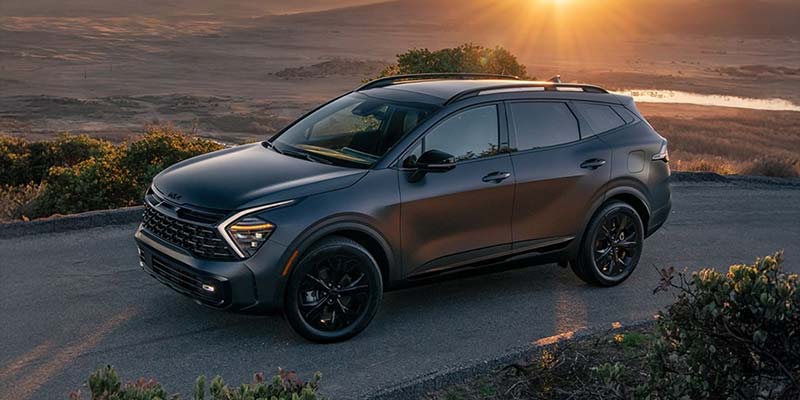
Navigating Auto Financing and Purchasing a Vehicle with Poor Credit

Securing reliable transportation is a vital step for working professionals and families. While navigating the auto loan process with less-than-perfect credit can feel challenging, understanding how subprime lending works helps buyers make informed decisions. Many lenders regularly work with borrowers in various credit tiers, focusing on stable income and overall financial stability rather than just a single score. more For residents living along the flat coastal plains of New Port Richey, having a dependable vehicle is essential for daily commutes and family activities near the Anclote River. Our team specializes in helping buyers find flexible financing paths that align with their household budgets. By focusing on practical vehicle choices and clear terms, we help drivers secure the transportation they need to maintain their active lifestyles. Starting the process is straightforward and can be done from the comfort of home. Shoppers can easily apply for financing online to establish their budget parameters before visiting the showroom. Once pre-qualified, buyers can explore our new-vehicle inventory to find highly efficient models that offer long-term value. To discuss available options or speak with a finance specialist, feel free to give us a quick call or plan a visit to our showroom on US Highway 19 to get started. Understanding Credit Tiers and Auto Loan Requirements Credit scoring models categorize borrowers into distinct tiers that directly influence the interest rates offered by lenders. In the automotive finance industry, a FICO score between 501 and 600 is generally classified as subprime credit, while scores from 300 to 500 fall into the deep subprime category. According to Experian data from the first quarter of 2023, the average interest rate for a new vehicle loan in the subprime tier was roughly 13%, whereas used vehicle loans in the same tier averaged around 19%. For deep subprime borrowers, average rates reached approximately 16% for new vehicles and 22% for used vehicles. Lenders evaluate several key factors beyond the three-digit credit score when reviewing an application. Verifiable monthly income—typically a minimum of $1,500 before taxes—is a standard industry benchmark required to prove repayment capability. Additionally, underwriters assess employment stability, debt-to-income ratios, and residential history to determine overall risk. Our finance team often sees buyers who worry that a past medical bill or a thin credit file will disqualify them entirely, but auto-specific scoring models weigh past car payments more heavily than a general credit card balance. This means a history of consistent, on-time vehicle payments can significantly improve approval odds, even if other areas of a credit report show past challenges. Strategic Down Payments and Smart Budgeting for Subprime Buyers Providing a substantial down payment is one of the most effective strategies for securing an auto loan with poor credit. Industry standards suggest aiming for a down payment of 10% to 20% of the vehicle's purchase price. This upfront contribution immediately lowers the loan-to-value ratio, which represents the total loan amount relative to the actual worth of the car. A lower ratio reduces the lender's financial exposure, often translating into more favorable approval odds and potentially lower interest rate offers. Beyond improving approval chances, a solid down payment directly reduces the total interest paid over the life of the loan. By borrowing less money, the interest charges accumulate on a smaller principal balance, saving the buyer thousands of dollars over time. This strategy also helps prevent a situation where the borrower owes more than the vehicle is worth, commonly referred to as being upside down on the loan. Selecting a reliable, budget-friendly pre-owned vehicle is another excellent way to minimize the required loan amount. Buyers can explore our used-vehicle inventory to find high-quality options that fit comfortably within a strict monthly budget. Opting for a vehicle with a lower overall purchase price keeps monthly payments manageable and allows borrowers to build a positive payment history without overextending their finances. Financing Solutions for Buyers with No Established Credit History Entering the automotive market without an established credit history presents unique challenges, as lenders have no historical data to assess repayment behavior. However, having no credit is fundamentally different from having a history of missed payments or defaults. Many lenders offer specialized first-time buyer programs designed specifically for individuals who are just starting to build their credit profiles. Securing a creditworthy co-signer is a highly effective method for overcoming a lack of credit history. A co-signer, such as a close friend or family member with strong credit, legally agrees to take responsibility for the loan payments if the primary borrower defaults. This arrangement significantly reduces the lender's risk, allowing the applicant to qualify for competitive interest rates and terms that would otherwise be unavailable. For commuters driving into downtown Tampa for work along the Selmon Expressway, establishing a reliable credit history through a manageable auto loan is a practical long-term investment. Making consistent, on-time monthly payments on a vehicle loan reports positive data to the major credit bureaus, steadily building a strong credit score. Over time, this positive payment history opens the door to prime financing rates on future purchases. Answers to Common Questions About Subprime Auto Loans Q: Is there a strict minimum credit score required to get approved for an auto loan? No universal minimum credit score guarantees or prevents approval for an auto loan. While prime rates typically require a score of 661 or higher, many subprime lenders specialize in working with buyers who have scores in the 500s or even no credit history at all. Q: How does a down payment affect the overall cost of a subprime auto loan? A larger down payment reduces the total amount of money borrowed, which lowers the interest charges that accumulate over the loan term. It also reduces the lender's risk, which can help secure a lower interest rate and more favorable terms. Q: What documentation is typically required for a subprime car loan application? Borrowers should prepare to provide recent pay stubs to verify a minimum monthly income of at least $1,500 before taxes. Additionally, lenders usually require proof of residence, such as a utility bill, and a valid driver's license. Q: Can I refinance an auto loan if my credit score improves after purchase? Yes, many borrowers successfully refinance their auto loans after maintaining 6 to 12 months of consistent, on-time payments. Refinancing can significantly lower the interest rate and reduce monthly payments as the borrower's credit profile improves. Begin Your Purchase Journey at Ken Ganley Kia New Port Richey Our finance specialists are dedicated to finding practical, budget-friendly solutions for every buyer, regardless of their credit history. As a leading volume dealership, we leverage our strong relationships with a vast network of lenders to secure competitive rates and terms. We are committed to helping you find a vehicle that meets your needs while offering the peace of mind of the industry-leading Kia 10-year/100,000-mile limited powertrain warranty on new models. To take the first step toward your next vehicle, we invite you to contact us today. You can reach our finance team by calling (888) 604-4352 to discuss your options, or you can plan a visit to our dealership located at 5819 US Highway 19 to explore our extensive inventory in person. Prices and MSRP referenced in this article are estimates for informational purposes only and do not constitute an offer to sell. See dealer for complete details. Fuel economy estimates shown may differ from official EPA ratings and should not be relied upon as a guarantee of actual vehicle performance.
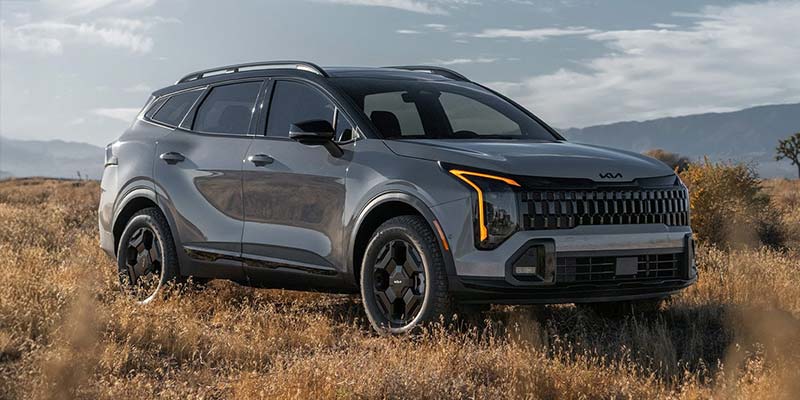
Dark matte gray Kia Sportage SUV parked on a winding road with brilliant sunset in the background.

2026 Kia Sportage Hybrid vs. Gas Model: Which Is Right for You?

The 2026 Kia Sportage Hybrid enters the market with a starting MSRP of $30,490 for the base LX trim, while the conventional gas-powered model begins slightly lower at $28,790. When evaluating the long-term financial impact, this price gap of roughly $1,700 is the primary figure most shoppers consider during their initial research. For those navigating the waterfront residential areas and commercial corridors of New Port Richey, the decision often hinges on how quickly that initial investment is recovered through reduced fuel expenses. more We often find that shoppers who visit our showroom for a test drive ask how many years it takes to break even on the hybrid fuel savings before they even sit in the driver's seat. Based on typical Florida driving patterns of 15,000 miles per year, the fuel savings provided by the hybrid system generally offset the higher purchase price within three to four years of ownership. This timeline makes the hybrid a compelling choice for drivers who plan to keep their vehicle through the duration of the 10-year/100,000-mile limited powertrain warranty. Beyond the pump, the hybrid model often retains a higher percentage of its value in the secondary market. As more buyers prioritize efficiency, the demand for pre-owned hybrid SUVs continues to grow, potentially offering a better return when it comes time to trade in. If you are ready to compare these models side-by-side, you can browse our new-vehicle inventory online or visit us at 5819 US, New Port Richey, FL 34652. For specific questions about current availability, feel free to call our team at (888) 604-4352. You can also find our showroom address easily to see the latest styling refresh in person. Analyzing the MPG Gap and Real-World Savings on Florida Highways How much can a local driver actually save by choosing the hybrid powertrain over the standard 2.5-liter engine? The 2026 Kia Sportage Hybrid in its LX front-wheel-drive configuration is EPA-rated at 41 city / 44 hwy, which is a significant jump over the gas model's estimate of 25 city / 33 hwy. For a professional commuting from the residential neighborhoods of Palm Harbor toward the business centers further south, these figures translate to roughly $750 to $900 in annual fuel savings at current gas prices. Fuel Economy EPA-estimated fuel economy ratings Feature LX S EX X-Line SX-Prestige City MPG 41 mpg 35 mpg 35 mpg 35 mpg 35 mpg Highway MPG 44 mpg 36 mpg 36 mpg 36 mpg 36 mpg Combined MPG 42 mpg 35 mpg 35 mpg 35 mpg 35 mpg Standard across all trims: Fuel Type Regular unleaded (87 or higher) gasoline Best combined fuel economy: LX at 42 mpg The efficiency gap is most noticeable in the stop-and-go traffic common on US-19. While a traditional internal combustion engine consumes fuel constantly during idling and slow crawls, the hybrid system utilizes its electric motor to handle low-speed maneuvers and maintain cabin climate without burning gasoline. This allows the hybrid to achieve its highest efficiency in the very conditions that typically penalize gas-only SUVs. Even with the available active all-wheel drive, the hybrid maintains a strong 35 city / 36 hwy rating. Over a five-year ownership period, these savings can total between $3,700 and $4,500, which significantly exceeds the initial price premium of the hybrid. For those who prefer a lower entry price or drive fewer miles annually, our selection of used vehicles often includes late-model gas versions that offer a different type of upfront value. However, for the high-mileage Florida commuter, the hybrid’s ability to travel over 500 miles on a single tank of regular 87-octane gasoline provides both financial relief and fewer interruptions at the station. Trim-by-Trim Feature Differences and Drivetrain Choices The 2026 Kia Sportage Hybrid delivers a combined system output of 232 hp and 271 lb-ft of torque, providing more standard power than the base gas engine's 187 hp. This performance is distributed across a revised trim structure for 2026, which now includes the LX, S, EX, X-Line, and SX-Prestige. While the LX is the only trim offered with front-wheel drive to maximize MPG, the rest of the lineup comes standard with active all-wheel drive and a dedicated Terrain Mode for snow, sand, and mud. Pricing MSRP and destination charges Feature LX S EX X-Line SX-Prestige Starting MSRP $30,490 $32,790 $33,790 $35,690 $40,590 Available across all trims: Destination Charge $1,495 Lowest starting MSRP: LX at $30,490 Engine & Performance Powertrain specifications across trim levels Feature LX S EX X-Line SX-Prestige Drivetrain FWD AWD AWD AWD AWD Standard across all trims: Feature Included Engine 1.6 Turbo Gasoline Direct Injection (GDI) engine (1,598 cc, inline 4-cylinder) Horsepower 232 hp (combined system) Torque 271 lb.-ft. (combined system) Transmission 6-speed Automatic transmission For 2026, the S and X-Line are new additions to the hybrid family. The S trim, starting at $32,790, focuses on feature-forward value by including heated front seats and Blind-Spot Detection Technology. The X-Line, priced at $35,690, caters to those seeking a more rugged aesthetic with gloss black exterior accents, a high-utility roof rack, and a Panoramic Sunroof with Power Sunshade. At the top of the range, the SX-Prestige at $40,590 adds premium touches like the Harman Kardon audio system and a 360-degree Surround View Monitor. Every hybrid trim now features a 12.3-inch infotainment touchscreen and wireless connectivity for smartphones as standard equipment. This higher baseline of technology means that even the entry-level LX at $30,490 feels modern and well-equipped. If you have identified the trim that fits your lifestyle, you can move closer to ownership by submitting a credit application through our secure online portal. This helps our finance team secure competitive rates before you arrive for your test drive. Inside the Cabin: Exclusive Technology and Cargo Versatility One of the first things families notice when stepping inside the 2026 Kia Sportage Hybrid is the modernized dashboard layout featuring the available Dual Panoramic Display. This setup combines two screens for a total of nearly 24 inches of digital real estate, providing a seamless interface for navigation and vehicle diagnostics. Unlike some competitors that reserve their best screens for top-tier trims, the Sportage Hybrid standardizes the large 12.3-inch infotainment touchscreen across the entire lineup, ensuring every buyer has access to the latest interface. Dimensions & Capacity Interior and exterior dimensions Feature LX S EX X-Line SX-Prestige Curb Weight Curb Weight, min 3,598 lbs; max 3,831 lbs Curb Weight, min 3,803 lbs; max 3,994 lbs Curb Weight, min 3,803 lbs; max 3,994 lbs Curb Weight, min 3,803 lbs; max 3,994 lbs Curb Weight, min 3,803 lbs; max 3,994 lbs Standard across all trims: Feature Included Cargo Volume Dual-level cargo floor: high (behind 2nd row) 34.5 cu. ft.; low (behind 2nd row) 39.5 cu. ft. Length 184.4 in. Width 73.4 in. Height 65.4 in. (without roof rails); 65.6 in. (with roof rails) Cargo versatility remains a strong point for this crossover, even with the inclusion of the hybrid battery pack. The vehicle offers about 40 cubic feet of storage space behind the second row when the dual-level cargo floor is in its lowest position. This is virtually identical to the gas-only model, as Kia engineers tucked the battery beneath the rear seats rather than intruding into the load floor. This design choice ensures that beach gear, groceries, or sports equipment fit just as easily in the hybrid as they do in the traditional model. The interior also benefits from a 2026 refresh that includes a redesigned two-spoke steering wheel and new accent trim finishes. Rear passengers enjoy about 41 inches of legroom, which is among the best in the compact SUV segment. Whether you are hauling gear for a weekend outing or carpooling with adults, the cabin remains airy and spacious. Standard Auto Emergency Braking with junction turning detection adds an extra layer of confidence, using sensors to monitor the road ahead while you focus on the drive. Driving Dynamics: How the Hybrid and Gas Transmissions Compare on the Road A common misconception among first-time hybrid shoppers is that the driving experience will feel disconnected or sluggish compared to a traditional gas engine. The 2026 Kia Sportage Hybrid addresses this by utilizing a 6-speed Automatic transmission rather than the Continuously Variable Transmission (CVT) found in many other hybrids. This traditional geared transmission provides a familiar sense of acceleration and shifting, avoiding the "rubber band" feel often associated with hybrid power delivery. The integration of the 1.6 Turbo Gasoline Direct Injection (GDI) engine with the electric motor results in a more responsive feel off the line. Because electric motors produce maximum torque instantly, the hybrid feels punchier in city traffic than the gas-only model, which relies on a naturally aspirated engine and an 8-speed automatic. The combined 271 lb-ft of torque ensures that merging onto the highway or passing slower traffic is handled with confidence. On the road, the transition between electric and gasoline power is nearly imperceptible. The hybrid system is designed to prioritize electric-only operation during steady-state cruising and light deceleration, which contributes to a quieter cabin environment. The braking system also feels natural; while it uses regenerative braking to recharge the battery, the pedal feel remains consistent and easy to modulate. For those who enjoy a more tailored experience, the Drive Mode Select system allows you to toggle between Eco, Sport, and a customizable MyDrive mode. Choosing Between the Sportage Hybrid and the Plug-In Hybrid for Short Commutes For a driver whose daily routine consists of short local trips, the choice between the standard hybrid and the Plug-In Hybrid (PHEV) becomes a matter of charging habits. The PHEV version of the Sportage offers an estimated 34 miles of all-electric range on a full charge. This means that if your round-trip commute is under 30 miles and you have access to a standard household outlet or a Level 2 charger, you could potentially complete your daily errands without using any gasoline at all. However, the PHEV requires a higher upfront investment and a commitment to plugging in the vehicle regularly to see those maximum efficiency gains. For those who do not have a convenient place to charge or frequently take longer trips across the state, the standard 2026 Kia Sportage Hybrid is often the more practical choice. It requires no lifestyle changes—you simply fill it with gas like a normal car—while still delivering over 40 MPG in many driving scenarios. The standard hybrid is also lighter than the PHEV, as it carries a smaller battery pack, which can lead to slightly more agile handling on winding roads. Both models offer the same class-leading interior space and safety features, including the Auto Emergency Braking system. If your primary goal is to maximize every drop of fuel during short trips, the PHEV is the efficiency leader, but for the widest range of utility and a lower entry price, the standard hybrid remains the sweet spot for most local families. Finding Your Perfect Sportage at Ken Ganley Kia New Port Richey Choosing the right SUV involves balancing upfront costs with long-term benefits, and our team is here to help you navigate that math. As the #1 volume Kia dealer in Tampa, we maintain a larger selection than most, ensuring you can compare the LX, EX, and SX-Prestige trims in one visit. We are proud to be a Presidents Club Award Winner, a distinction that reflects our commitment to a transparent and efficient buying process for every customer who walks through our doors. When you purchase a new Kia from us, you are backed by more than just a manufacturer warranty. We offer three years or 36,000 miles of oil changes to keep your new vehicle running at peak performance, and we stand behind our pricing with a commitment to offer competitive pricing. Furthermore, we believe in giving back to the community that supports us, which is why a portion of every vehicle sold is donated to Angel Tree. We invite you to experience the turbocharged power and refined interior of the new Sportage lineup today. You can get directions to our dealership or call us at (888) 604-4352 to schedule a time for a side-by-side comparison. Whether you choose the maximum efficiency of the hybrid or the traditional value of the gas model, we are dedicated to helping you find the perfect fit for your Florida lifestyle. Quick Answers Regarding the 2026 Sportage Hybrid Q: Does the 2026 Sportage Hybrid come with a spare tire? Most trims of the hybrid model utilize a tire mobility kit rather than a traditional spare tire to accommodate the battery pack and reduce overall vehicle weight. However, the new S trim for 2026 is specifically listed as including a compact spare tire, providing an extra layer of security for those who frequently travel away from main roads. Q: Is premium gasoline required to achieve the advertised horsepower? Both the 1.6-liter turbocharged hybrid engine and the standard 2.5-liter gas engine are engineered to run on regular 87-octane unleaded fuel. You do not need to pay for premium gasoline to reach the combined system output of 232 hp or to achieve the EPA-estimated fuel economy ratings. Q: What is the total estimated driving range on a full tank? Thanks to its high MPG ratings and a 14-gallon fuel tank, the 2026 Kia Sportage Hybrid can offer a total driving range of over 500 miles. This makes it an excellent choice for long-distance road trips, as it requires significantly fewer stops for refueling compared to the gas-only model or many competitors in the compact SUV segment. Q: How long does the battery in the hybrid model last? Kia provides an industry-leading 10-year/100,000-mile limited powertrain warranty that specifically includes the hybrid battery pack. This coverage is designed to give owners peace of mind regarding the long-term durability of the electrical components, ensuring that the vehicle remains a reliable asset well beyond the initial purchase period. Q: Can I use the 12.3-inch touchscreen with my smartphone wirelessly? Yes, wireless Apple CarPlay and Android Auto are now standard across the entire 2026 hybrid lineup. This allows you to access your favorite navigation, music, and messaging apps directly on the high-resolution screen without needing to plug in a physical cable, keeping the cabin clutter-free and modern. Prices and MSRP referenced in this article are estimates for informational purposes only and do not constitute an offer to sell. See dealer for complete details. Fuel economy estimates shown may differ from official EPA ratings and should not be relied upon as a guarantee of actual vehicle performance.

A gray Kia Sorento SUV with roof racks parked on dry brown grass in a field with mountains in the background.

Exploring Florida's Gulf Coast in the 2026 Kia Sportage

The drive from New Port Richey down to the coast requires a vehicle that handles stop-and-go traffic on US-19 as easily as it manages a crowded beach parking lot. For the 2026 model year, the Sportage receives a significant visual update that makes a statement before you even reach the sand. Our team has noted that the most striking change is the front-end redesign, which now features a stacked vertical headlight design and amber Star Map DRLs. These elements give the SUV a wider, more planted stance that looks modern and upscale against the backdrop of the Gulf. more Beyond the aesthetics, the 2026 Sportage is built to simplify the logistics of a day trip. Whether you are navigating the narrow streets near the pier or cruising south, the standard Smart Cruise Control with Stop & Go helps manage the pace of traffic without constant driver input. The exterior refresh also includes all-new alloy wheel designs ranging from 17 to 19 inches, depending on the trim you select. These updates ensure that while the Sportage remains a practical choice for Florida families, it does not sacrifice style. The redesign extends to the rear bumpers as well, creating a cohesive look that feels fresh for the new model year. It is a vehicle designed for those who want the utility of a crossover with the visual polish of a much more expensive SUV. Segment-Up Cargo Space and Smart Cabin Versatility for Beach Gear One of the first things families ask about when they visit us is how much gear they can actually fit inside. The 2026 Sportage answers this with what we call segment-up roominess, offering about 40 cubic feet of cargo space behind the second row. When you are loading up coolers, umbrellas, and chairs for a day in Port Richey near the Pithlachascotee River, that extra volume means you do not have to leave anything behind. If you need even more room for larger items like paddleboards, the rear seats fold down to create a total of roughly 74 cubic feet of space. Dimensions & Capacity Feature Standard across all trims Seating Capacity 5 Length 184.4 Width 73.4 Height 65.4 To make loading even easier, the Smart Power Liftgate becomes standard on the EX trim and higher. This feature is particularly useful when your hands are full of beach bags; the system detects your key and opens the hatch automatically. Inside the cabin, the layout is designed for maximum utility. You will find clever storage solutions for smaller items, and the rear legroom is generous enough to accommodate tall adults or bulky child seats without cramping the front-row passengers. For buyers who are looking for this level of versatility at a different price point, we also maintain a diverse selection of pre-owned models that offer similar interior dimensions. The wide cargo opening and low lift-over height are consistent strengths of this platform, making it one of the easiest SUVs in its class to load and unload. This focus on practical space is a major reason why the Sportage remains a top choice for active residents who spend their weekends outdoors. Turbocharged Hybrid Performance and Fuel Efficiency for Florida Highway Cruising The 2026 Sportage Hybrid offers a compelling blend of power and efficiency that is difficult to find in the traditional gas-only segment. Equipped with a 1.6L I4 turbocharged engine paired with an electric motor, the hybrid powertrain produces a combined 232 hp. This provides plenty of muscle for merging onto the Suncoast Parkway or passing slower traffic on the way to the beach. Unlike some hybrids that feel sluggish, the turbocharged setup ensures that acceleration is crisp and responsive from a dead stop. Engine & Performance Powertrain specifications across trim levels Feature LX LX Hybrid EX S Hybrid EX Hybrid SX X-Line Hybrid X-Line SX Prestige X-Pro Prestige SX Prestige Hybrid X-Line Prestige Engine 2.5L I4 1.6L I4 2.5L I4 1.6L I4 1.6L I4 2.5L I4 1.6L I4 2.5L I4 2.5L I4 2.5L I4 1.6L I4 1.6L I4 Drivetrain FWD FWD FWD 4WD 4WD FWD 4WD 4WD 4WD 4WD 4WD 4WD Standard across all trims: Transmission Automatic Fuel Economy EPA-estimated fuel economy ratings Feature LX LX Hybrid EX S Hybrid EX Hybrid SX X-Line Hybrid X-Line SX Prestige X-Pro Prestige SX Prestige Hybrid X-Line Prestige City MPG 25 mpg 42 mpg 25 mpg 35 mpg 38 mpg 25 mpg 35 mpg 24 mpg 24 mpg 23 mpg 38 mpg 88 mpg Highway MPG 33 mpg 44 mpg 33 mpg 36 mpg 38 mpg 33 mpg 36 mpg 30 mpg 30 mpg 30 mpg 38 mpg 79 mpg Combined MPG 29 mpg 43 mpg 29 mpg 36 mpg 38 mpg 29 mpg 36 mpg 27 mpg 27 mpg 27 mpg 38 mpg 84 mpg Fuel Type Unleaded Unleaded Unleaded Unleaded Unleaded Unleaded Unleaded Unleaded Unleaded Unleaded Unleaded Electric / Unleaded Best combined fuel economy: X-Line Prestige at 84 mpg Efficiency is where the hybrid models truly shine for long-distance Florida driving. The LX Hybrid with FWD is rated at an impressive 42 city / 44 hwy, allowing you to spend more time on the road and less time at the pump. Even if you opt for the EX Hybrid or SX Prestige Hybrid with 4WD, you still get 38 city / 38 hwy. This level of efficiency makes the Sportage an ideal road-trip companion, especially when you consider that it does not compromise on interior space or towing capability. The transition between gas and electric power is engineered to be nearly seamless, providing a quiet and refined cabin experience even at highway speeds. The hybrid system also assists with low-speed maneuvers, using electric torque to provide smooth, silent operation in parking lots or heavy traffic. For shoppers who prioritize both environmental impact and daily performance, this powertrain represents the current sweet spot in the lineup. Beating the Florida Heat with Advanced Cabin Comfort and the Panoramic Sunroof Florida summers demand a cabin that can cool down quickly and stay comfortable during long exposures to the sun. The 2026 Sportage addresses this with a standard 12.3-inch infotainment display screen that allows for easy control of the dual-zone automatic climate system. Higher trims offer ventilated front seats, which are an absolute necessity for those humid July afternoons. The interior materials are also chosen for durability and comfort, ensuring the seats stay cool even after the vehicle has been parked in the sun for several hours. The available panoramic sunroof completely changes the atmosphere of the cabin, letting in natural light and providing an open, airy feel for all five passengers. While some might worry about the heat, the power sunshade is effective at blocking out the midday sun when needed. Tech-wise, the 2026 model standardizes wireless Apple CarPlay and Android Auto, so you can pull up your favorite beach playlist or navigation without fumbling with cables as soon as you get in. For those who want the ultimate tech experience, the available curved display integrates the instrument cluster and the touchscreen into one continuous piece of glass. This setup, known as the Connected Car Navigation Cockpit, provides high-resolution graphics and an intuitive interface that reduces distraction. Combined with the available Harman Kardon audio system, the Sportage transforms a standard commute into a premium experience, keeping everyone entertained and comfortable regardless of the temperature outside. Coastal Traction and All-Weather Confidence with Active All-Wheel Drive While Florida is mostly flat, the frequent heavy rain and sandy coastal roads can present traction challenges. The 2026 Sportage AWD models now include a new Terrain Mode with specific settings for Snow, Mud, and Sand. This system optimizes the distribution of power between the front and rear wheels to ensure you have grip when the pavement ends or when a sudden afternoon downpour turns the road slick. It provides a level of confidence that front-wheel-drive rivals struggle to match in unpredictable conditions. The active all-wheel-drive system is designed to be proactive rather than reactive. It constantly monitors road conditions and driver input to distribute torque where it is needed most, often before wheel slip even occurs. This is particularly helpful when pulling a small trailer or boat; the Sportage has a maximum towing capacity of 2,500 pounds when properly equipped. Whether you are launching a jet ski or just navigating a flooded street, the mechanical grip of the AWD system is a valuable safety net. Safety is further bolstered by the standard suite of Advanced Driver Assistance Systems. For 2026, Kia has standardized Auto Emergency Braking with detection for pedestrians, cyclists, and junction turning. This means the car is looking out for you even in the busiest intersections. Combined with the Parking Distance Warning for both the front and rear, the Sportage is as easy to park in a tight coastal lot as it is to drive on the open highway. Comparing the Sportage to Compact SUV Rivals for Your Next Purchase When you compare the Sportage to other compact SUVs, the value proposition becomes clear through its industry-leading warranty and high standard feature count. Every new model comes with a 10-year/100,000-mile limited powertrain warranty and a 5-year/60,000-mile limited basic warranty. This long-term protection is a major advantage over competitors that often stop coverage much earlier. Additionally, the 2026 Sportage was recognized as an IIHS Top Safety Pick+, which is the highest honor awarded by the Insurance Institute for Highway Safety. Pricing MSRP and destination charges (source: MarketCheck VIN Decode (consensus)) Feature LX LX Hybrid EX S Hybrid EX Hybrid SX X-Line Hybrid X-Line SX Prestige X-Pro Prestige SX Prestige Hybrid X-Line Prestige Starting MSRP $31,640 $32,310 $33,517 $34,660 $36,368 $36,380 $37,652 $38,687 $38,985 $41,980 $42,724 $49,355 Lowest starting MSRP: LX at $31,640 The pricing for the 2026 lineup remains competitive, with the LX starting at $31,640 and the top-tier SX Prestige Hybrid reaching $49,355. This wide range allows you to choose the exact level of luxury and efficiency that fits your budget. If you are ready to explore our new Sportage inventory, we invite you to visit us and take a test drive. Our team can help you navigate the different trims and even assist you with an online credit application to save time at the dealership. For the best experience, we recommend stopping by our showroom in New Port Richey to see the new Star Map lighting and interior tech for yourself. You can also give us a quick call to schedule a specific time for a walk-around. Whether you are looking for the fuel-sipping hybrid or the rugged X-Line, we are here to ensure you find the perfect SUV for your Florida lifestyle. Quick Answers About the 2026 Sportage Q: Can the 2026 Kia Sportage tow a small boat or jet ski to the coast? A: Yes, when equipped with trailer brakes, the 2026 Sportage has a maximum towing capacity of 2,500 pounds. This is sufficient for many small watercraft, utility trailers, or lightweight campers often used for weekend trips. Q: Which trims of the 2026 Sportage include the new Terrain Mode? A: The Terrain Mode system, which includes dedicated settings for Sand, Mud, and Snow, is standard on all 2026 Sportage models equipped with all-wheel drive. This includes the gas-powered X-Line and X-Pro models, as well as the AWD Hybrid variants. Q: Does the 2026 Sportage support using a smartphone as a vehicle key? A: The 2026 Sportage offers available Digital Key 2.0 capability. This technology uses ultra-wideband sensors to allow you to lock, unlock, and start your vehicle using a compatible smartphone or smartwatch without needing to take a physical key out of your pocket. Q: What are the specific terms of the Kia roadside assistance plan? A: Every new 2026 Sportage includes a 5-year/60,000-mile roadside assistance plan. This manufacturer-backed service provides peace of mind for unexpected situations on the road and is supported by authorized Kia service centers. You can reach Kia Roadside Assistance: 800-333-4542 for 24/7 support. Q: Is the 2026 Sportage Hybrid available with front-wheel drive for maximum MPG? A: For the 2026 model year, the LX Hybrid is available in a front-wheel-drive configuration, which provides the highest fuel economy in the lineup at 42 city / 44 hwy. All other hybrid trims, such as the EX Hybrid and SX Prestige Hybrid, come standard with all-wheel drive. Prices and MSRP referenced in this article are estimates for informational purposes only and do not constitute an offer to sell. See dealer for complete details. Fuel economy estimates shown may differ from official EPA ratings and should not be relied upon as a guarantee of actual vehicle performance.

Contact Us

Fill out this form below and we'll contact you shortly
*Required Fields