

Today: 9:00AM - 8:00PM
Blog

Which Kia SUV Is Best for Growing Families in Palm Harbor?

Selecting the right vehicle comes down to matching daily routine requirements with cabin capacity. Larger families frequently hauling kids, sports equipment, and groceries need dedicated legroom in every row, making full-size cabin dimensions a priority. Midsize alternatives offer easier parking in tight spots while maintaining the ability to fold down seats for sudden cargo demands.

For expanding households evaluating seating and cargo needs, the three-row 2027 Kia Telluride is the top recommendation for maximum passenger room and overall utility. Families needing flexible, occasional third-row seating in a slightly smaller footprint will find the 2026 Kia Sorento ideal, while five-passenger households focused on maneuverability and high fuel efficiency should consider the two-row 2026 Kia Sportage.

Our team at Ken Ganley Kia New Port Richey helps local buyers compare these cabin layouts side by side. Whether you want to test out child seat installation or practice folding third-row seats, dropping by our New Port Richey showroom address allows you to evaluate each model in person. You can also give our team a quick call to check current vehicle availability before stopping in.

What Makes the 2027 Kia Telluride the Best Choice for Larger Families in Palm Harbor?

With seating for up to eight and a spacious interior, the 2027 Kia Telluride is engineered to accommodate larger families comfortably in Palm Harbor. With 21 cubic feet of cargo volume behind the third row and up to 87 cubic feet when rear rows are folded flat, it handles demanding family routines with ease.

Powering the SUV is a robust 3.8L V6 engine producing 291 hp and 262 lb-ft of torque, providing smooth acceleration for highway merging and passing. Families planning weekend trips with small boats or recreational trailers benefit from a maximum towing capacity of up to 5,000 lbs when properly equipped. Available all-wheel drive adds traction control during heavy summer downpours.

Inside, thoughtful cabin engineering keeps passengers comfortable across long drives. Tri-zone automatic climate control allows independent temperature settings for the driver, front passenger, and rear cabin. Families testing the Telluride often ask if three child safety seats can fit across the second-row bench seat before looking at trim upgrades, and the wide row design easily accommodates proper car seat placement.

The trim lineup spans from the well-equipped LX and S trims up to the refined EX, SX, and SX Prestige, alongside rugged X-Line and X-Pro variants for added ground clearance. Active driver-assist features come standard, including forward collision-avoidance assist, blind-spot collision-avoidance assist, and rear cross-traffic collision-avoidance assist.

For households seeking added value, exploring our pre-owned vehicle inventory offers access to late-model three-row SUVs featuring these same core safety and convenience technologies. Whether packing cooler chests for weekend picnics at Wall Springs Park or managing daily school pickup lines, the Telluride provides the interior volume and stability growing households require.

Which Kia Three-Row SUV Should You Choose: Telluride vs. Sorento?

Choose the Kia Telluride if your family regularly carries adult passengers or older teenagers in the rear and requires maximum cargo space behind the seats; choose the Kia Sorento if you want an agile midsize SUV with optional third-row seating for younger children at a lower starting price point.

The Sorento provides seating for up to seven passengers, making it a versatile middle ground between compact crossovers and full-size three-row haulers. Under the hood, the standard 2026 Kia Sorento features a 2.5L four-cylinder engine paired with a Sportmatic transmission, achieving an EPA-estimated 20 city / 29 hwy mpg in front-wheel drive configurations. It delivers 12 cubic feet of cargo space behind its third row and a towing capacity of 3,500 lbs.

While the Telluride excels in third-row legroom and shoulder room for full-capacity road trips, the Sorento offers easier maneuverability in tight parking lots and lower fuel consumption during suburban commuting. Families with toddlers or younger elementary-aged children often find the Sorento's cabin layout ideal for their current stage of life, keeping a fold-flat third row ready for playdate carpools or extra luggage space when needed.

How Does the Kia Telluride Compare to the Hyundai Palisade, Honda Pilot, and Toyota Highlander?

The 2027 Kia Telluride compares favorably against three-row rivals like the Hyundai Palisade, Honda Pilot, and Toyota Highlander by delivering higher standard horsepower than the Highlander, more third-row legroom than the Pilot, and superior long-term warranty protection across the board.

Comparing performance and capacity specs highlights key differences in this competitive segment:

  • Engine Output: The Telluride's standard 3.8L V6 generates 291 hp, topping the Toyota Highlander's 265 hp turbocharged four-cylinder.
  • Rear Cargo Space: Behind the third row, the Telluride provides 21 cubic feet of storage, beating the Highlander's 16 cubic feet and matching the Palisade.
  • Powertrain Protection: Every new Telluride is backed by Kia's 10-year/100,000-mile warranty program for limited powertrain coverage, outlasting the 5-year/60,000-mile powertrain warranties provided standard on the Honda Pilot and Toyota Highlander.

Inside the cabin, the Telluride emphasizes user-friendly technology, featuring an available dual 12.3-inch panoramic display system with integrated navigation, Apple CarPlay, and Android Auto. Safety tech remains a core strength, as standard lane keeping assist, lane following assist, and safe exit assist provide continuous monitoring during highway travel. For buyers prioritizing cabin space, long-term ownership security, and standard features, the Telluride remains a standout benchmark in the midsize three-row class.

Which Kia SUV Powertrain Offers the Best Family Value and Fuel Savings?

For families seeking to reduce daily fuel expenses, the Kia Sorento Hybrid powertrain offers the highest overall value, combining three-row versatility with an EPA-estimated 35 city / 36 hwy mpg in all-wheel drive configurations.

Choosing a hybrid or plug-in hybrid model allows buyers to balance family utility with lower fuel consumption. The Sorento Hybrid pairs a 1.6L turbocharged engine with an electric motor to output a combined 227 hp and 258 lb-ft of torque, delivering immediate low-end pull for city driving while maintaining efficiency on long highway stretches.

Every new Kia SUV purchase includes comprehensive coverage designed to shield owners against unforeseen service bills:

  • 10-year/100,000-mile limited powertrain warranty
  • 5-year/60,000-mile limited basic warranty
  • 5-year/100,000-mile limited anti-perforation warranty
  • 5-year/60,000-mile roadside assistance plan

In the event of a flat tire or unexpected roadside issue, owners receive dedicated protection through Kia Roadside Assistance: 1-800-333-4542, offering 24/7 towing, battery jump-starts, and emergency assistance backed by factory-trained support. Combined with lower stops at the pump, this long-term protection keeps ownership costs predictable for budget-conscious households.

What Is the Best Kia SUV for Smaller Families Who Do Not Need a Third Row?

The 2026 Kia Sportage is the premier recommendation for smaller families, providing class-leading rear legroom, 39 cubic feet of rear cargo capacity behind the second row, and a driver-friendly footprint.

Designed for five passengers, the Sportage features a spacious back seat that easily accommodates rear-facing car seats without crowding front passengers. Power comes from a standard 2.5L engine, while the Sportage Hybrid variant pairs a 1.6L turbo engine with electric power to achieve up to 35 city / 36 hwy mpg with all-wheel drive.

Standard active safety features include automatic emergency braking, lane keeping assist, and driver attention warning. For parents running daily errands along US-19 or spending weekend afternoons at Robert K. Rees Memorial Park, the Sportage combines cargo versatility and easy parking into an affordable, high-value package.

Frequently Asked Questions About Choosing a Kia Family SUV

Q: How comfortable is third-row seating in the Kia Telluride for older kids and adults? The 2027 Kia Telluride features 31 inches of third-row legroom and generous headroom, making its rear seats comfortable for older children, teenagers, and average-sized adults on extended trips. Reclining rear seatbacks and standard USB-C charging ports in all three rows enhance passenger comfort.

Q: Can three car seats fit across the second row in a Kia SUV? Yes, three child safety seats can fit across the second-row bench seat in the Kia Telluride when using slim car seat models. The second row features complete lower LATCH anchors and top tether anchors across all three seating positions for secure installation.

Q: What warranty coverage comes standard on a new Kia SUV? New Kia family SUVs come backed by Kia's 10-year/100,000-mile warranty program. This includes a 10-year/100,000-mile limited powertrain warranty, a 5-year/60,000-mile limited basic warranty, a 5-year/100,000-mile anti-perforation warranty, and a 5-year/60,000-mile roadside assistance plan.

Q: How does financing or pre-qualification work for a new family SUV? Buyers can start their purchase process online by filling out our secure online financing application. Getting pre-qualified helps you establish a clear budget, review competitive interest rates, and streamline your time spent at the dealership.

Q: Which Kia SUV offers the most cargo space behind the rear seats? The Kia Telluride provides the most cargo space in the Kia lineup, offering 21 cubic feet behind the third row and up to 87 cubic feet with all rear seats folded flat. You can browse available models today in our new Kia inventory.

Prices and MSRP referenced in this article are estimates for informational purposes only and do not constitute an offer to sell. See dealer for complete details. Fuel economy estimates shown may differ from official EPA ratings and should not be relied upon as a guarantee of actual vehicle performance.

Recommended Posts

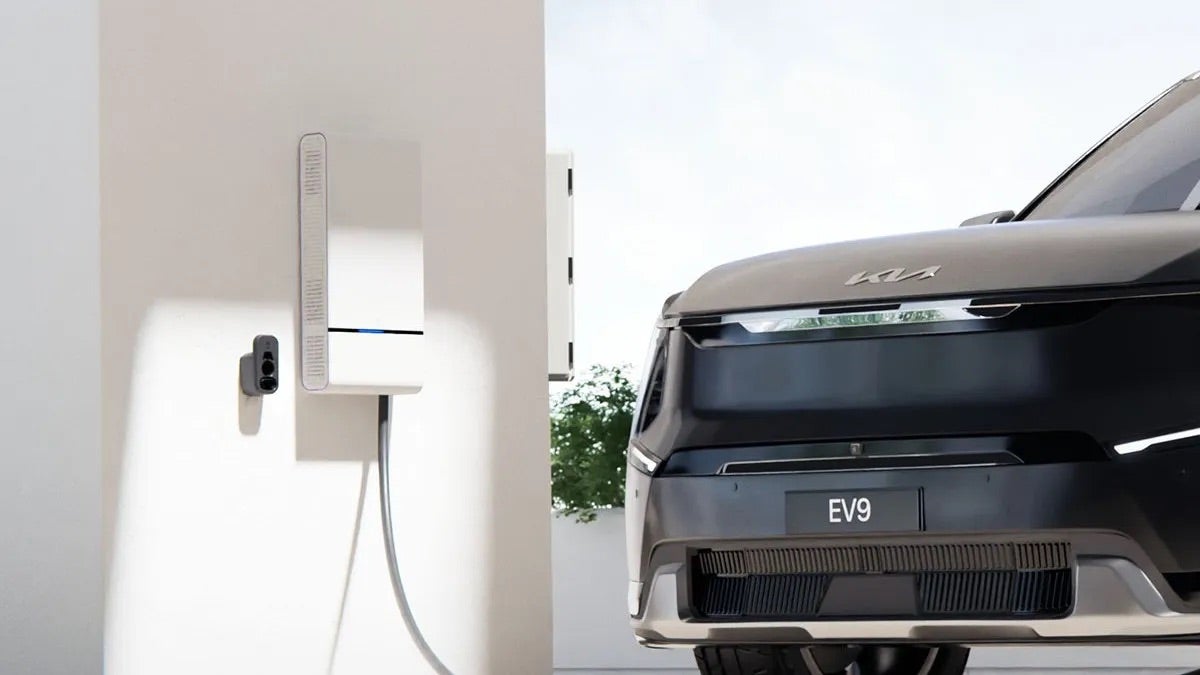
How to Charge Your Kia EV at Home: Tips & Best Practices

How to Charge Your Kia EV at Home: Tips & Best Practices

The best home charging setup for a Kia EV is a dedicated 240-volt Level 2 charging station installed on a 40-amp or 50-amp circuit. Connected through a hardwired terminal or a NEMA 14-50 outlet, Level 2 delivers up to 35 miles of range per hour, enabling complete overnight replenishments for long-range electric models. First-time electric vehicle shoppers at our showroom often ask whether a standard wall outlet is sufficient for daily driving before deciding if they need a 240-volt home installation. While every electric Kia is designed for versatile plug-in capability, equipping your garage with a dedicated Level 2 charger provides the ideal blend of speed, convenience, and daily peace of mind. Models such as the 2026 Kia EV6 come equipped with a standard dual-voltage charging cable that connects to both 120-volt and 240-volt power sources, allowing new owners to charge immediately while deciding on permanent equipment. Kia also offers official Level 2 home charging hardware available with either J1772 or NACS connectors, backed by a 3-year limited warranty. Installing a dedicated home station ensures your vehicle is always ready for the day ahead without relying on public infrastructure. If you want to view electric models in person or explore home charging accessories, stop by our showroom on US Highway 19 or give our team a quick call to learn more. What Is the Difference Between Level 1 and Level 2 Home Charging for a Kia EV? Level 1 home charging uses a standard 120-volt household AC outlet to add 3 to 5 miles of range per hour, whereas Level 2 charging utilizes 240-volt power to restore 25 to 35 miles of range per hour. Understanding the technical differences between these two power delivery methods helps buyers choose the right setup for their daily driving habits. Level 1 relies on the portable charging cable included with the vehicle, plugging directly into any grounded three-prong wall socket. Because standard household outlets supply continuous current at roughly 1.4 kW, power recovery is gradual. This trickle approach works fine when a vehicle sits parked for 12 or more hours, but it requires patience when recharging larger battery packs from a low state of charge. Level 2 charging elevates power delivery by tapping into a dedicated 240-volt circuit—similar to the heavy-duty outlets used by clothes dryers or electric ranges. Supplying between 7.6 kW and 11.5 kW of continuous power, a Level 2 station drastically reduces total charge time. Owners can set custom charging schedules directly through the vehicle's infotainment system or the Kia Access app to take advantage of lower off-peak electricity rates overnight. Choosing between charger types often comes down to daily mileage expectations; shoppers browsing our new Kia EV inventory can evaluate their driving routine with our team to determine whether a Level 1 cable fits their lifestyle or if a Level 2 station is worth the upgrade. Why Would a Kia EV Owner Rely Solely on Level 1 Charging or Upgrade to Level 2? A Kia EV owner relies solely on Level 1 charging because it requires no upfront electrical installation costs and easily recovers 30 to 40 miles of range during an overnight plug-in session. Upgrading to Level 2 becomes necessary when daily driving distances exceed 40 miles or when charging larger electric vehicles. For drivers with predictable routines, low daily mileage, or short trips like suburban driving around New Port Richey, Level 1 trickle charging provides all the energy needed without spending extra on electrical upgrades. Plugging into a standard 120-volt outlet for 10 to 12 hours overnight replenishes roughly 35 to 50 miles of driving range. If your commute is brief, the standard wall outlet handles your energy requirements effortlessly. However, daily range recovery demands change significantly with larger vehicles or longer travel schedules. Fully charging a three-row electric SUV like the Kia EV9 from near empty using a 120-volt outlet can take 60 to 70 hours due to its high-capacity battery pack. In those scenarios, upgrading to a 240-volt Level 2 charger transforms the ownership experience by fully restoring range in approximately 7 to 9 hours. Whether you are considering a brand-new crossover or exploring a selection of pre-owned electric vehicles, evaluating your daily mileage helps pinpoint the exact charging hardware you need. Is Level 2 Home Charging More Energy Efficient Than Level 1 Charging? Charging efficiency varies notably: Level 2 chargers typically convert 85% to 90% of power into battery charge, while Level 1 chargers convert only 75% to 80%. The efficiency advantage of Level 2 stems from reducing the operating duration of the vehicle's onboard electronics. When an electric vehicle is plugged in, its internal computer systems, cooling pumps, and battery thermal management controls remain active to monitor voltage and cell temperatures. During a Level 1 session, these auxiliary systems must draw power over a 30-to-50-hour window, consuming a larger proportion of total electricity just to keep the vehicle awake. Because Level 2 delivers power up to six times faster, the vehicle completes its charge cycle in a fraction of the time, allowing cooling systems and onboard computers to enter sleep mode much sooner. In warm climates where sustained summer heat forces active thermal conditioning during charging, Level 2 minimizes heat buildup and energy loss. Investing in home charging equipment is a seamless process, and buyers can complete an online credit application to include home charger accessory costs directly into their purchase financing. What Is the Best Daily Home-Charging Routine for a Kia EV? The best daily home-charging routine for a Kia EV is setting the maximum charge limit to 80% for routine driving and plugging in overnight during off-peak utility hours. Maintaining a target charge level of 80% preserves lithium-ion battery chemistry by preventing the high voltage stress that occurs when cells remain fully saturated. Reserving a 100% state of charge for occasional long-distance travel—such as commuters traveling from Trinity along the Suncoast Parkway for trips toward Tampa—strikes the perfect balance between daily battery health and maximum highway range. Establishing a consistent plug-in habit also allows owners to utilize grid pre-conditioning features. By scheduling departure times through the vehicle settings, the electric powertrain uses grid electricity rather than battery reserve to heat or cool the cabin before you set off. This practice optimizes driving efficiency and preserves maximum battery range for your drive. Every new electric Kia is backed by Kia’s 10-year/100,000-mile warranty, giving owners long-term confidence in their vehicle's powertrain and high-voltage battery system. Is It Safe to Leave a Kia EV Plugged In Overnight After Reaching the Charge Limit? It is completely safe to leave a Kia EV plugged in overnight because the vehicle's internal Battery Management System automatically terminates power intake once the designated charge limit is reached. Modern electric vehicles feature sophisticated onboard charge controllers that actively monitor cell voltage, current intake, and internal temperatures. Once the battery reaches your chosen threshold—whether set to 80% for daily driving or 100% for a weekend highway trip—the vehicle signals the charging station to stop supplying power. The charger then sits in a passive standby mode, drawing virtually no electricity until a scheduled climate pre-conditioning event occurs or the plug is disconnected. Leaving the vehicle connected overnight actually benefits overall battery health. While plugged in, the control system can perform passive cell balancing and utilize external grid power to run thermal management systems during extreme ambient temperatures. Combined with active safety technologies like lane assist and blind spot detection that protect you on the road, Kia’s high-voltage engineering ensures your vehicle remains protected while parked in your driveway. Common Questions About Kia EV Home Charging and Battery Health Q: How often should a Kia EV battery be charged to 100 percent? A Kia EV battery should be charged to 100% roughly once a month or immediately prior to heading out on an extended road trip. Routine monthly 100% charges help the Battery Management System calibrate individual cell voltages across the pack, ensuring accurate range estimates on your driver display. For daily driving, keeping the target limit at 80% is recommended to maximize long-term battery health and minimize chemical degradation. Q: Why does Kia EV home charging slow down after reaching 80 percent charge? Home charging speed slows down past 80% because the vehicle's onboard computer automatically tapers the incoming electrical current to protect internal cell chemistry. As lithium-ion cells approach full capacity, internal resistance increases and generates heat. Reducing charging power past 80% prevents thermal stress, prevents lithium plating on the battery anode, and extends the overall service life of the high-voltage battery pack. Q: Can you charge a Kia EV using a standard 120V household wall outlet? Yes, you can charge any Kia EV using a standard 120-volt household wall outlet via Level 1 charging. Using the portable dual-voltage charging cable supplied with models like the 2026 Kia EV6, the vehicle draws power from a standard grounded outlet to add 3 to 5 miles of range per hour. This method is ideal for drivers with shorter daily commutes who can leave their car plugged in overnight. Q: What safety features protect the EV battery while charging during hot Florida summers? Kia electric vehicles feature active liquid cooling systems that monitor battery cell temperatures continuously during charging sessions. If ambient temperatures rise or charging causes internal heat buildup, the thermal management system circulates coolant and operates active cooling fans to keep the battery within its optimal operating window. Charging in a shaded garage or during cooler overnight hours further enhances thermal efficiency during summer months. Q: Does charging overnight on Level 1 affect battery warranty coverage? No, charging overnight on Level 1 power has zero negative impact on your warranty coverage. Every new electric vehicle is covered by Kia’s 10-year/100,000-mile warranty program, which includes the high-voltage battery pack against major capacity loss and manufacturing defects regardless of whether you primarily charge via Level 1 or Level 2 AC power. To learn more about electric vehicle ownership, test-drive a new model, or discuss home charging accessories, visit our New Port Richey dealership location or call our specialists at (727) 242-9613 today. Prices and MSRP referenced in this article are estimates for informational purposes only and do not constitute an offer to sell. See dealer for complete details. Fuel economy estimates shown may differ from official EPA ratings and should not be relied upon as a guarantee of actual vehicle performance.

Driving from New Port Richey to Disney World: Which Kia SUV Is Best?

Driving from New Port Richey to Disney World: Which Kia SUV Is Best?

The 2027 Kia Telluride is the best overall Kia SUV for family road trips to Disney World, offering standard three-row seating for up to eight passengers, 22 cubic feet of rear cargo capacity, and up to 5,000 lbs of maximum towing capacity. Families prioritizing fuel efficiency can select the 2027 Kia Telluride Hybrid EX FWD, which achieves an EPA-estimated 34 mpg city / 36 mpg highway and up to 637 miles of total driving range on a single tank. When packing bags, strollers, and cooler bags for an Orlando vacation, cabin space and seating versatility determine how comfortable the journey will be. The 2027 Kia Telluride provides 22 cubic feet of storage behind the third row, expanding to 48 cubic feet when the back row is folded flat. For larger families, standard second-row bench seating accommodates eight people, while higher trims feature second-row captain's chairs that slide forward at the touch of a button. For families starting their road trip in New Port Richey, having a spacious three-row crossover ensures everyone stays comfortable along coastal highways and interstate corridors. The 2027 Kia Sorento offers a slightly more compact three-row alternative with seating for up to seven passengers and 13 cubic feet of cargo space behind the third row. Meanwhile, the 2027 Kia Sportage provides a two-row option with seating for five and 40 cubic feet of rear storage space, making it a great option for smaller households. Our team at Ken Ganley Kia New Port Richey helps local buyers compare interior dimensions, seat configurations, and technology options side by side. Families comparing three-row crossovers on our lot usually ask to try the second-row seat slide mechanism with a child seat installed before discussing pricing options. You can stop by our New Port Richey showroom address to tour the lineup or give our sales team a quick call to learn more about current vehicle availability. How Far Is the Drive from New Port Richey to Disney World and What Is the Best Route? The drive from Florida's Gulf Coast to Walt Disney World in Orlando covers approximately 95 to 105 miles and takes between 1 hour 45 minutes and 2 hours under normal traffic conditions. The most direct route follows State Road 54 East to Interstate 75 South, merging onto Interstate 4 East toward Orlando before taking Exit 64 onto World Drive directly into the theme park resort area. Depending on your starting neighborhood and real-time traffic updates, alternative routes offer smoother travel during peak rush hours. Drivers can travel east on State Road 52 to connect with Interstate 75, or utilize State Road 589 (Suncoast Parkway) to bypass local surface street congestion. Near Orlando, taking the Western Beltway (State Road 429) provides a less congested approach to the western entrances of the Walt Disney World property. Both the Suncoast Parkway and State Road 429 use electronic toll collection systems compatible with SunPass and Toll-by-Plate. Morning commuter traffic on Interstate 4 East typically peaks between 7:00 AM and 9:30 AM, while Friday afternoon travel into Orlando brings heavier congestion near major tourist exits. Planning departure times around these window periods helps ensure a steady, stress-free drive. Selecting a vehicle equipped with comfortable seating, dynamic cruise controls, and multi-zone climate settings makes long highway stretches much more enjoyable for every passenger. Shoppers can explore our selection of new Kia vehicles to find the latest crossover models, or browse our pre-owned SUV inventory for high-value family hauler options ready for the highway. Which Kia SUV Delivers the Best Fuel Economy and Range for Commutes? The 2027 Kia Telluride Hybrid EX FWD leads the three-row crossover class in highway efficiency, achieving an EPA-estimated 34 mpg city / 36 mpg highway / 35 mpg combined and an estimated driving range of up to 637 miles. For all-wheel-drive efficiency, the 2027 Kia Telluride Hybrid AWD delivers an EPA-estimated 30 mpg city / 32 mpg highway / 31 mpg combined, making it an ideal choice for drivers wanting all-weather traction without sacrificing range. Among non-hybrid two-row models, the 2027 Kia Sportage FWD delivers an EPA-estimated 25 mpg city / 33 mpg highway, providing up to 462 miles of highway range from its 17.2-gallon fuel tank capacity. Choosing the Sportage AWD configuration lowers highway efficiency slightly to an EPA-estimated 24 mpg city / 30 mpg highway, resulting in a estimated highway range of roughly 420 miles. For commuters driving from Trinity onto the Suncoast Parkway or heading east toward Orlando, hybrid efficiency eliminates the need for frequent fuel stops during busy travel weeks. Lower fuel consumption combined with long driving range reduces long-term ownership costs for active households. Our finance specialists can help you compare efficiency figures against vehicle purchase terms to find a model that fits your monthly budget. Buyers can submit an online credit application to review competitive loan options before visiting our dealership. What Driver-Assist Safety Features and Disney EV Charging Stations Are Available? Kia SUVs come standard with Kia Drive Wise driver-assist technology is designed to help reduce driver fatigue on long highway routes like Interstate 4. Standard systems include Blind-Spot Collision-Avoidance Assist, Lane Following Assist, and Rear Cross-Traffic Collision-Avoidance Assist. Upgrading to advanced trim levels adds Highway Driving Assist 2, which combines adaptive cruise control with automated lane-changing capabilities and steering wheel hands-on detection. Inside the cabin, driver and passenger comfort is enhanced by multi-zone automatic climate control, standard Apple CarPlay and Android Auto integration, and multiple device charging stations. The 2027 Kia Telluride equips up to seven USB-C charging ports—three in the front row, two in the second row, and two in the third row—along with dual front wireless charging pads on higher trim levels to keep smartphones powered during the entire trip. Families traveling to Central Florida in electric or plug-in hybrid vehicles will find convenient charging infrastructure throughout the Walt Disney World resort. Disney provides ChargePoint Level 2 EV charging stations at all four major theme park parking lots: Magic Kingdom Park (Medical Parking Lot) EPCOT (Journey Parking Lot) Disney's Hollywood Studios (Heel Parking Lot) Disney's Animal Kingdom Theme Park (Peacock Parking Lot) Additional ChargePoint charging stations are located at Disney Springs garages and select Disney Resort hotels, allowing EV drivers to recharge their vehicle batteries while enjoying the parks or resting overnight. Common Questions About Driving a Kia SUV to Disney World Q: How many USB ports are available for device charging in the Kia Telluride? Equipped with up to seven USB charging ports, the 2027 Kia Telluride ensures every passenger stays connected during the drive. Front passengers receive three USB ports, second-row occupants have access to two ports integrated into the front seatbacks, and third-row passengers receive two dedicated side-panel ports. Upper trims also feature dual rubberized wireless charging pads in the center console. Q: Does Kia’s 10-year/100,000-mile warranty cover roadside emergencies on road trips? Yes, Kia’s 10-year/100,000-mile warranty program includes a 5-year/60,000-mile roadside assistance plan that provides 24/7 emergency support anywhere in the United States. If you experience a flat tire, dead battery, or mechanical breakdown on the way to Orlando, you can access manufacturer-backed service by calling Kia Roadside Assistance: 1-800-333-4542 for towing to the nearest authorized dealership. Q: How much cargo space remains in the Kia Telluride when all seats are occupied? The 2027 Kia Telluride provides 22 cubic feet of cargo room behind the third-row seats, which easily holds several carry-on suitcases or a double stroller. Folding the third-row seatbacks increases storage volume to 48 cubic feet, while folding both rear rows opens up a maximum cargo capacity of 89 cubic feet. Q: Do I need a SunPass transponder when driving on Central Florida toll roads? Central Florida toll highways, including the Suncoast Parkway (SR-589) and Western Beltway (SR-429), use all-electronic toll collection systems. While Toll-by-Plate billing automatically invoices vehicle owners by mail using license plate images, using a SunPass or compatible transponder grants access to discounted toll rates and prevents delayed billing statements after your trip. Q: What documents should I bring to apply for auto financing at the dealership? When visiting our finance department to purchase a new or pre-owned Kia SUV, bring a valid driver's license, your most recent proof of income (such as pay stubs), proof of residency (a current utility bill), and your auto insurance card. Bringing complete documentation helps our underwriters process your application quickly and secure competitive financing terms. Start Your Disney Road Trip Journey at Ken Ganley Kia New Port Richey Finding the right SUV for your family road trip comes down to balancing passenger seating, cargo capacity, and long-distance fuel efficiency. Whether you need the three-row versatility of the 2027 Kia Telluride, the flexible efficiency of the 2027 Kia Sorento, or the two-row agility of the 2027 Kia Sportage, our lineup offers proven options for Florida drivers. As the #1 Volume Kia dealer in Tampa, Ken Ganley Kia New Port Richey maintains a wide inventory selection, giving you more trim levels, exterior colors, and package options to choose from. Every new Kia comes backed by Kia's 10-year/100,000-mile warranty powertrain protection, giving you long-term confidence on every vacation and daily drive. To test drive your preferred crossover model or discuss current purchase incentives, stop by our New Port Richey dealership location or call our sales department today to schedule your visit. Prices and MSRP referenced in this article are estimates for informational purposes only and do not constitute an offer to sell. See dealer for complete details. Fuel economy estimates shown may differ from official EPA ratings and should not be relied upon as a guarantee of actual vehicle performance.

Can You Get Approved for a Car Loan Without a Cosigner

Can You Get Approved for a Car Loan Without a Cosigner?

Qualifying for a car loan without a cosigner requires meeting an auto lender's independent standards for creditworthiness, debt-to-income ratio, employment stability, and down payment contribution. Auto lenders evaluate a solo application by analyzing credit payment history, gross monthly income, existing debt obligations, and the loan-to-value ratio of the vehicle. Demonstrating consistent income alongside a reasonable loan request proves borrowing capacity without requiring a second party to guarantee the debt. When applying for financing individually, lenders review your personal financial standing rather than leaning on a secondary applicant's credit record. Shoppers frequently ask whether solo approval requires exceptional credit or if verified income can bridge the gap. In practice, lenders balance multiple risk factors. Weakness in one area, such as a thin credit history, can often be counterbalanced by strong income verification, years at the same employer, or cash equity brought to the purchase. Preparing your application before selecting a vehicle builds momentum. Lenders examine your debt-to-income (DTI) ratio, which calculates the percentage of your gross monthly income committed to recurring debts like housing, credit cards, and student loans. Keeping your total debt obligations—including the estimated new car payment—under 45% of your gross monthly income keeps you in a favorable underwriting window. For drivers navigating daily routines around New Port Richey, having an affordable, reliable vehicle is essential for work and family life. Securing individual financing gives you complete ownership of the vehicle and sole control over the loan terms. You can visit our New Port Richey showroom address or give our team a quick call to discuss financing options tailored to your personal financial profile. Can You Get Approved for a Car Loan Without a Cosigner and Bad Credit? Yes, you can secure an auto loan without a cosigner even with a lower credit score, provided you offset the lender's financial risk through other application strengths. Subprime auto lenders routinely evaluate solo applicants with challenged credit profiles by focusing heavily on stable employment, verifiable monthly earnings, and the overall loan-to-value ratio. Subprime financing relies on holistic underwriting rather than a single credit score figure. While past late payments or collection accounts lower your score, subprime financial institutions look at current stability. Lenders typically look for a minimum monthly income threshold—often starting around $1,500 to $1,800 gross per month—and at least six months to a year of continuous employment at the same job or within the same industry. Lowering the amount you need to finance directly improves subprime approval odds. When you select an affordable model from our pre-owned inventory, the total loan balance drops, which lowers the lender's exposure and keeps your monthly payment manageable. Applying cash equity or a trade-in vehicle further decreases the loan-to-value ratio, making individual approval far more accessible. Taking time to organize documentation before submitting a formal application prevents unnecessary processing delays. Bringing recent pay stubs, proof of residency (such as a current utility bill), and a list of references helps auto underwriters verify your application details quickly. You can start this process online by completing our secure online finance application to review potential loan parameters. What Credit Score Do You Need for Solo Auto Loan Approval? There is no universal minimum credit score required to buy a car without a cosigner, as individual lenders establish their own underwriting parameters. However, a score of 661 or higher generally qualifies buyers for prime rates and streamlined solo approval, while scores between 500 and 600 typically require subprime lending criteria or larger down payments. Credit Score Tier VantageScore Range Average New Car APR Average Used Car APR Solo Approval Outlook Super Prime 781 - 850 4.41% 6.29% Excellent solo approval odds with best rates Prime 661 - 780 6.15% 8.81% Strong solo approval odds with competitive terms Near Prime 601 - 660 9.71% 13.93% Moderate solo approval odds; down payment helps Subprime 501 - 600 13.52% 19.10% Conditional solo approval; income proof required Deep Subprime 300 - 500 16.11% 21.62% Strict solo approval requirements; higher rates apply Data reflecting national automotive lending averages based on quarterly industry reports. As detailed in the table above, credit score ranges dictate the interest rate tier and borrowing conditions you are likely to receive. Buyers in the prime and super prime categories represent lower statistical risk to financial institutions, allowing them to secure solo financing easily without additional collateral or credit enhancements. For applicants in near prime or subprime categories, lenders mitigate risk by adjusting interest rates and adjusting loan parameters. An applicant with a 580 score can secure solo financing, but the loan may carry a higher APR to compensate the lender for taking on greater credit risk. Reviewing your credit report for errors and resolving small outstanding balances prior to visiting the dealership can lift your score into a better lending bracket. How Does a Down Payment Offset Low Credit or Zero-Down Requests? A larger down payment offsets a lower credit score by directly reducing the principal loan balance, lowering the lender's loan-to-value (LTV) ratio, and minimizing potential default losses. Putting down 10% to 20% of the vehicle's total purchase price significantly strengthens a solo application by establishing immediate equity in the automobile. Zero-down car loans without a cosigner are typically reserved for buyers with good-to-excellent credit scores (usually 700 and above) who possess established payment histories. When a buyer requests a zero-down loan with limited or poor credit, the lender assumes 100% of the financial risk on a depreciating asset. This often leads to loan denials or restrictive financing terms. Applying cash equity or trade-in value transforms the loan structure. For example, putting $3,000 down on a $20,000 vehicle lowers the loan balance to $17,000. This 85% loan-to-value ratio gives the underwriter greater security, which frequently unlocks lower interest rates and improves overall solo approval prospects. Additionally, a smaller principal balance creates lower monthly payments that fit comfortably into a tight budget. Solo vs. Cosigned Car Loans: What Financial Responsibility Does a Cosigner Assume? Applying for an auto loan solo bases approval terms entirely on your individual credit score, income, and financial history, whereas adding a cosigner merges two distinct financial profiles onto a single obligation. A cosigner assumes full, equal legal responsibility for repaying the loan balance if the primary borrower defaults or falls behind on payments. A common misconception is that a cosigner is merely a character reference. In reality, the auto loan appears on the cosigner's personal credit report as an active debt. Any late payments or defaults by the primary borrower immediately damage the cosigner's credit score alongside the borrower's. Furthermore, the total loan balance counts toward the cosigner's overall debt-to-income ratio, which can limit their own borrowing capacity for future mortgages or personal loans. Choosing to finance a vehicle independently protects family members or friends from financial liability. While adding a creditworthy cosigner can help secure a lower interest rate, successfully managing a solo car loan builds your personal credit score faster. Every on-time monthly payment made on a solo loan directly strengthens your credit file, paving the way for easier approvals on future purchases. What Improves Your Approval Odds with Limited or No Credit History? First-time car buyers with thin credit files can increase their solo loan approval odds by preparing detailed income documentation, choosing an affordable vehicle, and establishing a banking relationship. Demonstrating financial stability through verifiable documentation gives auto lenders confidence when evaluating an applicant who lacks a long credit track record. Lenders evaluating a thin credit file look closely at cash flow and stability markers. Providing W-2 forms, recent pay stubs, and bank statements proves steady earnings. If you commute along the Suncoast Parkway from Trinity for work in the Tampa Bay area, highlighting continuous employment history within the region shows underwriters that your income stream is reliable. Additional steps to boost your solo application odds include: Prequalifying Before Shopping: Utilizing soft credit inquiries allows you to see realistic loan estimates without affecting your credit score. Building Credit Fundamentals: Opening a secured credit card or a credit-builder loan several months before auto shopping establishes an active reporting line. Selecting the Right Vehicle: Choosing a practical, reliable vehicle with high resale value keeps your financing request within conservative underwriting guidelines. Common Financing Questions for Solo Car Buyers in New Port Richey Q: How does self-employment income affect a solo auto loan application? Self-employed applicants can easily qualify for a solo car loan by providing full income documentation. While traditional employees submit pay stubs, self-employed buyers provide federal tax returns, W-2s or 1099 forms from the past two years, and recent bank statements. Lenders review your net self-employment income to calculate an accurate debt-to-income ratio and confirm that your earnings consistently support the proposed monthly payment. Q: Does soft credit prequalification impact your credit score? No, prequalifying for an auto loan through a soft credit inquiry does not harm your credit score. Soft inquiries allow auto lenders to review your basic financial overview and provide estimated loan terms without posting a hard inquiry to your credit file. A hard credit inquiry only occurs when you formally submit a full credit application for final loan approval. Q: Can you refinance a solo car loan later if your credit score improves? Yes, refinancing a solo auto loan is a practical strategy if your credit score rises after purchase. By making consistent, on-time payments for 6 to 12 months, your personal credit score generally increases. You can then apply to refinance the remaining principal balance at a lower interest rate, reducing your monthly payments and overall borrowing costs. Q: What key documents should you bring to the dealership when applying solo? When applying for solo auto financing, bring a valid driver's license, your most recent pay stubs (or tax returns if self-employed), a recent utility bill to verify your residential address, and current automotive insurance information. Having these documents organized speeds up the finance department's verification process. Q: How do vehicle age and mileage influence loan approval odds for solo buyers? Vehicle age and mileage directly impact the lender's risk evaluation because older, high-mileage cars carry lower collateral value. Auto lenders prefer financing newer models or late-model pre-owned vehicles with manageable mileage because they present less mechanical risk. Exploring our new Kia inventory gives solo buyers access to vehicles backed by robust factory warranty coverage, which reassuringly reduces mechanical risk for lenders. Prices and MSRP referenced in this article are estimates for informational purposes only and do not constitute an offer to sell. See dealer for complete details. Fuel economy estimates shown may differ from official EPA ratings and should not be relied upon as a guarantee of actual vehicle performance.