Today: 9:00AM - 8:00PM
Blog / Informational

Space, Safety, and Style: Kia SUVs Built to Fit Your Big Family Lifestyle

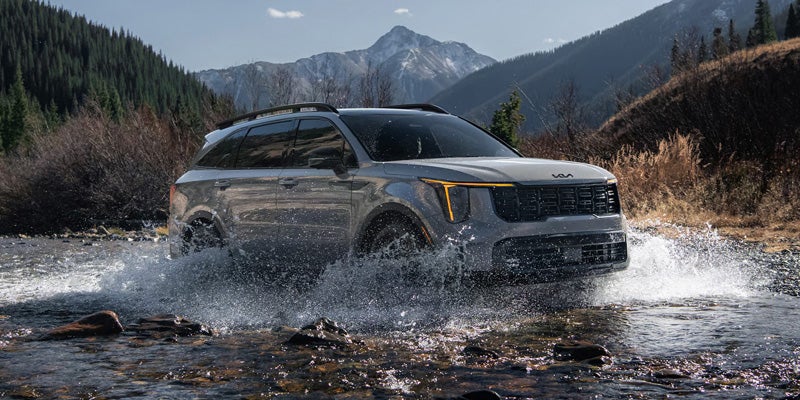
A silver Kia Telluride SUV splashing through a shallow river, with mountains and pine trees in the background.

Finding a spacious, reliable, and feature-packed SUV that comfortably seats seven or eight passengers is a top priority for growing families. Kia’s lineup offers compelling options designed to meet the diverse needs of family drivers, combining thoughtful interior space, advanced safety technologies, and modern conveniences. Whether you’re heading out for a weekend adventure or managing the daily school run in New Port Richey or Holiday, FL, the right Kia SUV can make all the difference in comfort and convenience.

For families requiring seating for seven or eight, two Kia models stand out: the Kia Telluride and the Kia Sorento. Both offer three rows of seating, but they cater to slightly different preferences and lifestyles. The Telluride is a full-size SUV known for its generous space and upscale features, making it a top choice for larger families who want a blend of luxury and practicality. On the other hand, the Sorento, while slightly smaller, delivers impressive versatility with multiple powertrain options, including hybrid and plug-in hybrid variants, perfect for families prioritizing fuel efficiency without compromising on roominess.

The Telluride impresses with its class-leading second-row legroom, ensuring that passengers in the middle row enjoy ample space for comfort during longer drives. Families in Tarpon Springs and Palm Harbor will appreciate the Telluride’s flexible seating arrangements, which accommodate up to eight passengers with a standard second-row bench or seven with available captain’s chairs for added comfort. Its cargo capacity is generous even with all rows in use, and the fold-flat third row expands storage for larger items such as sports gear or family luggage. Safety is a cornerstone of the Telluride’s appeal, boasting nearly 30 driver assistance features that actively work to prevent collisions and keep every occupant secure.

Meanwhile, the Kia Sorento balances family-friendly features with a more compact footprint, ideal for those navigating suburban streets or tighter parking spaces around Buena Vista Manor or New Port Richey. Its three-row seating fits seven passengers comfortably, with an emphasis on smart interior design that maximizes usable space. The Sorento’s availability in hybrid and plug-in hybrid models also makes it a standout for families looking to reduce fuel expenses. Its turbocharged engines deliver peppy performance, while the hybrid’s EPA-estimated 37 MPG combined offers real savings for families with busy schedules.

Both SUVs come equipped with advanced infotainment systems that keep everyone connected and entertained. Wireless Apple CarPlay and Android Auto compatibility, multiple USB-C ports across all three rows, and available rear-seat entertainment systems make long drives more enjoyable for families in Keystone or Palm Harbor. Climate control is thoughtfully designed as well, with tri-zone settings that allow the driver, front passenger, and rear passengers to customize their comfort levels individually.

Comparing the Kia Telluride with Competitors for Family Buyers

When searching for a family SUV that comfortably seats seven or eight passengers, the 2027 Kia Telluride stands out for its blend of spaciousness, advanced safety, and upscale features. Compared to competitors like the Honda Pilot and Toyota Highlander, the Telluride offers notable advantages that appeal directly to families prioritizing comfort, technology, and value.

The Kia Telluride provides up to eight-passenger seating with class-leading second-row legroom, ensuring that families from Holiday or Keystone, FL, experience comfortable journeys even on longer trips. Its versatile interior layout adapts to varying family needs, aided by convenient features such as USB-C ports across all three rows and an easy-access third row. This flexible space management is essential for larger families or those needing extra room for gear and activities.

Powertrain options in the Telluride include a robust 2.5-liter turbocharged engine delivering 274 horsepower and 311 lb-ft of torque, paired with available all-wheel drive. For family drivers in Palm Harbor looking for efficiency, the new turbo-hybrid variant combines power with an EPA-estimated 35 MPG, offering a compelling balance of performance and fuel economy.

Safety is a key consideration for family buyers, and the Telluride is equipped with an extensive suite of 29 driver assistance and collision avoidance features. Technologies such as Blind-Spot View Monitor, Highway Driving Assist, and Rear Cross-Traffic Collision-Avoidance Assist offer peace of mind on New Port Richey roads and beyond. These features are often available at a more accessible price point than comparable trim levels on the Pilot or Highlander.

Additionally, Kia’s industry-leading warranty program provides families with added confidence. The comprehensive coverage includes a 10-year/100,000-mile limited powertrain warranty and a 5-year/60,000-mile basic warranty, far exceeding the standard warranties offered by many competitors. This extended protection helps shield families from unexpected repair costs and ensures expert care at authorized Kia dealerships.

For families exploring options, the Telluride offers a compelling mix of space, technology, and reliability that’s hard to beat. To see the full selection of new Kia SUVs available for your family’s needs, explore our new inventory today. You can also check out our used inventory or apply for financing to make your purchase easier.​

Why the 2026 Kia Sorento Offers Exceptional Value for Family Drivers

The 2026 Kia Sorento stands out as a top choice for families looking for an affordable, versatile, and well-equipped midsize SUV. Offering three rows of seating with a flexible layout, it comfortably accommodates up to seven passengers, making it perfect for families of various sizes. The Sorento’s intelligently designed interior ensures that every passenger enjoys ample legroom and easy access to the third row, which is especially appreciated during school runs or weekend trips around Palm Harbor or Holiday.

One of the Sorento’s key strengths lies in its diverse powertrain options. Whether you prefer a traditional gas engine, a hybrid for improved fuel economy, or a plug-in hybrid for electric-only driving capability, the Sorento delivers both efficiency and power. The turbocharged 2.5-liter engine generates a robust 281 horsepower, providing confident acceleration for highway merging or family road trips. Meanwhile, the hybrid variants offer impressive EPA-estimated fuel economy, helping families save on fuel costs without sacrificing performance.

Safety is a priority for family drivers, and the Sorento includes a comprehensive suite of advanced driver-assistance features as standard, such as Forward Collision-Avoidance Assist, Lane Keeping Assist, and Blind-Spot Collision Warning. These systems work together to enhance peace of mind during busy daily commutes or long drives across Keystone or Tarpon Springs.

Beyond features, the Sorento’s value is enhanced by Ken Ganley Kia New Port Richey’s commitment to competitive pricing and an extensive inventory unmatched in the Tampa area. The dealership’s volume-based pricing and flexible financing options make it easier for families to secure the SUV that fits their budget and lifestyle. With competitive pricing and flexible financing options ideal time to explore the 2026 Kia Sorento for your family’s needs.

Family SUVs at Ken Ganley Kia New Port Richey

Shopping for a family SUV at Ken Ganley Kia New Port Richey means access to one of the largest Kia inventories in the Tampa area, offering a wide selection of Telluride and Sorento models to fit diverse budgets and preferences. Competitive pricing driven by volume sales ensures families find great value, and the dealership’s commitment to beating competitor prices by $500 means you get a great value without compromise. The buying experience is further enhanced by helpful financing options tailored to your needs, assisting families in Holiday or Palm Harbor to get behind the wheel of their ideal Kia with confidence.

Additionally, Ken Ganley Kia’s recognition as a Presidents Club Award winner and #1 Volume Kia dealer in Tampa reflects their dedication to customer satisfaction and quality. Families purchasing a Kia here benefit from exclusive perks like free gas on the second Saturday of each month with paid service, and a 3-year or 36,000-mile oil change offer that adds value to your purchase. The dealership’s commitment to community is also evident through charitable contributions, donating a portion of every vehicle sale to Angel Tree, supporting local families in need.

Choosing the perfect Kia SUV for a family of seven or eight isn’t simply about space—it’s about finding a vehicle that offers safety, convenience, and value tailored to your lifestyle. Whether your drives take you through the scenic neighborhoods of Keystone or the bustling streets of New Port Richey, Kia’s family SUVs deliver the comfort and capability needed for every journey. To explore the latest models and experience firsthand how these SUVs can elevate your family’s driving experience, visit Ken Ganley Kia New Port Richey for a test drive and personalized assistance.

For directions to the dealership, use this link: Ken Ganley Kia New Port Richey and browse our new vehicle inventory or used vehicle inventory today.

Posted in:

Related Posts

Does Florida Heat Cause Tire Pressure Warning Lights?

Understanding how climate affects air volume helps prevent unnecessary worry while keeping your vehicle operating safely. Standard tire pressure monitoring systems rely on direct wheel sensors calibrated to monitor air density within a narrow, safe margin. When ambient temperatures soar during summer, air molecules expand and press against the internal tire casing. Conversely, when the car rests overnight, the air inside cools down and contracts. This thermal drop often causes tire pressure to dip about 25 percent below the manufacturer's recommended cold inflation pressure, which is the standard threshold that activates the low-pressure warning symbol on your instrument cluster. more Extreme heat triggers your tire pressure warning light because ambient high temperatures expand the air inside your tires, raising internal pressure by approximately 1 psi for every 10-degree rise in temperature. Driving on hot pavement adds friction, pushing tire pressure several pounds above cold baseline levels. When temperatures fluctuate rapidly or air contracts during cooler overnight hours, your tire pressure monitoring system detects these pressure shifts and illuminates the dashboard warning symbol. When a warning light appears on your dash, a solid icon usually indicates that one or more tires have dropped below recommended inflation levels, while a flashing icon that remains solid after a minute indicates a system fault or sensor issue. If your warning symbol turns on, the safest immediate step is to pull over safely, check all four tires with a digital or dial gauge, and inspect the tread for physical damage. For drivers needing quick diagnostic help, finding our New Port Richey service facility gives you direct access to certified technicians equipped with factory diagnostic tools. You can also give our team a quick call at (888) 604-4352 for immediate guidance or schedule a service appointment online to have your tire pressure monitoring sensors calibrated before your next long drive. How Does Florida Heat, Hot Pavement, and Humidity Expand Tire Pressure? Florida heat expands tire pressure through a combination of high ambient air temperatures, intense road surface radiation, and elevated internal air humidity. As tires roll across sun-baked asphalt, surface friction combined with pavement temperatures that frequently exceed 130 degrees Fahrenheit cause internal air to expand by 3 to 5 psi above cold filling pressure. The physical relationship between heat and gas volume is governed by basic thermal expansion principles. When your vehicle sits parked, internal tire air matches ambient outdoor air temperature. However, once you start driving along coastal causeways near Clearwater, the combination of road contact friction and radiant pavement heat rapidly increases the internal temperature of the tire cavity. This heat transfer causes air molecules to move faster and exert greater outward pressure against the rubber sidewalls. Humidity plays an equally significant role in pressure instability. Compressed air pumped from standard gas station air compressors often contains invisible moisture vapor unless passed through specialized drying filtration. Water vapor reacts much more violently to thermal changes than dry air or pure nitrogen. As internal moisture heats up during highway driving, it transitions toward vapor, causing a sharper, non-linear pressure rise inside the tire casing. Over time, these thermal cycles place extra stress on rubber compounds, valve stems, and pressure seals. Inspecting your valve stems for corrosion or micro-cracks during routine oil changes prevents slow leaks that worsen under heat stress. If your vehicle requires replacement valve cores or factory pressure sensors, our team can help you order genuine Kia replacement parts designed specifically for your model's wheel specifications. Is It Safe to Drive with High Tire Pressure on Hot Summer Days? Driving on excessively over-inflated tires during hot summer days is unsafe because severe over-inflation reduces tire traction, stiffens ride quality, and significantly increases the risk of a high-speed tread separation or blowout. Over-inflated tires bulge at the center of the tread, reducing the rubber contact patch that keeps your vehicle firmly anchored to the roadway. When internal air pressure rises far above recommended settings, the tire's ability to absorb road impacts diminishes. Hitting a pothole or severe pavement seam with an over-inflated tire places extreme mechanical shock on the internal steel belts, making the casing vulnerable to structural failure. Furthermore, a smaller contact patch impairs critical vehicle safety systems like blind spot detection and lane assist, as the vehicle's electronic stability controls depend on optimal mechanical grip to execute sudden evasive maneuvers or emergency stops. Maintaining precise pressure settings is essential for popular crossover models like the 2026 Kia Sportage with its 1.6L engine and available all-wheel drive, or larger family vehicles like the 2026 Kia Sorento equipped with a 2.5L engine and Sportmatic™ transmission. Proper inflation ensures balanced weight distribution across all four contact patches, preserving smooth handling and extending tread life. To maintain safe inflation during summer heat, follow these practical maintenance guidelines: Measure tire pressure only when tires are cold, before driving more than one mile or after the vehicle has been parked in the shade for at least three hours. Never bleed air from a warm tire that reads high immediately after highway driving, as thermal expansion is temporary and the tire will become under-inflated once it cools. Adjust inflation to match the exact PSI recommended on your vehicle's doorjamb label rather than adjusting based on visual appearance. Use a high-quality digital pressure gauge rather than relying on uncalibrated air pump gauges found at public filling stations. What Does Your TPMS Light Mean and Why Do Sensor Batteries Fail in Heat? A tire pressure warning light alerts you that internal air pressure has drifted outside safe operating thresholds, while extreme heat degrades internal sensor batteries by accelerating internal chemical breakdown. Direct tire pressure monitoring systems use wheel-mounted electronic sensors powered by compact lithium coin-cell batteries that are continuously exposed to intense brake heat and severe road vibration. Direct TPMS units are installed inside the tire cavity attached to the inner end of the valve stem. These sensors transmit real-time pressure and temperature data wirelessly to your vehicle's central control module. Because these lithium batteries are permanently sealed within the sensor assembly to withstand centrifugal forces and moisture, they cannot be serviced or charged individually. Extreme wheel well temperatures speed up the chemical depletion of lithium cells, reducing their typical 5 to 10 year lifespan down to a much shorter window in hot climates. When a TPMS sensor battery reaches the end of its functional life or suffers thermal damage, the dashboard indicator communicates the failure through specific lighting patterns: Solid Warning Light: Indicates that one or more tires are under-inflated by 20 to 25 percent relative to recommended cold placard pressure. Flashing Light for 60 to 90 Seconds: Signals a system fault, loss of signal transmission, or a dead sensor battery requiring electronic diagnosis and replacement. Intermittent Light: Suggests thermal expansion cycles where pressure dips below threshold during cool mornings and recovers during afternoon driving. If a tire fails or suffers a sudden pressure drop while traveling, having access to manufacturer-backed emergency support makes a significant difference. New vehicle coverage includes access to Kia Roadside Assistance: 1-800-333-4542, providing professional flat tire change services, towing to authorized service centers, and trained technical support when road hazards interrupt your trip. How Do UTQG Temperature Grades and Door Placard Specs Protect Your Tires? Uniform Tire Quality Grading temperature ratings indicate a tire's ability to resist and dissipate thermal energy, while the driver-side door placard provides the official cold inflation pressure calculated by vehicle engineers. Relying on door placard specifications rather than sidewall maximum limits prevents severe over-inflation and protects your vehicle's suspension components. The National Highway Traffic Safety Administration established UTQG standards to help drivers compare treadwear, wet traction, and temperature resistance across different tire brands. The temperature grade evaluates how effectively a tire running on an indoor test wheel dissipates generated heat at controlled high speeds: Grade A: Represents the highest level of heat resistance, designed to withstand sustained speeds over 115 mph without thermal breakdown. Grade B: Meets standard federal safety requirements, handling speeds between 100 mph and 115 mph under normal loads. Grade C: Represents the minimum legal standard, suitable for basic low-speed driving but less capable of dissipating heat during extended summer highway travel. Selecting Grade A temperature-rated replacement tires ensures maximum resistance against heat-induced rubber degradation during hot weather driving. However, even the highest-rated tire will fail if inflated improperly. A common driver mistake is inflating tires to the maximum PSI molded onto the tire sidewall. That sidewall figure represents the maximum pressure the tire casing can safely hold at maximum load capacity, not the pressure intended for your specific vehicle. Engineers determine ideal inflation based on gross vehicle weight, axle distribution, and suspension tuning. The correct cold inflation figures are always printed on the tire information label located on the driver-side B-pillar doorjamb. Common Tire Pressure Questions and Professional Kia Tire Care in New Port Richey Drivers pulling into our service drive often ask why their tire pressure light illuminates first thing in the morning only to shut off ten minutes into their commute. The following answers clarify common tire monitoring concerns to help you maintain optimal safety on Florida roadways. Q: Why does my TPMS light turn on in the morning and turn off after driving? The morning warning light occurs because overnight temperature drops cause air inside the tire to contract, reducing internal pressure below the 25 percent low-pressure threshold. Once you begin driving, road friction and rolling resistance heat the air inside the tire cavity. This thermal expansion raises pressure back above the activation threshold, turning off the dashboard light. If this occurs regularly, your cold tire pressure is slightly low and needs to be topped off. Q: Does nitrogen tire inflation reduce heat-related pressure fluctuations? Nitrogen tire inflation significantly reduces pressure fluctuations because dry nitrogen gas lacks the moisture vapor found in standard compressed air. Water vapor expands rapidly when heated, causing unpredictable pressure spikes during summer driving. Pure nitrogen maintains a more consistent expansion rate across broad temperature ranges, helping maintain stable pressure readings and slowing natural pressure loss through porous rubber. Q: What is the difference between cold tire pressure and warm tire pressure? Cold tire pressure is the air pressure measured before the vehicle has been driven or after sitting parked for at least three hours, reflecting ambient air temperature without driving heat. Warm tire pressure is measured after driving, when friction and road heat have expanded internal air by 3 to 5 psi. Vehicle manufacturers always state recommended inflation in cold PSI specifications. Q: How long do TPMS sensor batteries usually last in Florida heat? TPMS sensor batteries typically last between 5 and 8 years under standard conditions, but sustained ambient heat and high wheel well temperatures accelerate lithium battery degradation. Frequent high-speed driving on hot pavement can reduce operational battery lifespan toward the lower end of that range, eventually requiring sensor replacement when internal voltage drops. Q: Where is the tire pressure placard located on my Kia? The official tire pressure placard is located on the driver-side doorjamb B-pillar, visible when you open the driver's door. This yellow and white label lists recommended cold inflation pressures for front and rear tires, spare tire specifications, and total weight capacity limits assigned to your specific vehicle model. Prices and MSRP referenced in this article are estimates for informational purposes only and do not constitute an offer to sell. See dealer for complete details. Fuel economy estimates shown may differ from official EPA ratings and should not be relied upon as a guarantee of actual vehicle performance.

Why Trinity Drivers Are Choosing the Kia Sportage for Their Daily Commute

Choosing the right commuter crossover depends on how well a vehicle handles real-world traffic, unpredictable weather, and extended highway stretches. Commuters traveling along major corridors like the Suncoast Parkway near Trinity need a cabin that remains quiet at cruising speeds and driver-assist technology that reduces fatigue during stop-and-go congestion. The redesigned interior of the 2026 Kia Sportage prioritizes ergonomic seating with available heated and ventilated front seats, acoustic windshield glass to minimize road noise, and flexible cargo configurations for work gear or weekend sports equipment. more The 2026 Kia Sportage is worth buying for daily commuting because it delivers an exceptional balance of passenger space, advanced technology, and low operating costs. Featuring about 40 cubic feet of cargo room, class-leading 41.3 inches of rear legroom, and an available 12.3-inch dual panoramic display, it transforms high-traffic drives into a relaxed, comfortable experience. Paired with Kia's 10-year/100,000-mile limited powertrain warranty and available fuel-efficient hybrid powertrains, it offers long-term reliability and exceptional value for daily drivers. At Ken Ganley Kia New Port Richey, our team helps commuters compare configurations side by side. You can explore our new Kia Sportage inventory to see which trim aligns with your daily routine, or apply for auto financing online before taking a test drive. If you prefer to speak with a representative directly, give our sales department a quick call or visit our New Port Richey showroom to experience the Sportage in person. What Engine and Transmission Power the 2026 Kia Sportage Commute? Every gas-powered 2026 Kia Sportage is equipped with a 2.5L 4-cylinder engine producing 187 hp and 178 lb-ft of torque, mated to an 8-speed automatic transmission with Sportmatic® shifting. This combination provides linear acceleration for merging onto high-speed highways and precise gear management for city street driving. For drivers seeking additional power or maximum efficiency, the lineup also features a 1.6L turbocharged hybrid powertrain outputting 232 hp and 271 lb-ft of torque, as well as a plug-in hybrid option delivering 268 hp and 271 lb-ft of torque. The standard 2.5L engine utilizes a 13.0 compression ratio and direct fuel injection to optimize throttle response while maintaining steady fuel consumption. The 8-speed automatic transmission replaces continuous variable transmissions (CVTs) found in some competing crossovers, giving drivers discrete gear ratios and smoother high-speed cruising. Front-wheel drive comes standard on the LX, EX, SX, and SX Prestige gas trims, while an advanced All-wheel drive system with a locking center differential is available across the range and comes standard on X-Line and X-Pro Prestige models. When commuters visit our lot to compare powertrains, they frequently ask how the 2.5L gas engine performs during highway merging compared to the turbocharged hybrid variants. On the road, the naturally aspirated engine delivers predictable power delivery that is easy to control in tight traffic. For commuters cross-shopping pre-owned models, our dealership also maintains a selection of quality pre-owned inventory to suit a wide range of driving needs and budgets. What Real-World Fuel Economy Does the 2026 Kia Sportage Deliver? Front-wheel-drive gas models of the 2026 Kia Sportage achieve an EPA-estimated 25 mpg city, 33 mpg highway, and 28 mpg combined, making it an economical choice for daily travel. All-wheel-drive gas trims deliver 23 mpg city, 27 mpg highway, and 25 mpg combined (with the LX AT AWD achieving up to 24 mpg city and 30 mpg highway). Equipped with a 14.3-gallon fuel tank, a gas-powered Sportage offers a highway driving range exceeding 380 miles on a single fill-up of regular unleaded gasoline. For commuters looking to maximize fuel savings, the 1.6 LX Hybrid AT delivers an EPA-estimated 41 mpg city, 44 mpg highway, and 42 mpg combined in front-wheel drive. All-wheel-drive hybrid variants, including the EX Hybrid AT AWD, SX Prestige Hybrid AT AWD, and X-Line Hybrid AT AWD, achieve 35 mpg city and 36 mpg highway. Commuters who choose the 1.6 X-Line PHEV AT AWD benefit from an EPA-estimated 34 miles of all-electric range and an 83 MPGe combined rating, allowing many drivers to complete their daily workplace commute on battery power alone before switching to hybrid mode at 36 mpg. Key factors influencing real-world fuel economy in the 2026 Sportage include: Drive Mode Select: Drivers can toggle between Eco Mode for optimized throttle sensitivity and fuel efficiency, Sport Mode for enhanced engine response, and Smart Mode for automatic adaptation to driving style. Start/Stop System: Standard across all gas trims, this feature turns off the engine during extended idling at traffic lights to conserve fuel in heavy urban congestion. Regenerative Braking: Standard on hybrid and plug-in hybrid variants, capturing kinetic energy during deceleration to recharge the onboard battery. How Do Forward Collision-Avoidance and Safety Assist Work in Traffic? The Forward Collision-Avoidance Assist system in the 2026 Kia Sportage uses front-mounted radar sensors and optical camera technology to monitor vehicles, pedestrians, and cyclists ahead in real time. If the system detects a potential impact while traveling through urban or highway traffic, it issues visual and audible alerts to the driver. If the driver does not apply the brakes in time, the system can automatically apply emergency braking force to mitigate or prevent a frontal collision. In complex traffic scenarios, advanced variants of the system offer Junction Turning Detection. When preparing to make a left turn across oncoming lanes at an intersection, the sensors scan oncoming traffic and can initiate automatic braking if a turn presents an immediate hazard. This feature is especially valuable during morning and afternoon peak traffic hours when turning gaps are tight. Complementing forward collision technology, the Sportage includes a robust suite of active driver-assist technologies designed for high-density traffic: Blind-Spot Collision Warning: Detects vehicles lurking in adjacent lane blind spots and provides visual indicators on the side mirrors, applying corrective braking if a lane change is attempted. Rear Cross-Traffic Collision-Avoidance Assist: Scans behind the crossover when reversing out of parking spaces, alerting the driver to approaching vehicles and applying brakes if necessary. Lane Keeping Assist and Lane Following Assist: Continuously read road lane markings to gently steer the vehicle and keep it centered in its lane. Driver Attention Warning with Leading Vehicle Departure Alert: Alerts the driver if distraction is detected and notifies them when the vehicle ahead begins moving from a stop. Safety & Driver Assistance Safety and driver-assistance features by trim All listed trims come standard with essential safety features including ABS, Isofix preparation, height-adjustable head restraints in both front and rear seats (two in front, three in rear), and front seat belts with driver and passenger pre-tensioners and height adjustability. Rear seat belts for the driver, passenger, and center all use a 3-point type and are standard across all trims. An accident data recorder is also standard on every trim. The anti-collision system, branded as Forward Collision Avoidance Assist (FCA) with Pedestrian and Cyclist Detection on most trims, is equipped with automatic emergency braking, brake light activation upon collision detection, and driver monitoring, all standard features. Additionally, this system operates across a wide speed range: it activates above 5 mph, functions below and above 30 mph (50 kph), and is effective at speeds exceeding 78 mph (130 kph). Certain trims, including 1.6 SX Prestige Hybrid AT AWD, 2.5 SX AT, 2.5 SX Prestige AT, 2.5 SX Prestige AT AWD, 2.5 X-Pro Prestige AT AWD, and X-Line Prestige PHEV AT AWD, include the FCA system with junction turning capability. Moreover, the anti-collision system brakes at low speed in front are present on most trims but are notably absent (marked by dashes) on some like 1.6 SX Prestige Hybrid AT AWD, 1.6 X-Line Prestige PHEV AT AWD, 2.5 SX Prestige AT, and 2.5 X-Pro Prestige AT AWD, indicating this feature is added on selected trims. What Does Highway Driving Assist 2 Do on Long Highway Commuter Routes? Highway Driving Assist 2 combines Smart Cruise Control with Stop & Go, Lane Following Assist, and highway navigation data to control speed, trailing distance, and lane centering on compatible controlled-access highways. By automatically maintaining a set distance from the vehicle ahead and keeping the crossover centered between lane markers, the system reduces driver steering inputs and pedal fatigue during extended highway commutes along routes like US-19 in coastal New Port Richey. Unlike basic adaptive cruise control, Highway Driving Assist 2 includes an automated lane-changing feature. When the driver activates the turn signal on a compatible highway, the system checks surrounding radar sensors and camera feeds to verify that the adjacent lane is clear, then smoothly steers the vehicle into the target lane without requiring manual steering input. Key functional capabilities of Highway Driving Assist 2 include: Machine-Learning Distance Control: Analyzes the driver's preferred follow distance and braking habits, adapting the automatic speed adjustments to match human driving preferences. Hands-On Steering Detection: Utilizes capacitive touch steering wheel sensors to ensure the driver maintains continuous oversight and touch control of the vehicle. Curve Speed Reduction: Uses navigation data to anticipate sharp highway curves ahead, automatically slowing the Sportage to a safe entry speed before resuming the set cruising speed. What Is the Price Range Across 2026 Kia Sportage Gas Trims? The 2026 Kia Sportage gas lineup spans an MSRP range from $28,790 for the entry-level 2.5 LX AT up to $39,690 for the fully equipped 2.5 X-Pro Prestige AT AWD, offering distinct trim levels tailored to different budget levels and equipment requirements. Each model includes a $1,495 destination charge (or $1,395 depending on production timing and destination coding), maintaining competitive value across front-wheel-drive and all-wheel-drive configurations. Frequently Asked Questions About the 2026 Kia Sportage Q: Does the 2026 Kia Sportage come with a warranty? Yes, every new 2026 Kia Sportage includes Kia's industry-leading warranty package. This consists of a 10-year/100,000-mile limited powertrain warranty, a 5-year/60,000-mile limited basic warranty, a 5-year/100,000-mile limited anti-perforation warranty, and a 5-year/60,000-mile roadside assistance plan. Q: What is the cargo capacity behind the second row in the Sportage? The 2026 Kia Sportage offers about 40 cubic feet of cargo room behind the second-row seats in its standard dual-level floor position (listed as about 39.5 cubic feet on select spec sheets). Folding the 60/40 split-folding rear seatbacks flat expands total cargo capacity to about 74 cubic feet. Q: Is Highway Driving Assist standard on all 2026 Kia Sportage trims? No, Highway Driving Assist is not standard on base trims. Standard Highway Driving Assist or upgraded Highway Driving Assist 2 is included on SX, SX Prestige, and X-Pro Prestige trims, while remaining optional or unequipped on LX, EX, and X-Line variants. Q: What is the maximum towing capacity of the 2026 Kia Sportage? When properly equipped with an approved aftermarket or factory tow hitch, the 2026 Kia Sportage gas model has a maximum towing capacity of 2,000 lbs (or up to 2,500 lbs with trailer brakes), making it capable of hauling small utility trailers or recreational equipment. Q: What are the interior screen dimensions on the 2026 Sportage dashboard? The 2026 Kia Sportage features a panoramic curved display housing two 12.3-inch screens under a single glass panel: one 12.3-inch instrument cluster display for driver telemetry and one 12.3-inch touchscreen for infotainment, navigation, and wireless Apple CarPlay and Android Auto. Prices and MSRP referenced in this article are estimates for informational purposes only and do not constitute an offer to sell. See dealer for complete details. Fuel economy estimates shown may differ from official EPA ratings and should not be relied upon as a guarantee of actual vehicle performance.

Back-to-School Vehicle Shopping Near New Port Richey: Which Kia Is Right for Your Family?

The 2027 Kia Telluride stands as an excellent SUV for daily school commutes when carrying larger families, offering seating for up to eight passengers, 5,000 lbs of maximum towing capacity, and an available 2.5L turbo-hybrid powertrain that delivers an estimated 329 hp and roughly 35 mpg. For smaller families seeking maximum fuel efficiency, the compact 2027 Kia Sportage provides an ideal alternative with an EPA-estimated 35 mpg city / 36 mpg highway, making it nimble and economical for morning drop-off lanes. more Navigating school carpool lines, morning traffic, and afternoon extracurricular trips requires a vehicle that balances interior volume, safety technology, and long-term operating efficiency. The Kia SUV lineup provides distinct sizing options tailored to different family dynamics. While the flagship Telluride excels at accommodating three rows of passengers along with heavy sports gear, the midsize Kia Sorento offers a slightly more compact three-row footprint with available plug-in hybrid capability, traveling up to roughly 31 miles on pure electric power before using gas. Choosing the ideal model depends on your daily seating demands and cargo requirements. Families carrying up to five passengers benefit from the two-row Sportage, which supplies about 40 cubic feet of rear cargo space behind the second row for musical instruments and backpacks. Larger households requiring seven or eight seats turn to the Telluride or Sorento to eliminate carpool seating arguments. Our team is ready to walk you through each cabin layout when visiting our New Port Richey showroom or by giving us a quick call to discuss current availability. Is the Kia Soul Practical and Fuel-Efficient Enough for Daily School Trips? The subcompact Kia Soul is exceptionally practical and fuel-efficient for daily school trips, returning an EPA-estimated 27 mpg city / 33 mpg highway alongside a generous 62 cubic feet of maximum cargo capacity when the rear seats are folded flat. Its distinctive boxy roofline creates substantial rear headroom and legroom, comfortably accommodating growing teenagers and high school commuters. While classified as a subcompact vehicle, the Soul utilizes its vertical hatchback architecture to maximize usable interior space. With the rear seats in place, the cargo bay accommodates backpack stacks, athletic bags, and science project displays that often struggle to fit in traditional sedans. The low rear liftgate threshold simplifies loading heavy gear, making it a favorite for parents managing multiple drop-off locations each morning. From an operating cost perspective, the Soul minimizes expenses during peak school-year driving. Its 2.0L 4-cylinder engine and Intelligent Variable Transmission prioritize smooth power delivery while maintaining competitive efficiency in stop-and-go neighborhood traffic. For budget-conscious households or families purchasing a primary vehicle for a new teen driver, exploring our pre-owned vehicle inventory often reveals low-mileage options loaded with modern driver-assist safety suites. Commuters handling daily drives along U.S. Highway 19 near Holiday consistently appreciate how the Soul combines a small, easy-to-park exterior footprint with real-world interior utility. Fuel Economy Fuel economy and range by trim Feature EX AWD EX FWD EX FWD HEV EX HEV AWD LX FWD S AWD S FWD SX FWD SX FWD HEV MPG 18 city / 24 hwy / 20 combined 20 city / 26 hwy / 22 combined 34 city / 36 hwy / 35 combined 30 city / 32 hwy / 31 combined 20 city / 26 hwy / 22 combined 18 city / 24 hwy / 20 combined 20 city / 26 hwy / 22 combined 20 city / 26 hwy / 22 combined 32 city / 34 hwy / 33 combined Feature SX-Prestige AWD SX-Prestige HEV AWD X-Line EX AWD X-Line SX AWD X-Line SX HEV AWD X-Line SX Prestige AWD X-Line SX Prestige HEV AWD X-Pro SX AWD X-Pro SX Prestige AWD MPG 18 city / 24 hwy / 20 combined 30 city / 32 hwy / 31 combined 18 city / 24 hwy / 20 combined 18 city / 24 hwy / 20 combined 30 city / 32 hwy / 31 combined 18 city / 24 hwy / 20 combined 30 city / 32 hwy / 31 combined 17 city / 22 hwy / 19 combined 17 city / 22 hwy / 19 combined How Many Passengers and Child Seats Can the Kia Telluride Carry? Depending on the seating configuration, the 2027 Kia Telluride carries seven or eight passengers and features standard lower LATCH anchors and top tethers in both the second and third rows for effortless child seat installation. Models equipped with a second-row bench seat accommodate up to eight occupants, while configurations featuring second-row captain's chairs seat seven passengers while opening a wide center walkthrough lane to the rearmost bench. Accommodating multiple car seats simultaneously represents a major challenge in many family vehicles, but the Telluride addresses this with wide cabin dimensions and accessible anchoring points. The second row provides generous legroom that prevents rear-facing child seats from crowding the front driver or passenger seats. Furthermore, the third row includes dedicated LATCH anchor pairs, allowing parents to secure child seats in row three without sacrificing second-row seating flexibility. Beyond passenger seating, the Telluride provides substantial cargo capacity for family gear. Behind the third row, the vehicle offers about 22 cubic feet of storage space, expanding to roughly 89 cubic feet with all rear seats folded flat. Powering the lineup is a standard 2.5L engine generating 274 hp and 311 lb-ft of torque, routed through an automatic 8-speed transmission for confident highway merging. The entry 2027 Kia Telluride LX FWD trim carries a base MSRP of $39,190 plus a $1,545 destination charge. Parents test-driving three-row SUVs on our floor routinely check how many car seats fit in the third row before they even adjust the driver's seat. Shoppers can streamline their purchase process ahead of time by completing our online credit application. Does the Electric Kia EV9 Offer Frunk Storage and Parent-Monitoring Tech? The fully electric Kia EV9 features a front trunk (frunk) providing up to 3 cubic feet of additional storage capacity for school gear, complemented by comprehensive Kia Connect smart technology that enables parents to monitor vehicle speed, geofenced boundaries, and curfew times directly from a smartphone. The front trunk offers a clean, enclosed compartment separate from the main cabin, making it ideal for stowing muddy athletic cleats, damp rain gear, or emergency road kits out of sight. Inside the cabin, the three-row electric architecture delivers a completely flat floor, maximizing legroom across all three seating rows and creating convenient floor-level storage nooks for electronics and backpacks. Parental control features embedded in Kia Connect deliver added reassurance when teenage family members take the wheel. Parents can configure custom smartphone notifications, including: Geofence Alerts: Sends immediate notifications if the vehicle enters or leaves pre-designated areas, such as school campuses or neighborhood zones. Speed Alerts: Triggers alerts if the vehicle exceeds a pre-selected speed threshold set by the parent. Curfew Notifications: Alerts parents if the vehicle is turned on or driven past a established evening time limit. Charging convenience also supports busy school schedules. Utilizing an 800V DC fast-charging architecture, the EV9 recharges its battery from 10% to 80% capacity in approximately 24 minutes under ideal conditions. Additionally, the EV battery is backed by Kia’s 10-year/100,000-mile limited powertrain warranty, ensuring long-term peace of mind. Does Kia Standard Automatic Emergency Braking Detect Pedestrians Near School Zones? Standard Forward Collision-Avoidance Assist across the Kia family lineup actively scans the road ahead using camera and radar sensors to detect both pedestrians and cyclists in addition to passenger vehicles. When approaching school zones or crosswalks, the system monitors movement in front of the vehicle and can automatically initiate emergency braking if a collision hazard is detected and the driver does not react in time. Navigating school drop-off lanes involves dynamic surroundings with children stepping between parked cars, bicycles entering traffic lanes, and sudden vehicle stops. Kia safety engineering integrates multiple layers of driver assistance to mitigate these hazards: Pedestrian and Cyclist Detection: Identifies moving or stationary pedestrians and bicycles in the vehicle's path at urban commuting speeds. Junction Turning Detection: Available on upper trims, this enhancement monitors oncoming traffic when turning left across intersections near school grounds. Blind-Spot Collision Warning: Alerts the driver to vehicles hidden in side blind spots during heavy morning lane changes. Safe Exit Assist: Uses rear corner radars to detect approaching vehicles or cyclists from behind, preventing rear passengers from opening doors into moving traffic. These driver-assist systems operate continuously in the background, providing an essential safety foundation for chaotic morning routines. Which Kia Models Are the Best Overall Choices for Local Families? The best overall choices for local families encompass three primary sizes: the compact 2027 Kia Sportage starting at a base MSRP of $32,290 for two-row versatility, the midsize Sorento for flexible three-row seating, and the flagship 2027 Kia Telluride for maximum eight-passenger room and towing muscle. Every standard gasoline and hybrid Kia family SUV is calibrated to run on cost-effective 87-octane regular unleaded gasoline, helping control routine fuel expenses throughout the school year. Comparing core specifications across the lineup helps narrow down the right fit for your household: 2027 Kia Sportage: Features a 1.6L engine, Sportmatic® transmission, seating for 5, about 40 cubic feet of rear cargo volume, and up to 2,000 lbs of towing capacity. EPA-estimated fuel economy reaches 35 mpg city / 36 mpg highway. 2027 Kia Sorento: Provides three-row seating for up to 7 passengers, available hybrid or plug-in hybrid options with up to 31 miles of all-electric range, and versatile split-folding rear seats for mixed passenger and cargo loads. 2027 Kia Telluride: Offers seating for up to 8 occupants, a 2.5L engine producing 274 hp and 311 lb-ft of torque, an automatic 8-speed transmission, and 5,000 lbs of towing capability. The LX FWD trim starts at $39,190 MSRP. Every new Kia vehicle comes backed by an industry-leading warranty suite, including a 10-year/100,000-mile limited powertrain warranty, a 5-year/60,000-mile limited basic warranty, and a 5-year/60,000-mile roadside assistance plan. Buyers can browse our current new Kia inventory to compare trims, color options, and interior seating configurations. Common Questions About Back-to-School Vehicle Shopping Q: What fuel grade is required for Kia hybrid and gas SUVs? All standard gasoline, hybrid, and plug-in hybrid Kia family SUVs are engineered and calibrated to run on standard 87-octane regular unleaded gasoline. Using premium grade fuel is unnecessary, allowing parents to keep routine fueling expenses low over thousands of miles of school commuting. Q: Can I fit three child safety seats across the second row of a Kia SUV? The 2027 Kia Telluride features wide second-row hip room and shoulder room that can accommodate three thin-profile child safety seats side-by-side on models equipped with the standard second-row bench seat. Proper fitment depends on seat brand dimensions and shell designs, so testing your specific child seats during a showroom visit is recommended. Q: How does Kia Safe Exit Assist protect children during school drop-offs? Safe Exit Assist uses rear-corner radar sensors to detect vehicles or cyclists approaching from behind. If a rear passenger attempts to open a door while a vehicle is approaching in the blind spot, the system emits an audible warning and keeps the electronic child safety locks engaged to prevent accidental exit into oncoming traffic. Q: What documents should I bring when applying for auto financing? When visiting to purchase a vehicle, bringing your current driver's license, recent pay stubs or proof of income, proof of residence (such as a utility bill), and current auto insurance account details may help us review your financing options more efficiently. Contact our finance desk for current details. Q: Does the Kia 10-year/100,000-mile warranty transfer to second owners? When purchasing a new Kia, the original owner receives the full 10-year/100,000-mile limited powertrain warranty. If the vehicle is sold to a second owner, the powertrain coverage transitions to the remainder of the 5-year/60,000-mile limited basic warranty, unless purchased as a Certified Pre-Owned Kia through an authorized dealer, which restores the full powertrain timeframe. Prices and MSRP referenced in this article are estimates for informational purposes only and do not constitute an offer to sell. See dealer for complete details. Fuel economy estimates shown may differ from official EPA ratings and should not be relied upon as a guarantee of actual vehicle performance.